
Durable goods giảm mạnh nhưng nhiễu: tín hiệu capex nằm dưới vận tải
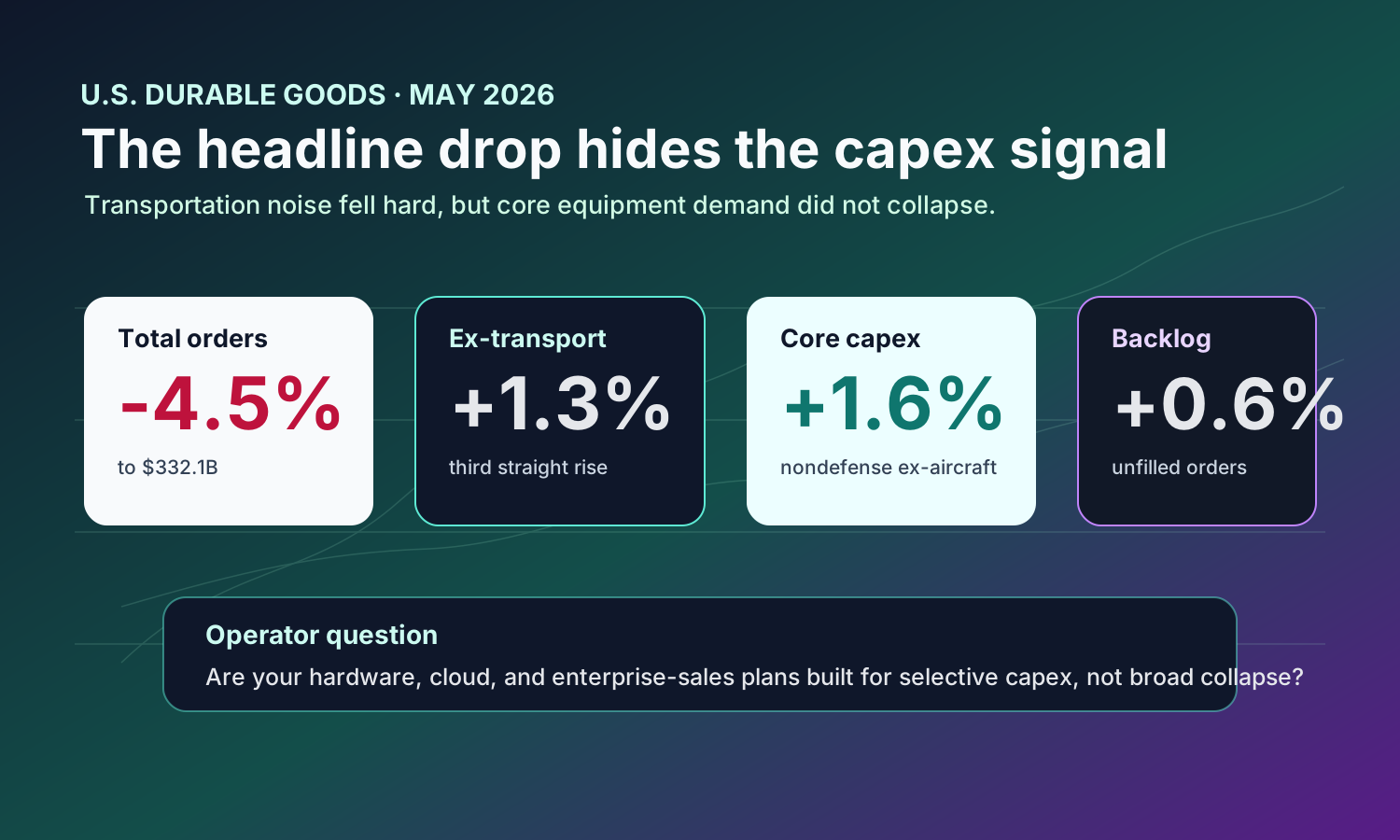
May U.S. durable goods orders fell 4.5% in the headline, but orders excluding transportation rose 1.3% and nondefense capital goods excluding aircraft rose 1.6%.
The better read is not broad manufacturing collapse. It is selective capex under aircraft and transportation noise, with a higher cost of capital in the background.
Sự kiện đã xác nhận
- Census: May durable goods new orders fell 4.5% to $332.1 billion.
- Orders excluding transportation increased 1.3%.
- Transportation equipment orders fell 14.0%, and nondefense aircraft and parts fell 51.8%.
- Nondefense capital goods excluding aircraft rose 1.6% to about $84.0 billion.
- Machinery rose 1.9%, computers and related products rose 1.6%, and communications equipment rose 0.8%.
- Unfilled orders rose 0.6%, and inventories rose 0.2%.
- BEA: May PCE inflation was 4.1% year over year and core PCE was 3.4%.
- The Fed held rates at 3.50%-3.75% on June 17 and said inflation remains above target.
Từ số liệu đến hành động
| Signal | Number | Practical read |
|---|---|---|
| Total durable goods orders | -4.5% | Do not read the headline without aircraft and transportation context. |
| Orders excluding transportation | +1.3% | Broad equipment demand looks firmer than the headline. |
| Core capital goods ex-aircraft | +1.6% | Business equipment investment has not disappeared. |
| Unfilled orders | +0.6% | Backlogs can support revenue, but also hide delivery and working-capital risk. |
| PCE inflation | 4.1% YoY | Capex decisions still face a high cost-of-capital backdrop. |
Diễn giải
The durable goods headline is highly sensitive to aircraft and transportation; operators should read it beside ex-transport and core-capex measures.
More orders do not automatically mean better margins; high inflation and high rates raise working-capital and approval costs.
AI infrastructure is not just GPUs. Communications, power, cooling, and server-adjacent equipment are part of the same capex cycle.
Tín hiệu thị trường
The market narrative is split: the headline drop says manufacturing is slowing, while ex-transport and core capital goods suggest business investment has not disappeared.
Tác động bậc hai
- B2B sellers into manufacturing should prepare for stricter ROI review, not assume budgets vanish.
- Hardware teams need tighter control over inventory, delivery timing, and cancellation terms.
- AI products should track inference-cost payback, not only usage growth.
- Investors should separate aircraft, defense, automation, electrical equipment, and semiconductor-equipment exposure.
Checklist
•Split customer pipeline by transport, machinery, electronics/communications, defense, and general industrial exposure.
•Lead sales material with payback period, labor savings, inventory reduction, and downtime reduction.
•Before increasing inventory, check unfilled orders, customer deposits, and cancellation clauses.
•For AI features, include model, server, network, power, and support costs in gross-margin payback.
•Watch the next durable goods release, PCE/GDP update, and FOMC together.
Rủi ro
The risk is that the durable goods report is preliminary and can be revised. Core capital goods strength does not prove the whole cycle is strong, and rising backlogs can also reflect supply constraints.
Miễn trừ
This article is informational economic and market commentary, not financial advice.
Nguồn
- U.S. Census Bureau, Monthly Advance Report on Durable Goods Manufacturers’ Shipments, Inventories and Orders, May 2026
- U.S. Bureau of Economic Analysis, Personal Income and Outlays, May 2026
- U.S. Bureau of Economic Analysis, GDP third estimate, 1st quarter 2026
- Federal Reserve, FOMC statement, June 17, 2026
- Axios, Hot inflation, strong economy: the Fed’s new test