
CPI Mỹ 4,2%: tính lại chi phí năng lượng trước khi đặt cược giảm lãi suất
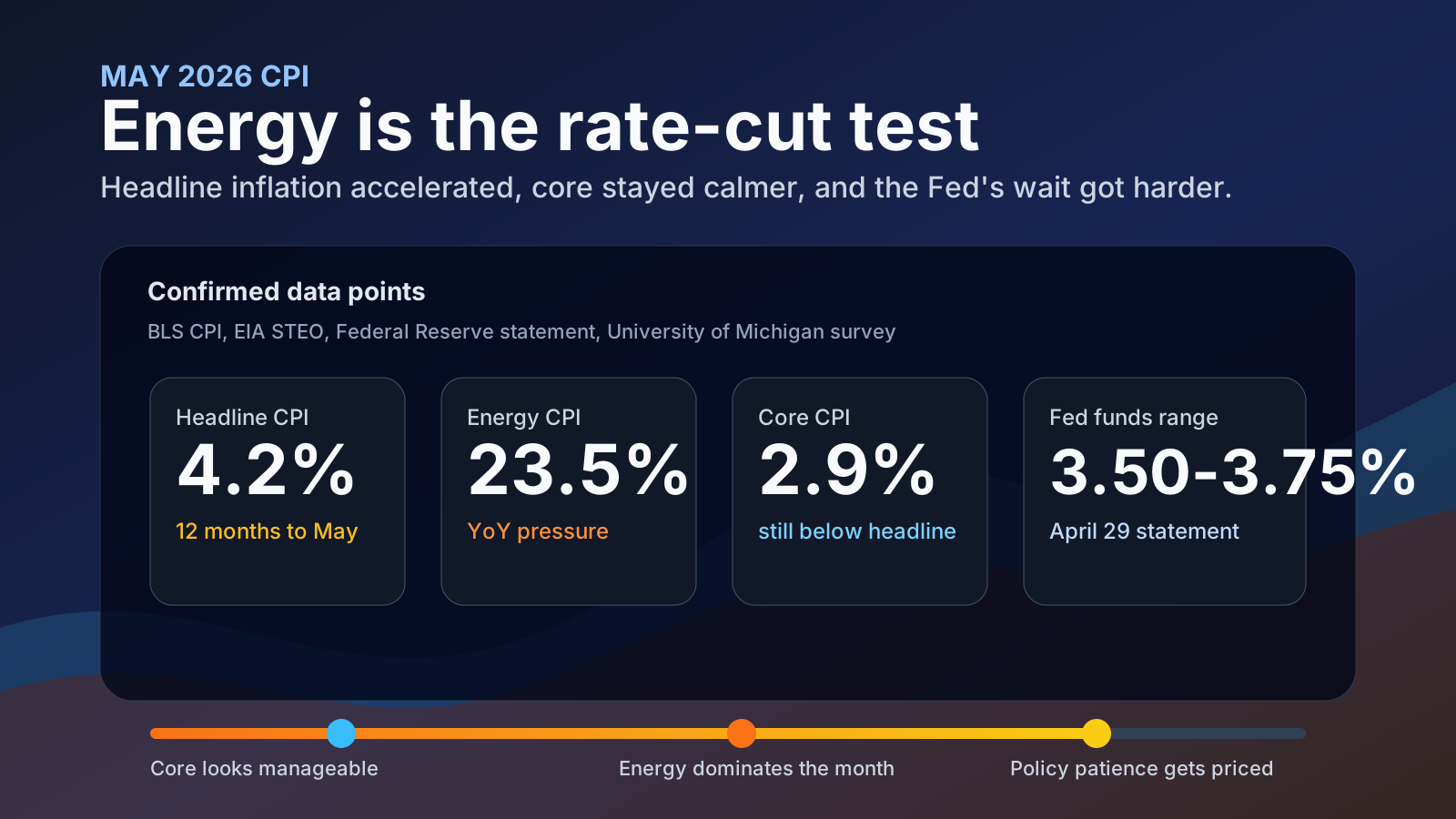
CPI Mỹ tháng 5 làm câu chuyện cắt giảm lãi suất bớt đơn giản. Lạm phát toàn phần lên 4,2%, trong khi lõi ở 2,9%. Động lực chính là năng lượng: tăng 23,5% so với cùng kỳ.
Với nhóm nhỏ, đây không phải dữ liệu vĩ mô xa xôi. Năng lượng đi vào điện, cloud, logistics, đi lại, tỷ giá và định giá.
Sự kiện đã xác nhận
- BLS: CPI-U rose 0.5% month over month and 4.2% year over year in May.
- Core CPI rose 0.2% month over month and 2.9% year over year.
- Energy rose 3.9% month over month and 23.5% year over year; gasoline rose 7.0% and 40.5%, respectively.
- EIA says Hormuz remains effectively constrained near term and Middle Eastern output is down more than 11 million b/d.
- EIA forecasts Brent at $95/b in 2026, $79/b in 2027, and $105/b in June-July.
- The Fed kept the target range at 3.50%-3.75% on April 29; the next FOMC is June 16-17.
- University of Michigan reports one-year inflation expectations at 4.8% and long-run expectations at 3.9%.
| Signal | Number | Practical read |
|---|---|---|
| CPI headline | 4.2% YoY | Do not budget only for a quick rate-cut scenario. |
| Energy CPI | 23.5% YoY | Stress-test freight, electricity, cloud, and travel costs. |
| Gasoline CPI | 40.5% YoY | Watch consumer sentiment and wage pressure. |
| Core CPI | 2.9% YoY | The Fed can wait, but cannot ignore expectations. |
| Fed target range | 3.50%-3.75% | Cash and debt duration still matter. |
Vì sao quan trọng
Core inflation alone does not force immediate tightening, but households, wage bargaining, and sentiment react to headline CPI and gasoline.
EIA’s outlook is not just a commodity story. Aviation, logistics, electricity, food, cloud, and AI inference costs can absorb the shock with a lag.
The hurdle for rate cuts is higher. The Fed says it will assess inflation pressures and expectations, and this CPI report gives mixed evidence.
Tín hiệu thị trường và cộng đồng
Market notes and investing communities are repeating phrases such as energy-led stagflation, delayed cuts, AI power costs, and renewed consumer-price pain. These are not factual sources; they are signals of what markets may price first.
Tác động bậc hai
- Operators with dollar costs outside the U.S. may feel FX and billing-cycle pressure before CPI itself.
- Airfare, shipping, events, and travel often show lagged energy pass-through.
- AI products need a gross-margin retest because more usage does not automatically improve economics.
- High-multiple growth assets become more discount-rate sensitive when cuts move further out.
Checklist cho nhóm nhỏ, builder và nhà đầu tư
- Split the next 90 days of spend into fixed, dollar-denominated, and usage-linked costs.
- Model server, API, and ad costs under 5% and 10% adverse currency moves.
- Track inference cost, free usage, conversion, and payback period for every AI feature.
- If pricing must change, start with overage usage, expensive regions, and premium AI features.
- For portfolios, check cash, bond duration, and expensive growth exposure before chasing energy themes.
Phản biện và rủi ro
The counterargument is real: core CPI rose only 0.2%, so the Fed may still look through a temporary supply shock. EIA also expects Brent to average $79/b in 2027. The main risk is expectations; if households treat energy inflation as a longer regime, wages, price lists, and contracts adjust slowly and persistently.
Miễn trừ
This article is informational economic commentary, not financial advice.
Nguồn
- U.S. Bureau of Labor Statistics, Consumer Price Index Summary, May 2026
- U.S. Energy Information Administration, June 2026 Short-Term Energy Outlook press release
- U.S. Energy Information Administration, Short-Term Energy Outlook petroleum products
- Federal Reserve, FOMC statement, April 29, 2026
- Federal Reserve, FOMC minutes, April 28-29, 2026
- University of Michigan Surveys of Consumers, May 2026