
美联储压力测试的信号:银行很强,但信用仍会选择性流动
2026年美联储大型银行压力测试显示体系稳健,但创业者、SaaS经营者和投资者仍需关注信贷如何分配。
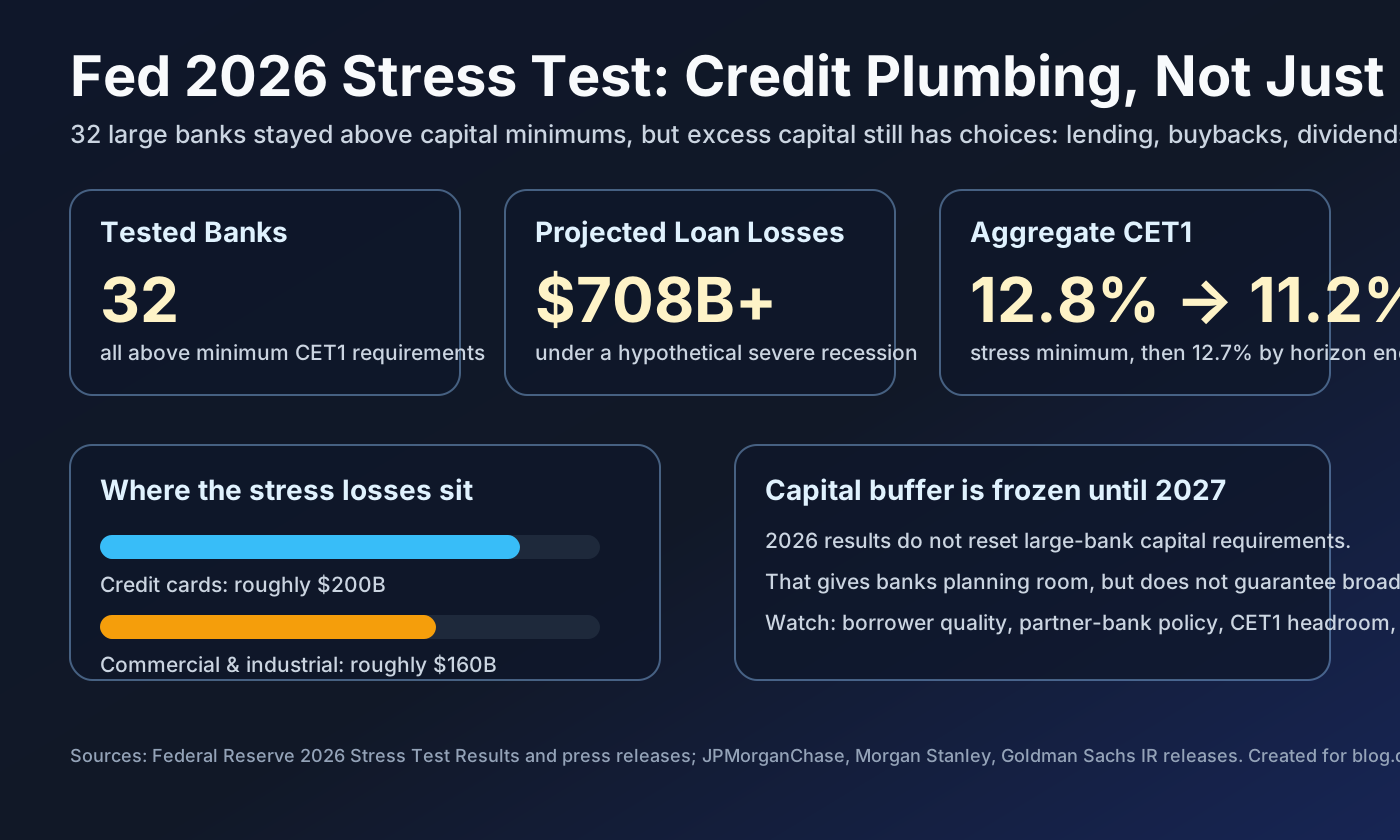
2026年6月24日,Federal Reserve发布大型银行压力测试结果。32家受测银行在商业地产价格下跌39%、房价下跌30%、失业率达到10%的假设情景下,仍高于最低CET1要求。
Fed结果PDF显示,合计CET1从2025年第四季度的12.8%降至压力低点11.2%。预计贷款损失超过7080亿美元,其中信用卡约2000亿美元,商业和工业贷款约1600亿美元,商业地产约750亿美元。
Fed已决定将现有stress capital buffer维持到2027年,因此2026年结果不会立即改变今年大型银行资本要求。JPMorganChase、Morgan Stanley和Goldman Sachs随后公布股息或回购计划。
已确认事实
- Federal Reserve released the 2026 large-bank stress test results on June 24, 2026.
- The tested banks stayed above minimum CET1 requirements under a severe hypothetical recession.
- The scenario included commercial real estate prices down 39%, house prices down 30%, and unemployment peaking at 10%.
- Aggregate CET1 moved from 12.8% to a stressed minimum of 11.2%; projected loan losses exceeded $708 billion.
- Current stress capital buffer requirements remain in place until 2027, so 2026 results do not reset capital requirements this year.
解读
对小团队而言,关键是强银行不等于容易融资。银行资本可能流向回购、股息、低风险贷款或收费业务,而不是自动流向高风险借款人。
市场信号
Fed已决定将现有stress capital buffer维持到2027年,因此2026年结果不会立即改变今年大型银行资本要求。JPMorganChase、Morgan Stanley和Goldman Sachs随后公布股息或回购计划。
二阶影响
申请信贷前,团队应整理月度收入、毛利率、流失率、应收账款、现金消耗和客户集中度。金融科技公司还需评估合作银行的风险偏好。
实务清单
• Track the bank or sponsor bank behind cards, working-capital lines, receivables finance, and embedded-finance products.
• Prepare lender-readable monthly revenue, margin, churn, receivables, burn rate, and customer-concentration data.
• Compare covenants, collateral, guarantees, account-freeze terms, and early repayment rules before headline rates.
• For bank investments, watch CET1 headroom, stress capital buffer, card, C&I, and CRE loss sensitivity, and 2027 reset risk.
风险与反方观点
银行稳定降低系统性风险,但压力测试不是预测。2027年仍可能重新计算资本要求。
本文仅供市场和经济信息参考,不构成投资建议或买卖建议。
来源
- Federal Reserve Board, 2026 stress test press release, June 24 2026
- Federal Reserve, 2026 Federal Reserve Stress Test Results PDF, June 24 2026
- Federal Reserve Board, 2026 scenarios and stress capital buffer extension, February 4 2026
- Federal Reserve, Dodd-Frank Act Stress Tests 2026 resource page
- JPMorganChase, dividend increase and $50 billion repurchase authorization, June 24 2026
- Morgan Stanley, dividend increase and $20 billion repurchase reauthorization, June 24 2026
- Goldman Sachs, CCAR 2026 results statement, June 24 2026