
韩国芯片周期出现分化:产量下滑,投资仍在推进
Invest
浏览 146
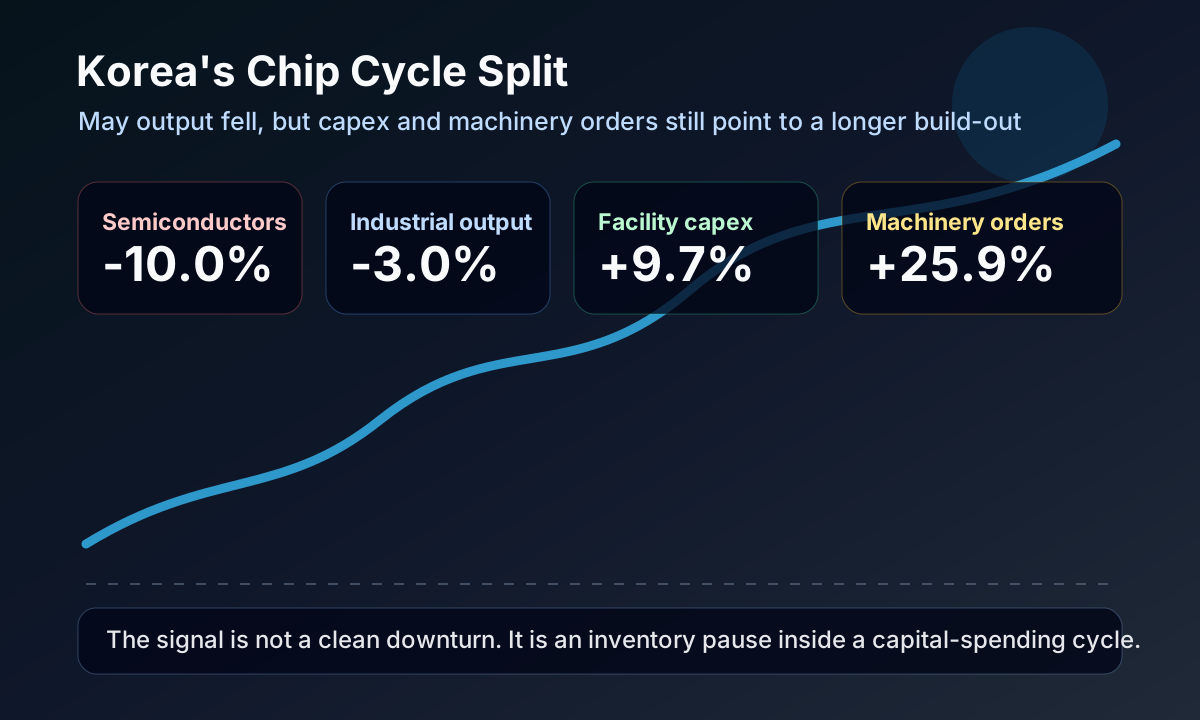
韩国2026年5月产业活动数据释放混合信号。全产业生产环比-0.3%,工业生产-3.0%,半导体生产-10.0%。但设备投资同比+9.7%,国内机械订单同比+25.9%。
已确认事实
- All-industry production: -0.3%; industrial production: -3.0%; semiconductor output: -10.0%.
- Services output: +0.1%; retail sales: +0.5%.
- Facility investment: +9.7% y/y; domestic machinery orders: +25.9% y/y.
- Manufacturing inventory: +1.5%; average utilization: 71.1%.
- Coincident index cyclical component: +0.2p; leading index cyclical component: +0.1p.
解读
当前产量与长期产能投资并不总是同步。库存、出货节奏和产品结构可能压低月度产量,而已经确定的设备预算仍会继续执行。
对创业者、B2B团队和投资者来说,重点是现金流:客户库存、产能利用率、付款条件和预算审批周期。
| Signal | Number | Operating read |
|---|---|---|
| Semiconductor output | -10.0% | Monthly production can reflect inventory and shipment timing. |
| Facility investment | +9.7% | Longer-cycle capacity spending can remain active. |
| Domestic machinery orders | +25.9% | Equipment and automation demand may lag output. |
| Manufacturing inventory | +1.5% | Inventory can pressure cash flow and payment terms. |
实用清单
• 检查客户库存和产能利用率
• 区分疲弱产量与仍在执行的资本开支
• 跟踪付款条件和PoC转化
• 把产量、库存、订单和投资放在一起看
风险
主要风险是库存继续上升并转化为价格和利润率压力。单月数据不能定义周期,但足以要求重新检查整条链条。
免责声明:本文仅供信息参考,不构成金融或投资建议。: 免责声明:本文仅供信息参考,不构成金融或投资建议。