
韩国6月CPI达3.2%:先重算成本表,再看利率决定
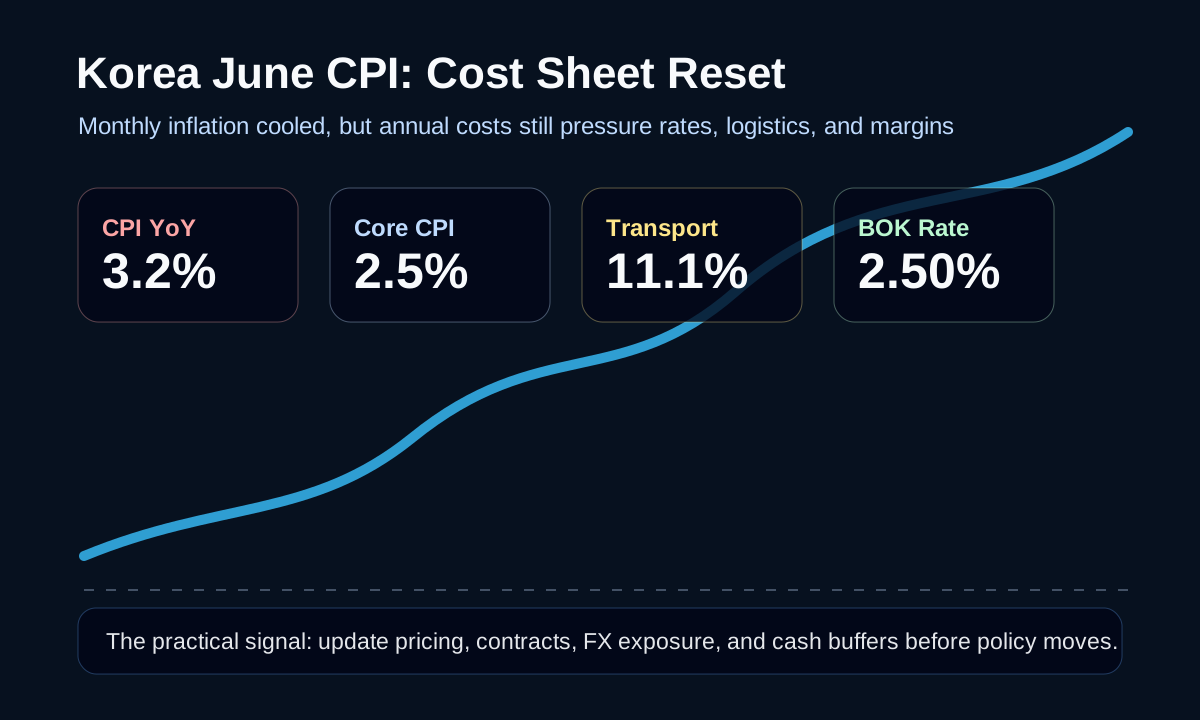
韩国6月通胀月度放缓,但运输、核心物价和美元成本仍会影响小团队现金流。 Confirmed data show headline CPI at 3.2%, core CPI at 2.5%, transport prices up 11.1%, and the Bank of Korea base rate still at 2.50%. The practical question is not only where the policy rate goes, but whether pricing, contracts, FX exposure, and cash buffers have been updated before the next negotiation.
Confirmed facts
- The Ministry of Data and Statistics reported on July 2, 2026 that Korea’s June CPI was 119.99 on a 2020=100 basis, up 0.1% from May and 3.2% from a year earlier.
- The index excluding food and energy was 115.98, unchanged on the month and up 2.5% from a year earlier.
- By expenditure category, transport prices were up 11.1% year over year. Furnishings and routine household maintenance rose 1.2% on the month, while miscellaneous goods and services rose 4.2% from a year earlier.
- The Bank of Korea left the base rate unchanged at 2.50% on May 28, 2026. Its inflation target is 2.0%.
- The Bank of Korea’s 2026 policy-setting calendar lists the next rate-setting meeting on 2026-07-16.
| Signal | Latest | Why it matters |
|---|---|---|
| Headline CPI | 3.2% | Above the BOK target |
| Monthly CPI | 0.1% | Near-term speed cooled |
| Core CPI | 2.5% | Sticky underlying pressure |
| Transport | 11.1% | Logistics and commuting pressure |
| BOK base rate | 2.50% | Hold is not easing |
Interpretation: cost decisions start before the rate decision
Separate the confirmed facts from the interpretation. The confirmed facts are that headline inflation is still above 3%, core inflation remains above the target, and transport costs are applying pressure to both households and logistics. The interpretation is that the monthly pace cooled, but the invoices already sent to operators have not reset lower.
For founders and solo operators, the first question is not whether the Bank of Korea hikes in July. It is whether the operating cost sheet is current. Delivery, contractors, overseas SaaS, ads, cloud, travel, meals, and hiring compensation do not move like the CPI basket. Some costs jump quickly, while others appear at renewal. Missing that lag is how a business keeps revenue while losing margin.
Investors should use the same lens. When inflation is above target, a rate hold is not the same thing as easing. In company results, pricing power, inventory turnover, working capital, financing costs, and churn matter more than nominal revenue growth. Domestic consumer, commerce, logistics, travel, advertising, and platform businesses need to separate nominal sales from real demand.
Market narrative signals
The market narrative is split between “monthly inflation slowed, so the peak may be behind us” and “3.2% year-over-year inflation keeps pressure on the Bank of Korea.” Financial media framed the print as the fastest inflation pace in roughly two and a half years and a live issue for the July meeting. Treat that as a signal of what markets are debating, not as a guaranteed policy path.
Checklist for small teams and investors
• Add CPI, transport costs, FX, and dollar SaaS costs as separate lines in the monthly operating dashboard.
• Test price changes that map to the cost source, such as delivery, usage, or premium features, instead of a blunt across-the-board increase.
• Avoid long fixed-price B2B contracts without a cost-reset clause.
• For investments, prioritize gross margin, cash conversion, inventory, and financing sensitivity over headline revenue growth.
• Around the July 16 rate meeting, track lending rates, deposit rates, FX, and failed payment rates together.
Risks and counterarguments
The counterargument is real. Monthly CPI rose only 0.1%, and some transport pressure could reverse if energy and geopolitical risks ease. Core CPI was flat on the month, so it would be wrong to claim that every price category is reaccelerating.
But small-team risk comes from line-item costs, not the average CPI number. Even if broad inflation cools, a 10% renewal increase in a critical service can change the P&L immediately. The practical takeaway is not to predict the rate decision perfectly. It is to update the pricing and cash-flow model before customers and suppliers do it for you.
Disclaimer: This article is for informational purposes only and is not investment advice or a recommendation to buy, sell, or hold any security, bond, property, or financial product.
Sources
- Ministry of Data and Statistics, Consumer Price Index in June 2026
- Ministry of Data and Statistics, CPI press release list
- Bank of Korea, Monetary Policy Decision, May 28 2026
- Bank of Korea, 2026 policy-setting meeting dates
- Wall Street Journal, South Korea Inflation Accelerates to 30-Month High in June