
Der US-Haeusermarkt bewegt sich wieder: Die 6-Prozent-Hypothek wird zur Kostenbasis
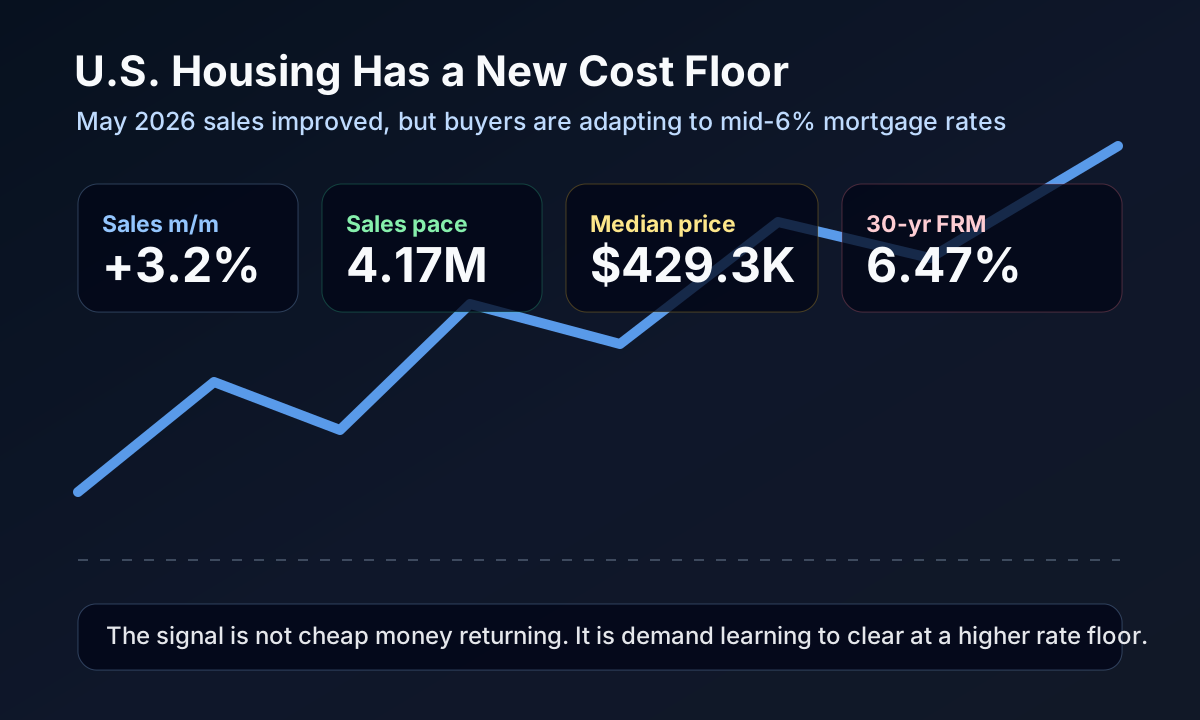
Der US-Haeusermarkt sendet kein Signal fuer billiges Geld. Er zeigt, dass ein Teil der Nachfrage beginnt, mit Hypothekenzinsen im mittleren 6-Prozent-Bereich zu kalkulieren.
Bestaetigte Fakten
- NAR reported that U.S. existing-home sales rose 3.2% month over month in May 2026.
- The May 2026 snapshot showed 4.17 million sales, a $429,300 median sales price and 4.5 months of inventory.
- NAR’s latest pending home sales signal was +3.8%, based on signed contracts.
- Freddie Mac reported a 6.47% average 30-year fixed mortgage rate as of June 18, 2026, with the 15-year fixed rate at 5.81%.
- The Federal Reserve held the federal funds target range at 3.50% to 3.75% on June 17, 2026.
Einordnung
The practical read is that housing demand is adapting to a higher financing cost floor, not that affordability has suddenly normalized. A mid-6% mortgage changes monthly cash flow, buyer qualification, local-service demand and the pricing power of companies connected to moving, repairs, insurance, lending and real-estate software.
For operators, the important split is confirmed data versus interpretation. Confirmed: sales improved, prices remained high, inventory was still finite and mortgage rates stayed far above the pandemic low-rate period. Interpretation: some households may be accepting the new rate floor because life events, income, location and limited supply are stronger than the desire to wait.
Checkliste fuer kleine Teams
• Track local demand by region or ZIP code, not only by national housing headlines.
• Watch lead quality, quote conversion and average order value in home-service categories.
• Model customer budgets with taxes, insurance, maintenance and higher debt service included.
• For SaaS and fintech teams, prioritize tools that clarify affordability, refinancing and full monthly payment risk.
Risiken und Gegenargumente
One month is not a trend. Seasonality, regional inventory, temporary rate moves and pent-up demand can distort the signal. Existing-home sales also do not capture the full new-home and rental markets. The risk is confusing transaction recovery with broad household comfort: more closings can coexist with tighter discretionary budgets.
Hinweis: Dieser Beitrag dient nur der Information und ist keine Finanz-, Immobilien- oder Anlageberatung.