
US-CPI bei 4,2%: Energiekosten neu rechnen, bevor man auf Zinssenkungen setzt
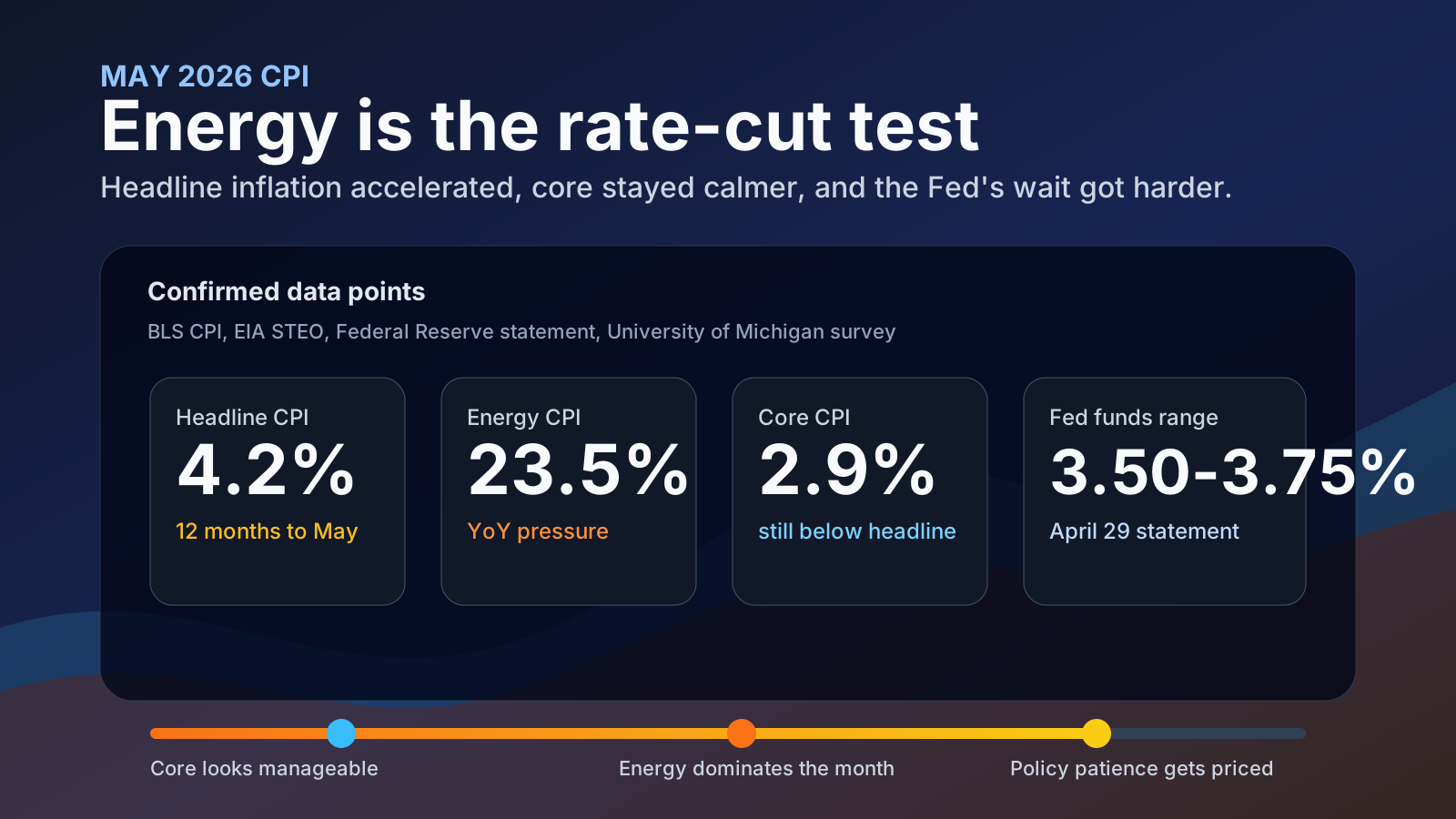
Der US-CPI fuer Mai macht die einfache Zinssenkungsstory schwieriger. Die Gesamtinflation stieg auf 4,2%, waehrend die Kernrate mit 2,9% ruhiger blieb. Der eigentliche Treiber war Energie: +23,5% gegenueber Vorjahr.
Fuer kleine Teams ist das kein abstraktes Makrothema. Energie wirkt ueber Strom, Cloud, Logistik, Reisen, Wechselkurse und Bewertungszinsen direkt auf Cashflow und Margen.
Bestaetigte Fakten
- BLS: CPI-U rose 0.5% month over month and 4.2% year over year in May.
- Core CPI rose 0.2% month over month and 2.9% year over year.
- Energy rose 3.9% month over month and 23.5% year over year; gasoline rose 7.0% and 40.5%, respectively.
- EIA says Hormuz remains effectively constrained near term and Middle Eastern output is down more than 11 million b/d.
- EIA forecasts Brent at $95/b in 2026, $79/b in 2027, and $105/b in June-July.
- The Fed kept the target range at 3.50%-3.75% on April 29; the next FOMC is June 16-17.
- University of Michigan reports one-year inflation expectations at 4.8% and long-run expectations at 3.9%.
| Signal | Number | Practical read |
|---|---|---|
| CPI headline | 4.2% YoY | Do not budget only for a quick rate-cut scenario. |
| Energy CPI | 23.5% YoY | Stress-test freight, electricity, cloud, and travel costs. |
| Gasoline CPI | 40.5% YoY | Watch consumer sentiment and wage pressure. |
| Core CPI | 2.9% YoY | The Fed can wait, but cannot ignore expectations. |
| Fed target range | 3.50%-3.75% | Cash and debt duration still matter. |
Warum es wichtig ist
Core inflation alone does not force immediate tightening, but households, wage bargaining, and sentiment react to headline CPI and gasoline.
EIA’s outlook is not just a commodity story. Aviation, logistics, electricity, food, cloud, and AI inference costs can absorb the shock with a lag.
The hurdle for rate cuts is higher. The Fed says it will assess inflation pressures and expectations, and this CPI report gives mixed evidence.
Markt- und Community-Signale
Market notes and investing communities are repeating phrases such as energy-led stagflation, delayed cuts, AI power costs, and renewed consumer-price pain. These are not factual sources; they are signals of what markets may price first.
Zweiteffekte
- Operators with dollar costs outside the U.S. may feel FX and billing-cycle pressure before CPI itself.
- Airfare, shipping, events, and travel often show lagged energy pass-through.
- AI products need a gross-margin retest because more usage does not automatically improve economics.
- High-multiple growth assets become more discount-rate sensitive when cuts move further out.
Checkliste fuer kleine Teams, Builder und Investoren
- Split the next 90 days of spend into fixed, dollar-denominated, and usage-linked costs.
- Model server, API, and ad costs under 5% and 10% adverse currency moves.
- Track inference cost, free usage, conversion, and payback period for every AI feature.
- If pricing must change, start with overage usage, expensive regions, and premium AI features.
- For portfolios, check cash, bond duration, and expensive growth exposure before chasing energy themes.
Gegenargumente und Risiken
The counterargument is real: core CPI rose only 0.2%, so the Fed may still look through a temporary supply shock. EIA also expects Brent to average $79/b in 2027. The main risk is expectations; if households treat energy inflation as a longer regime, wages, price lists, and contracts adjust slowly and persistently.
Hinweis
This article is informational economic commentary, not financial advice.
Quellen
- U.S. Bureau of Labor Statistics, Consumer Price Index Summary, May 2026
- U.S. Energy Information Administration, June 2026 Short-Term Energy Outlook press release
- U.S. Energy Information Administration, Short-Term Energy Outlook petroleum products
- Federal Reserve, FOMC statement, April 29, 2026
- Federal Reserve, FOMC minutes, April 28-29, 2026
- University of Michigan Surveys of Consumers, May 2026