
The 57,000-job warning: rebuild hiring pipelines before betting on Fed relief
A weak jobs report is not automatically a green light for risk. For small teams, the June U.S. labor data says something more practical: rebuild the hiring plan, stress-test pricing, and protect cash before assuming the Fed will rescue multiples.
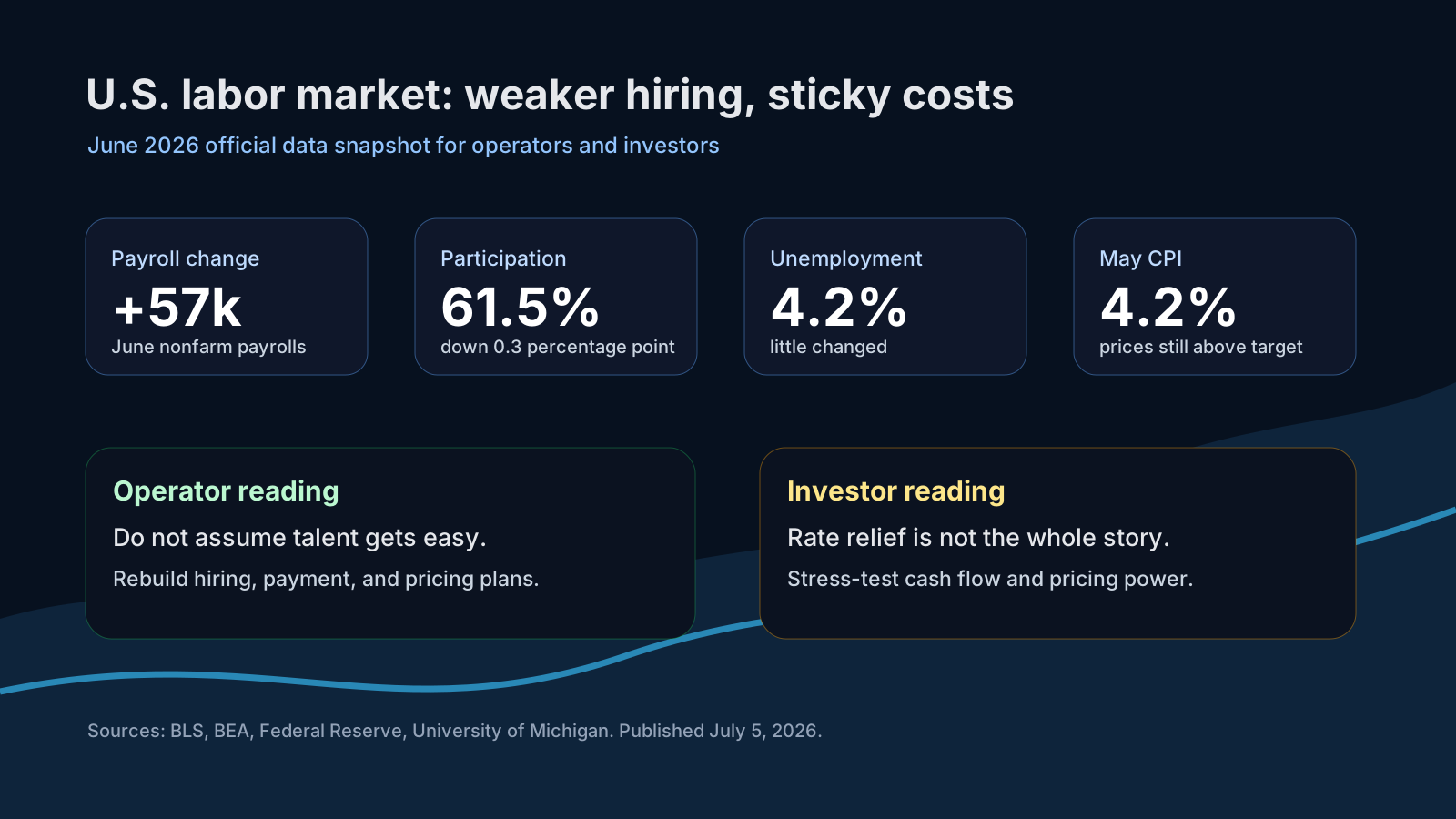
Confirmed facts: the headline is soft, but the signal is mixed
- The BLS reported that U.S. nonfarm payroll employment increased by 57,000 in June 2026, while the unemployment rate was little changed at 4.2%.
- April and May payroll gains were revised down by a combined 74,000, with April lowered to 148,000 and May lowered to 129,000.
- The labor force participation rate fell to 61.5%, down 0.3 percentage point from May. That makes the lower unemployment rate less comforting than it looks.
- Average hourly earnings for private employees rose to $37.64, up 0.3% on the month and 3.5% over the year. The latest official inflation readings were higher: May CPI was 4.2% year over year and May PCE inflation was 4.1%.
- The Fed held the federal funds target range at 3.50% to 3.75% on June 17, and the July 2 H.15 release showed an effective federal funds rate of 3.63%.
Why it matters: labor is cooling while prices are still hot
The hardest operating environment is not a clean recession. It is a slowdown where customers become cautious but wages, cloud bills, travel, insurance, and financing costs remain sticky. That is what this report points toward.
A 4.2% unemployment rate can still look healthy, but the participation drop changes the interpretation. If people leave the labor force, unemployment can fall without the hiring market becoming easier. For founders, that means time-to-hire may stay long even as demand softens.
For investors, the lesson is not simply “bad news means lower rates.” If inflation remains above target, softer hiring can arrive before policy relief. In that case, balance-sheet quality, pricing power, and free cash flow matter more than a multiple-expansion story.
Market narrative: the bad-news-is-good-news trade is incomplete
Market commentary quickly framed the report as reducing pressure on the Fed to tighten again. That may explain a one-day move in yields or growth stocks, but it is too thin for operating decisions.
A better question for builders is whether customers will keep signing, paying, and expanding at the same pace. Slower hiring affects sales cycles, churn, freelance rates, and the willingness of buyers to approve tools that are “nice to have.”
Second-order effects small teams may feel first
| B2B sales | If customers slow hiring, budget approvals often slow too. Track payment dates, not just signed contracts. |
| Hiring | A lower unemployment rate does not guarantee an easier talent market. Build contractor, part-time, and remote pipelines before the role becomes urgent. |
| Pricing | When wage growth trails headline inflation, household purchasing power is under pressure. Consumer products should test bundles and tiers before relying on discounts. |
| Portfolios | Do not buy only the rate-relief story. Compare revenue durability, cash generation, pricing power, and refinancing exposure. |
This week’s checklist
• Split the hiring plan into must-hire, can-wait, and outsourceable roles.
• Reforecast B2B cash flow by expected cash receipt date, not contract signature date.
• For teams with U.S. revenue, separate ad and pricing decisions around the July 14 CPI, July 29 FOMC, and July 30 PCE releases.
• Track churn and downgrade behavior separately for consumer subscriptions.
• For investments, prefer companies that can handle sticky rates without depending on immediate multiple expansion.
Risks and counterarguments
One jobs report is not a recession call. The BLS noted that June payroll growth was roughly in line with the prior 12-month average, and professional services, social assistance, and health care still added jobs.
The opposite mistake is treating weak payrolls as an automatic rate-cut signal. CPI at 4.2%, PCE at 4.1%, and core PCE at 3.4% are still above the Fed’s 2% goal.
The practical posture is two-sided: delay optional costs if demand cools, shorten payback periods if rates stay high, and broaden hiring channels if participation distortions keep talent scarce.
This article is for informational economic context only and is not financial advice. Any investment decision should reflect your own objectives, time horizon, and risk tolerance.
Sources
- BLS Employment Situation, June 2026
- BLS Table A-1, labor force participation
- BLS CPI, May 2026
- BEA Personal Income and Outlays, May 2026
- Federal Reserve FOMC statement, June 17 2026
- Federal Reserve H.15 selected rates, July 2 2026
- University of Michigan Surveys of Consumers, June 2026
- Kiplinger jobs report market context