
Alerta energética de la OCDE: la fiebre de IA tambien depende de los costes
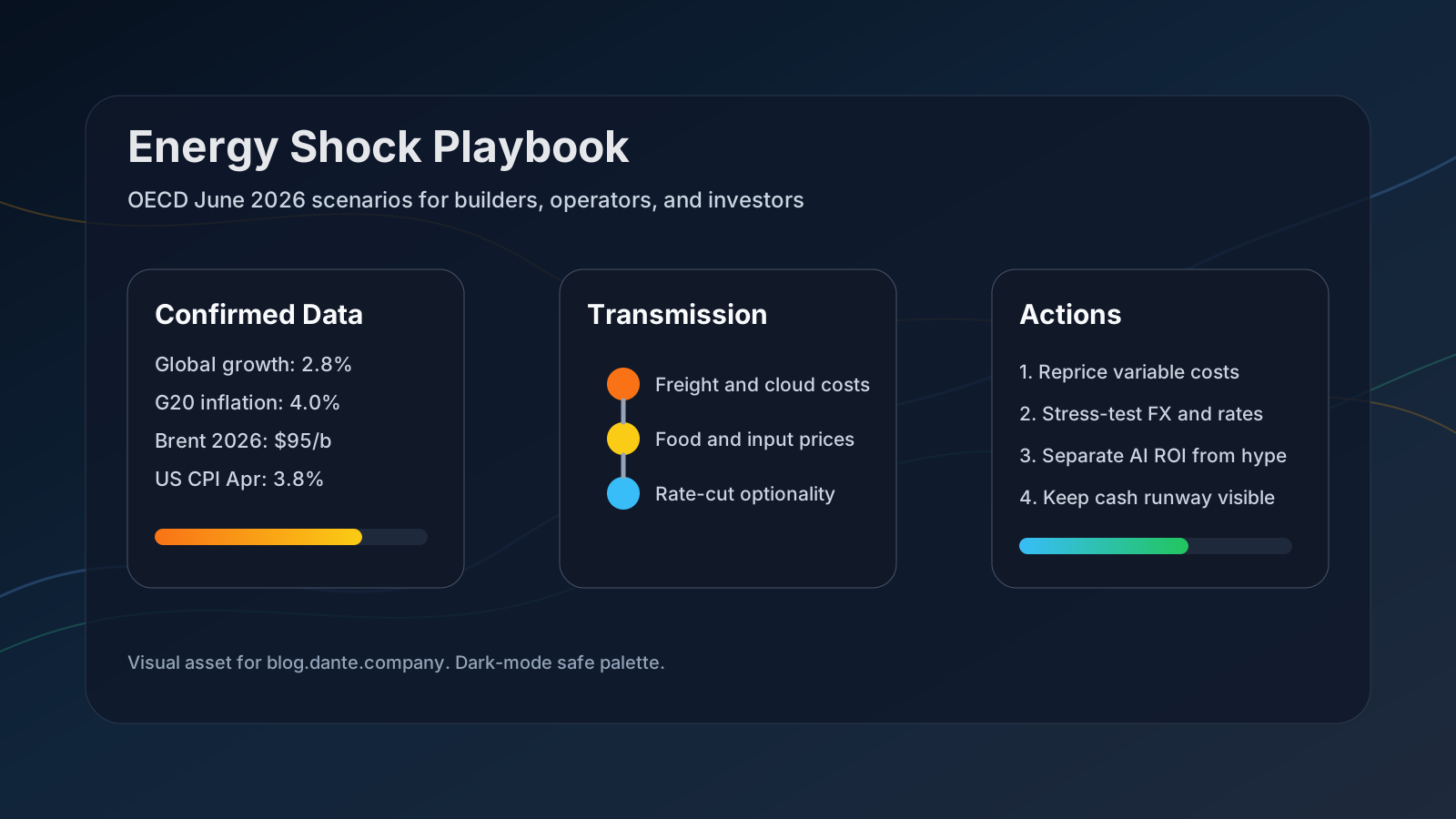
La OCDE complica el relato comodo del mercado: menor inflacion, recortes de tipos y capex de IA. En su escenario central, el crecimiento global baja a 2,8% en 2026 y la inflacion del G20 sube a 4,0%.
Para equipos pequenos importa la transmision: energia a transporte, electricidad, cloud, comida, divisas y tasas de descuento. El impacto puede llegar al flujo de caja antes que al titular macro.
Hechos confirmados
- OECD: global GDP growth 3.4% in 2025, 2.8% in 2026, 3.1% in 2027 under the time-limited disruption scenario.
- OECD: G20 inflation 3.4% in 2025, 4.0% in 2026, 3.1% in 2027 under the same scenario.
- OECD prolonged disruption scenario: global growth 2.1% in 2026 and 1.8% in 2027; G20 inflation 4.4% in both years.
- EIA May STEO: Brent crude averages $95/b in 2026 and $79/b in 2027, with around $106/b expected in May and June.
- BLS April CPI: +0.6% month over month and +3.8% year over year; energy +17.9% year over year. BEA April PCE price index: +3.8% year over year.
| Signal | Confirmed number | Operating read |
|---|---|---|
| OECD time-limited disruption | 2026 global growth 2.8%; G20 inflation 4.0% | Budget for slower demand and stickier costs. |
| OECD prolonged disruption | 2026 global growth 2.1%; 2027 growth 1.8% | Stress-test runway, credit, and high-multiple exposure. |
| EIA May STEO | Brent 2026 average $95/b; May-June around $106/b | Treat energy as an operating input, not a headline variable. |
| U.S. April inflation data | CPI and PCE price index both +3.8% year over year | Expect central banks to wait for cleaner evidence. |
Interpretacion
Los datos no implican automaticamente subidas de tipos, pero reducen el margen para recortes rapidos si la energia se filtra a precios subyacentes y expectativas.
En productos de IA, la energia pasa a ser una cuestion de unit economics: coste de inferencia, regiones cloud, electricidad y uso gratuito deben medirse junto al crecimiento.
Senales narrativas
En foros y notas de mercado aparecen con mas frecuencia expresiones como stagflation lite, retraso de recortes y costes electricos de IA. No son fuentes de hechos; son senales de que riesgos se estan probando primero.
Efectos secundarios
- Energy importers face margin pressure when fuel and FX move together.
- The U.S. has some energy-export offset, but consumers still feel gasoline, electricity, and food.
- AI infrastructure should be judged by power procurement and efficiency, not revenue growth alone.
- Small teams should monitor cloud, payment, logistics, FX, and travel costs before they become invisible margin leaks.
Lista de comprobacion
- Separate fixed costs from usage-linked costs for the next 90 days.
- Model base, 5% currency weakness, and 10% currency weakness if costs are dollar-denominated.
- Track AI inference cost per user next to conversion rate and payback period.
- Review discount-rate sensitivity and expensive growth exposure before chasing headlines.
- If pricing changes are needed, start with overage usage, high-cost regions, and premium AI features.
Riesgos
El escenario optimista existe: si energia y fertilizantes caen mas rapido, la presion inflacionaria baja. La OCDE estima que una caida adicional de 10% desde la segunda mitad de 2026 elevaria el crecimiento global de 2027 en 0,1 puntos y bajaria la inflacion en 0,3 puntos.
Aviso
Este articulo es informacion economica general y no constituye asesoramiento financiero.