
La Banque d’Angleterre marque une pause, mais le plancher des coûts monte
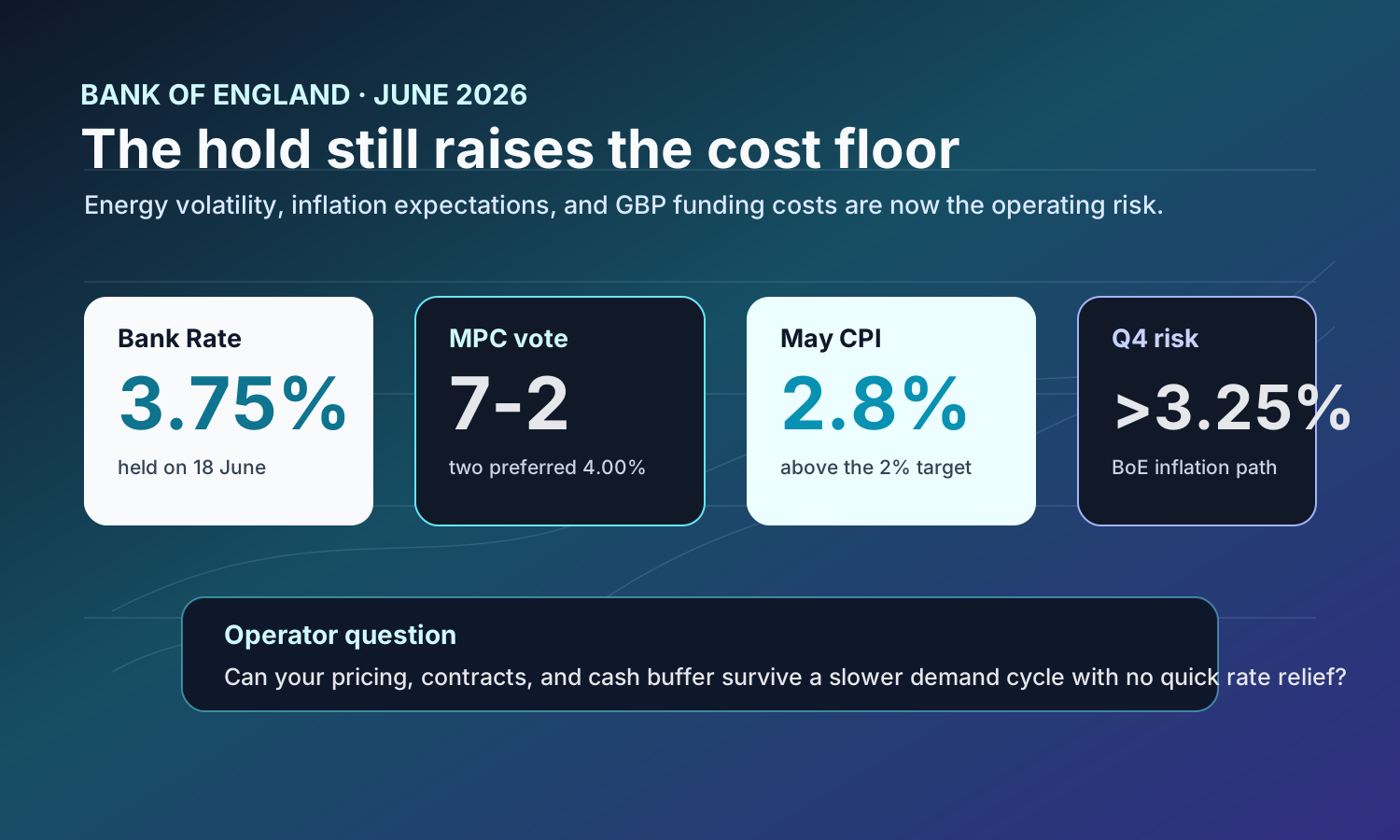
The Bank of England kept Bank Rate at 3.75% on 18 June 2026, but the minutes show a higher cost floor rather than a clean easing signal.
Teams with GBP costs, UK customers, European ads, or rate-sensitive assets should review contracts, pricing, and cash buffers without assuming quick rate cuts.
Faits confirmés
- The MPC voted 7-2 to hold Bank Rate at 3.75%; two members preferred 4.00%.
- Energy prices have fallen but remain above pre-conflict levels and volatile.
- May CPI was 2.8% year over year and CPIH was 3.0%, still above the 2% target.
- The BoE expects CPI to rise a little above 3.25% in Q4 2026.
- The unemployment rate was 4.9% for February to April 2026, with the labour market gradually loosening.
- Two-year OIS, fixed mortgage rates, and investment-grade corporate yields are above pre-conflict levels.
Table de décision
| Signal | Meaning | Action |
|---|---|---|
| Bank Rate 3.75% | No cut relief yet | Re-price borrowing, runway, and annual contracts without assumed cuts |
| 7-2 MPC vote | Some policymakers wanted tighter policy now | Treat “hold” as optionality, not a dovish pivot |
| CPI 2.8%, Q4 risk >3.25% | Inflation can re-accelerate through energy pass-through | Stress-test pricing and wage/contract escalation clauses |
| OIS +70bp, mortgage +80bp, IG yields +50bp | Financial conditions already tightened | Watch customer payment terms and refinancing windows |
Interprétation
A hold is not easing when markets remove the expected path of cuts.
Energy shocks can spread into freight, cloud bills, ads, wages, and customer budgets.
The 7-2 vote signals that the risk is higher costs for longer, not immediate relief.
Signaux de marché
The BoE Market Participants Survey median expected Bank Rate to stay unchanged for the year ahead, about 50bp tighter than the pre-conflict path that had expected cuts. That is an uncertainty premium, not simple relief.
Effets secondaires
- UK customers may delay procurement and payment before headline demand collapses.
- B2B SaaS renewals may face discounts, seat reductions, and longer payment terms.
- Teams exposed to logistics and energy should prioritize cash-conversion cycle.
- Investors should check debt maturity and refinancing spreads before dividend yield.
Liste de contrôle
•Split GBP/EUR costs by month and stress-test FX and fees by 5%, 10%, and 15%.
•Map UK and European contracts by renewal month, payment term, refund, and price clause.
•Measure ads and cloud spend by gross-margin payback.
•Remove rate-cut assumptions from hiring, contractors, and annual SaaS commitments.
•Before the 30 July BoE meeting, update CPI, wages, energy futures, OIS, and PMI.
Risques
The counterargument is real: CPI is lower than March, labour-market slack can limit second-round effects, and falling energy prices could reduce the need for another hike. Still, small teams should first make sure they can survive delayed cuts.
Avertissement
This article is informational economic and market commentary, not financial advice.
Sources
- Bank of England, June 2026 Monetary Policy Summary and Minutes
- Bank of England, Interest rates and Bank Rate latest decision
- ONS, Consumer price inflation, UK: May 2026
- ONS, Labour market overview, UK: June 2026
- ONS, GDP monthly estimate, UK: April 2026
- Federal Reserve, Summary of Economic Projections, 17 June 2026