
Stress test Fed: banche solide, credito ancora selettivo
Il test 2026 della Fed conferma la resilienza delle grandi banche, ma non significa credito facile per startup e operatori.
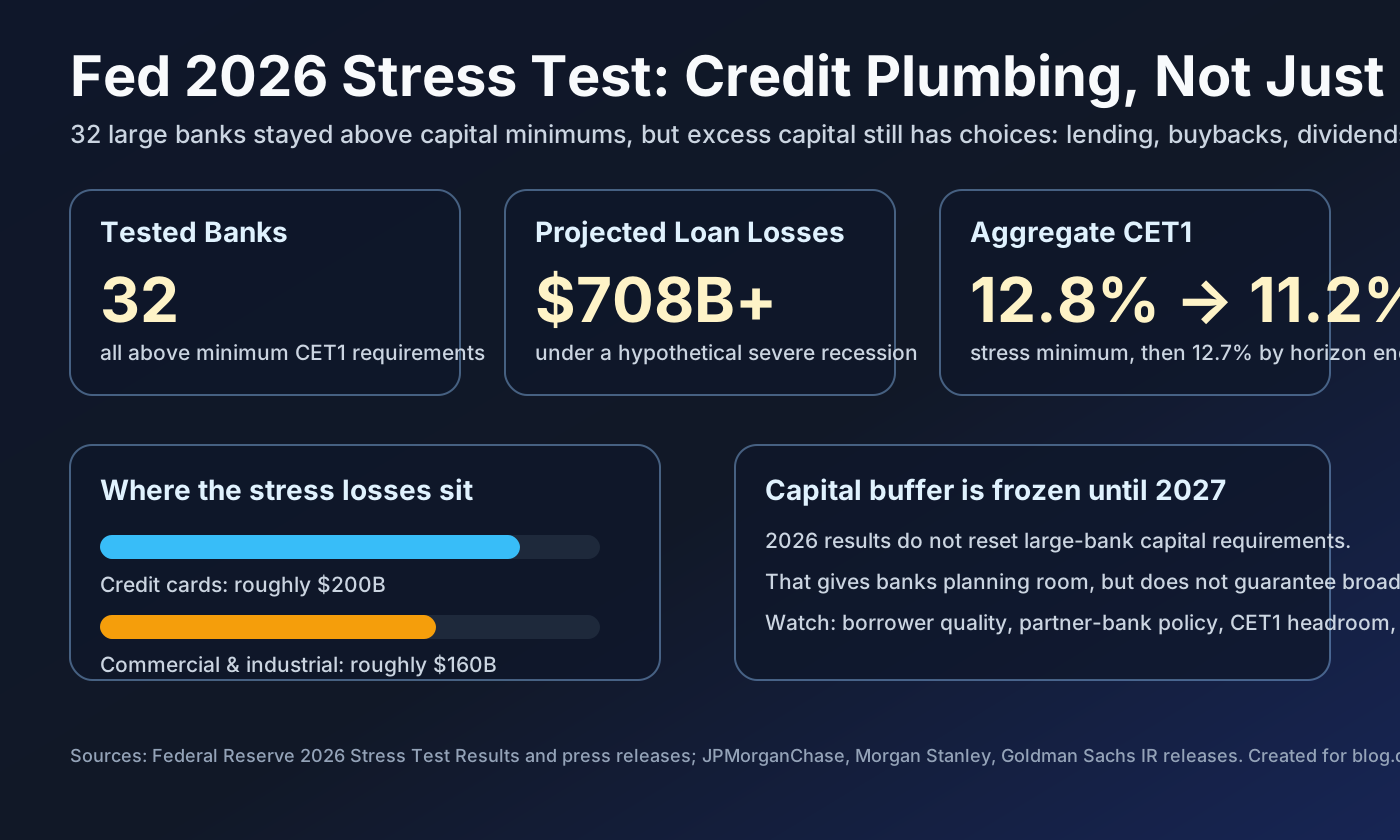
Il 24 giugno 2026 la Federal Reserve ha pubblicato i risultati dello stress test. Le 32 grandi banche testate sono rimaste sopra i requisiti minimi CET1 in uno scenario con immobili commerciali -39%, case -30% e disoccupazione al 10%.
Il rapporto Fed mostra il CET1 aggregato dal 12,8% di fine 2025 a un minimo stressato dell 11,2%. Le perdite sui prestiti superano 708 miliardi di dollari, con circa 200 miliardi da carte, 160 miliardi da C&I e 75 miliardi da CRE.
La Fed mantiene gli stress capital buffer attuali fino al 2027. Il risultato 2026 non cambia quindi i requisiti di capitale quest anno. Alcune banche hanno annunciato dividendi piu alti o buyback.
Fatti confermati
- Federal Reserve released the 2026 large-bank stress test results on June 24, 2026.
- The tested banks stayed above minimum CET1 requirements under a severe hypothetical recession.
- The scenario included commercial real estate prices down 39%, house prices down 30%, and unemployment peaking at 10%.
- Aggregate CET1 moved from 12.8% to a stressed minimum of 11.2%; projected loan losses exceeded $708 billion.
- Current stress capital buffer requirements remain in place until 2027, so 2026 results do not reset capital requirements this year.
Interpretazione
Per i fondatori la lezione e pratica: banche solide non significano denaro economico per tutti. Il capitale puo andare a buyback, dividendi, credito garantito o business a commissioni.
Segnale di mercato
La Fed mantiene gli stress capital buffer attuali fino al 2027. Il risultato 2026 non cambia quindi i requisiti di capitale quest anno. Alcune banche hanno annunciato dividendi piu alti o buyback.
Effetti di secondo ordine
I team piccoli devono preparare ricavi mensili, margini, churn, crediti, burn rate e concentrazione clienti prima di chiedere credito. Le fintech devono valutare il rischio delle banche sponsor.
Checklist
• Track the bank or sponsor bank behind cards, working-capital lines, receivables finance, and embedded-finance products.
• Prepare lender-readable monthly revenue, margin, churn, receivables, burn rate, and customer-concentration data.
• Compare covenants, collateral, guarantees, account-freeze terms, and early repayment rules before headline rates.
• For bank investments, watch CET1 headroom, stress capital buffer, card, C&I, and CRE loss sensitivity, and 2027 reset risk.
Rischi
La stabilita riduce il rischio di stretta sistemica, ma il test e ipotetico e nel 2027 possono arrivare nuovi requisiti.
Questo contenuto e informativo e non costituisce consulenza finanziaria.
Fonti
- Federal Reserve Board, 2026 stress test press release, June 24 2026
- Federal Reserve, 2026 Federal Reserve Stress Test Results PDF, June 24 2026
- Federal Reserve Board, 2026 scenarios and stress capital buffer extension, February 4 2026
- Federal Reserve, Dodd-Frank Act Stress Tests 2026 resource page
- JPMorganChase, dividend increase and $50 billion repurchase authorization, June 24 2026
- Morgan Stanley, dividend increase and $20 billion repurchase reauthorization, June 24 2026
- Goldman Sachs, CCAR 2026 results statement, June 24 2026