
Allarme energia dell’OCSE: anche il boom dell’IA deve fare i conti con i costi
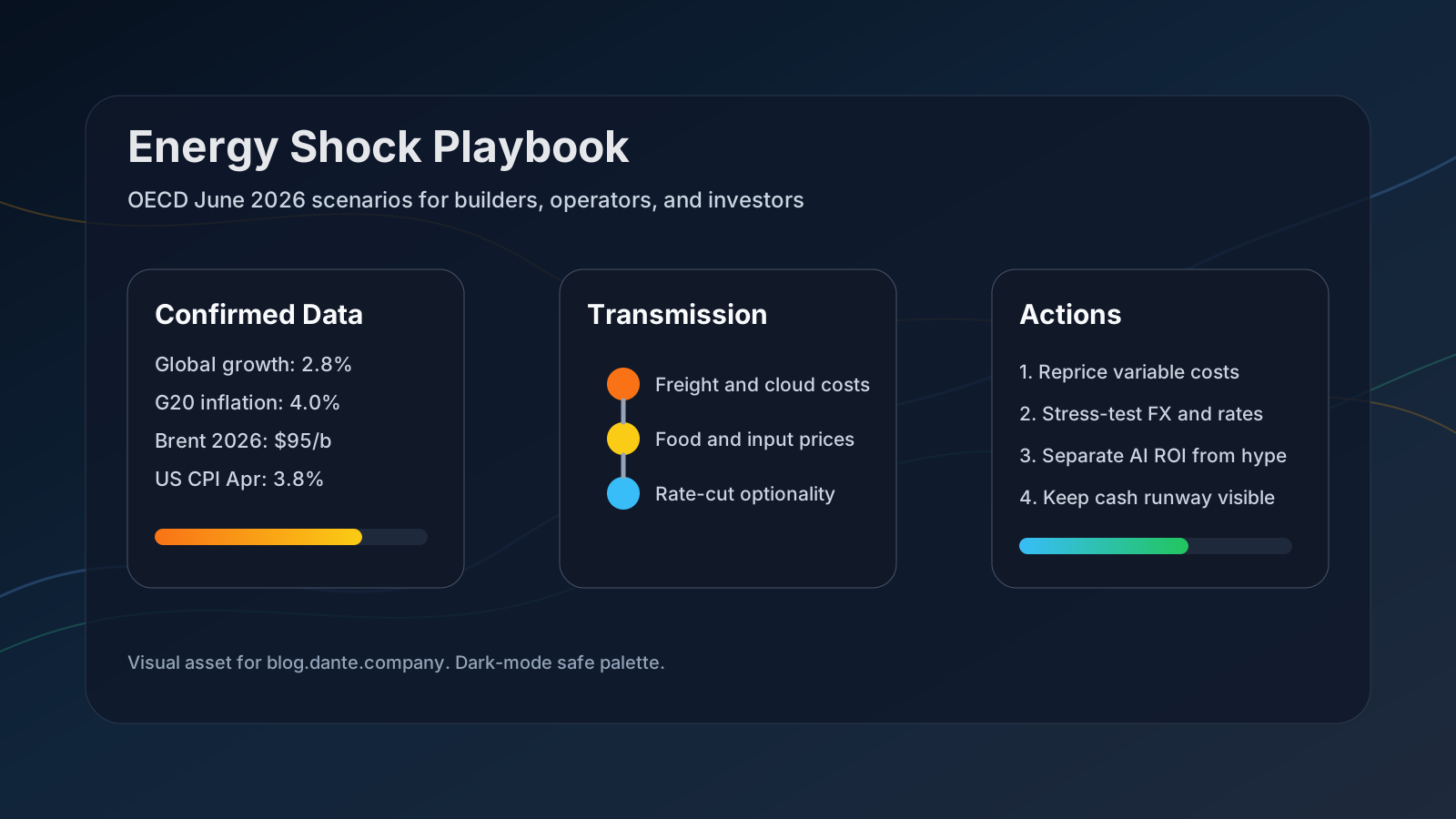
L’OCSE rende meno comoda la narrativa di mercato: inflazione in calo, tagli dei tassi e investimenti IA. Nello scenario centrale, la crescita globale scende al 2,8% nel 2026 e l’inflazione G20 sale al 4,0%.
Per piccoli team conta il canale di trasmissione: energia verso elettricita, cloud, logistica, cibo, cambio e tassi di sconto.
Fatti confermati
- OECD: global GDP growth 3.4% in 2025, 2.8% in 2026, 3.1% in 2027 under the time-limited disruption scenario.
- OECD: G20 inflation 3.4% in 2025, 4.0% in 2026, 3.1% in 2027 under the same scenario.
- OECD prolonged disruption scenario: global growth 2.1% in 2026 and 1.8% in 2027; G20 inflation 4.4% in both years.
- EIA May STEO: Brent crude averages $95/b in 2026 and $79/b in 2027, with around $106/b expected in May and June.
- BLS April CPI: +0.6% month over month and +3.8% year over year; energy +17.9% year over year. BEA April PCE price index: +3.8% year over year.
| Signal | Confirmed number | Operating read |
|---|---|---|
| OECD time-limited disruption | 2026 global growth 2.8%; G20 inflation 4.0% | Budget for slower demand and stickier costs. |
| OECD prolonged disruption | 2026 global growth 2.1%; 2027 growth 1.8% | Stress-test runway, credit, and high-multiple exposure. |
| EIA May STEO | Brent 2026 average $95/b; May-June around $106/b | Treat energy as an operating input, not a headline variable. |
| U.S. April inflation data | CPI and PCE price index both +3.8% year over year | Expect central banks to wait for cleaner evidence. |
Interpretazione
I numeri non implicano automaticamente rialzi dei tassi, ma restringono lo spazio per tagli rapidi se l’energia passa a prezzi core e aspettative.
Nei prodotti IA, l’energia diventa una questione di unit economics: costo di inferenza, region cloud, elettricita e uso gratuito vanno misurati insieme alla crescita.
Segnali narrativi
Nei forum e nelle note di mercato compaiono piu spesso stagflation lite, tagli dei tassi rinviati e costi elettrici dell’IA. Non sono fonti di fatti, ma segnali sui rischi che il mercato testa per primi.
Effetti di secondo ordine
- Energy importers face margin pressure when fuel and FX move together.
- The U.S. has some energy-export offset, but consumers still feel gasoline, electricity, and food.
- AI infrastructure should be judged by power procurement and efficiency, not revenue growth alone.
- Small teams should monitor cloud, payment, logistics, FX, and travel costs before they become invisible margin leaks.
Checklist
- Separate fixed costs from usage-linked costs for the next 90 days.
- Model base, 5% currency weakness, and 10% currency weakness if costs are dollar-denominated.
- Track AI inference cost per user next to conversion rate and payback period.
- Review discount-rate sensitivity and expensive growth exposure before chasing headlines.
- If pricing changes are needed, start with overage usage, high-cost regions, and premium AI features.
Rischi
Lo scenario ottimistico resta possibile: se energia e fertilizzanti scendono piu rapidamente, la pressione inflazionistica cala. L’OCSE stima che un ulteriore calo del 10% dalla seconda meta del 2026 alzerebbe la crescita globale 2027 di 0,1 punti e ridurrebbe l’inflazione di 0,3 punti.
Avvertenza
Questo articolo ha finalita informative e non costituisce consulenza finanziaria.