
Next.js 16.3 Turbopack: build เร็วขึ้นต้องมีแผน cache
อย่ามองเป็นแค่ performance flag แต่ต้องกำหนด cache key, restore policy, cleanup และ rollback path ให้ชัดเจน.
Next.js 16.3 Preview introduces Turbopack improvements around dev memory pressure, persistent filesystem cache for next build, experimental Rust React Compiler support, import.meta.glob, and HMR/startup work. The exact performance result depends on each application, so teams should validate it with their own route graph and CI topology.
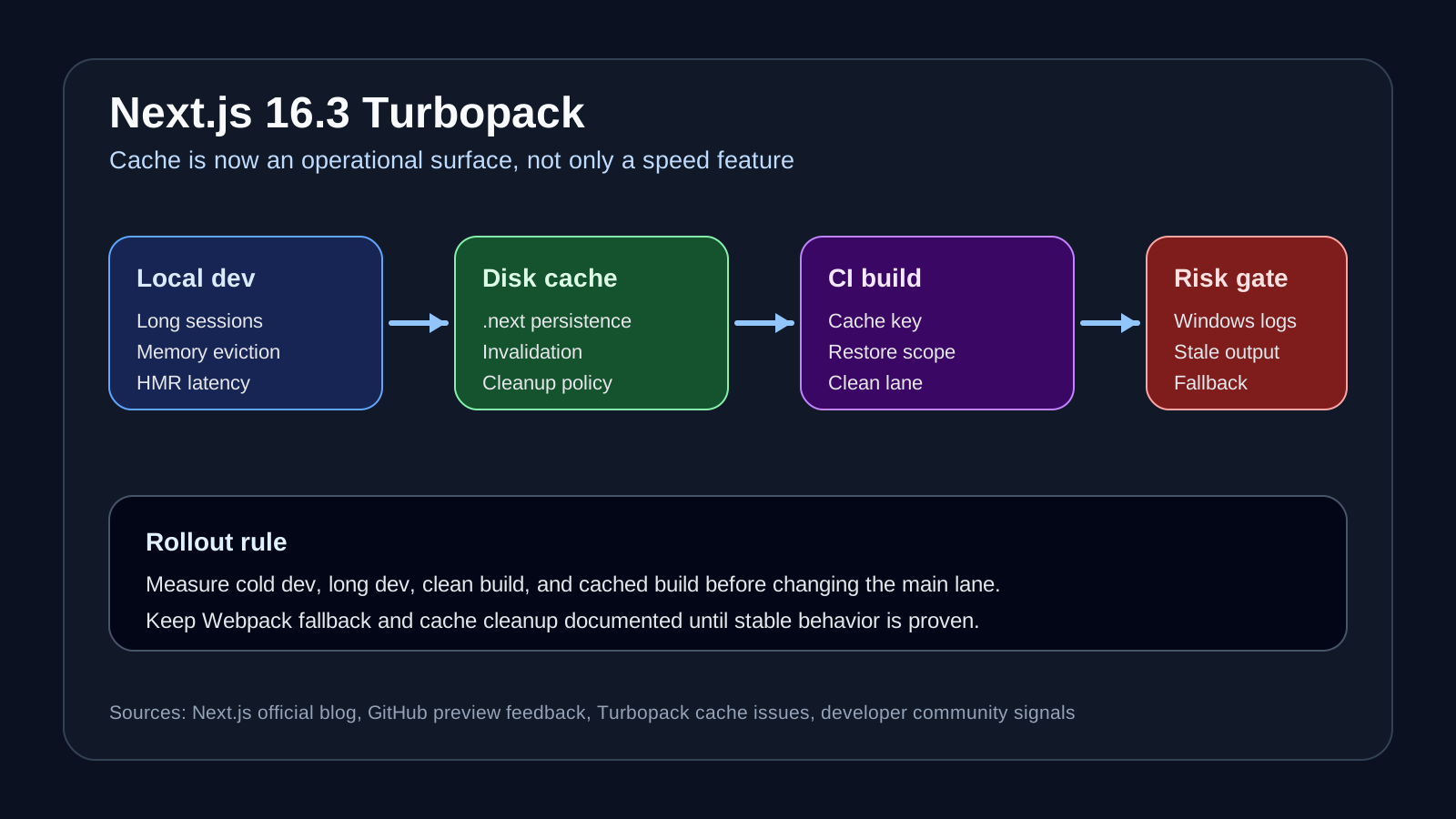
What happened
The official Next.js post says Turbopack in 16.3 focuses on compiler performance. The most practical changes are memory eviction in dev mode and filesystem cache support for builds. Both depend on cache persistence, so the rollout should be measured as an operational change rather than a generic framework upgrade.
Official examples show large reductions in dev memory after compiling many routes and shorter cached builds on selected Vercel sites. Those numbers are useful evidence, but they are not a guarantee for every app. Large dashboards, content-heavy sites, monorepos, and Windows machines can behave differently.
Why it matters
Local development now competes with IDEs, TypeScript, linters, browsers, Docker, and AI coding agents for the same memory budget. Reducing dev server growth can make the whole workstation feel more stable during long sessions.
CI gets a new tradeoff. A restored .next cache can save time, but it also becomes part of the build input. Cache keys, branch isolation, restore policy, and clean-build fallback need to be explicit.
Community signals
GitHub preview feedback shows developers want the Turbopack memory work quickly, while maintainers still point impatient teams to canary or preview rather than a low-risk stable backport.
Cache feedback and Windows issue reports show the risks teams should watch: stale output after cache restore, platform-specific persistence failures, disk growth, and the need for a Webpack fallback path.
Development and operations impact
Measure a real long-running dev session, not only startup time. Include route navigation, HMR, dynamic pages, RSS memory, CPU spikes, and .next disk size.
In CI, use conservative cache keys that include OS, Node, lockfile, package manager, Next.js version, and Turbopack flags. Keep a clean build lane for release verification.
Practical rollout checklist
The safest rollout is measurable and reversible.
• Choose one representative app, not the highest-risk production app.
• Compare cold dev, long dev session, clean build, and cached build under the same environment.
• Keep cache restore narrow during preview; avoid broad cross-branch reuse until output is trusted.
• Validate Windows separately and inspect cache persistence logs.
• Document cleanup and Webpack fallback commands before enabling the preview for the team.
Risks and counterarguments
The main risk is maturity: 16.3 is still a Preview. Teams with critical releases, custom Webpack loaders, or many Windows developers may wait for stable.
A faster cached build can hide a broken clean build. Treat Turbopack cache as an operating asset with invalidation, fallback, and monitoring, not as a magic speed switch.