
สัญญาณเตือนพลังงานจาก OECD: กระแส AI ก็ต้องเจอโครงสร้างต้นทุน
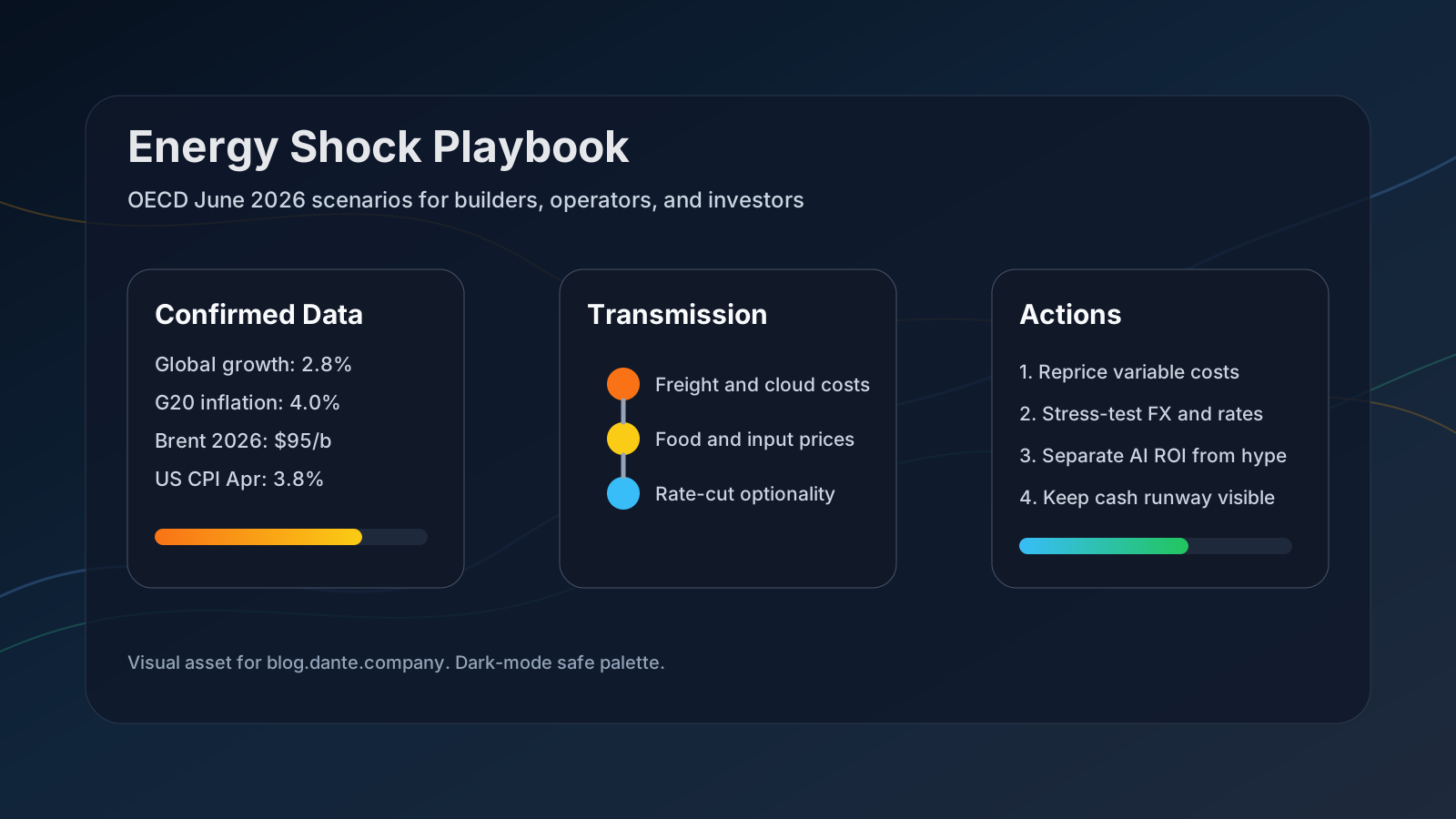
OECD ทำให้เรื่องเล่าง่ายๆ ของตลาดซับซ้อนขึ้น: เงินเฟ้อลด ดอกเบี้ยลง และการลงทุน AI ช่วยพยุงการเติบโต ในฉากทัศน์หลัก การเติบโตโลกปี 2026 ลดสู่ 2.8% และเงินเฟ้อ G20 ขึ้นสู่ 4.0%
สำหรับทีมเล็ก สิ่งสำคัญคือเส้นทางส่งผ่านจากพลังงานไปยังไฟฟ้า คลาวด์ โลจิสติกส์ อาหาร ค่าเงิน และอัตราคิดลด
ข้อเท็จจริงที่ยืนยันแล้ว
- OECD: global GDP growth 3.4% in 2025, 2.8% in 2026, 3.1% in 2027 under the time-limited disruption scenario.
- OECD: G20 inflation 3.4% in 2025, 4.0% in 2026, 3.1% in 2027 under the same scenario.
- OECD prolonged disruption scenario: global growth 2.1% in 2026 and 1.8% in 2027; G20 inflation 4.4% in both years.
- EIA May STEO: Brent crude averages $95/b in 2026 and $79/b in 2027, with around $106/b expected in May and June.
- BLS April CPI: +0.6% month over month and +3.8% year over year; energy +17.9% year over year. BEA April PCE price index: +3.8% year over year.
| Signal | Confirmed number | Operating read |
|---|---|---|
| OECD time-limited disruption | 2026 global growth 2.8%; G20 inflation 4.0% | Budget for slower demand and stickier costs. |
| OECD prolonged disruption | 2026 global growth 2.1%; 2027 growth 1.8% | Stress-test runway, credit, and high-multiple exposure. |
| EIA May STEO | Brent 2026 average $95/b; May-June around $106/b | Treat energy as an operating input, not a headline variable. |
| U.S. April inflation data | CPI and PCE price index both +3.8% year over year | Expect central banks to wait for cleaner evidence. |
การตีความ
ตัวเลขไม่ได้แปลว่าต้องขึ้นดอกเบี้ยทันที แต่ทำให้พื้นที่สำหรับลดดอกเบี้ยเร็วแคบลง หากพลังงานไหลเข้าสู่เงินเฟ้อพื้นฐานและความคาดหวัง
สำหรับผลิตภัณฑ์ AI พลังงานกลายเป็น unit economics: ต้นทุน inference, region cloud, ค่าไฟ และ usage ฟรีต้องวัดคู่กับการเติบโต
สัญญาณจากตลาด
ในฟอรัมและบันทึกตลาด มีคำอย่าง stagflation lite, การลดดอกเบี้ยล่าช้า และต้นทุนไฟฟ้าของ AI มากขึ้น สิ่งเหล่านี้ไม่ใช่แหล่งข้อเท็จจริง แต่เป็นสัญญาณว่าตลาดกำลังทดสอบความเสี่ยงใดก่อน
ผลกระทบรอบสอง
- Energy importers face margin pressure when fuel and FX move together.
- The U.S. has some energy-export offset, but consumers still feel gasoline, electricity, and food.
- AI infrastructure should be judged by power procurement and efficiency, not revenue growth alone.
- Small teams should monitor cloud, payment, logistics, FX, and travel costs before they become invisible margin leaks.
เช็กลิสต์
- Separate fixed costs from usage-linked costs for the next 90 days.
- Model base, 5% currency weakness, and 10% currency weakness if costs are dollar-denominated.
- Track AI inference cost per user next to conversion rate and payback period.
- Review discount-rate sensitivity and expensive growth exposure before chasing headlines.
- If pricing changes are needed, start with overage usage, high-cost regions, and premium AI features.
ความเสี่ยง
ฉากทัศน์เชิงบวกยังเป็นไปได้ หากราคาพลังงานและปุ๋ยลดเร็วกว่าคาด แรงกดดันเงินเฟ้อจะลดลง OECD ประเมินว่าการลดลงเพิ่มอีก 10% ตั้งแต่ครึ่งหลังปี 2026 จะเพิ่มการเติบโตโลกปี 2027 ราว 0.1 จุด และลดเงินเฟ้อ 0.3 จุด
ข้อจำกัดความรับผิด
บทความนี้เป็นข้อมูลเชิงเศรษฐกิจเท่านั้น ไม่ใช่คำแนะนำการลงทุน