
Cảnh báo năng lượng của OECD: làn sóng AI vẫn phải tôn trọng cấu trúc chi phí
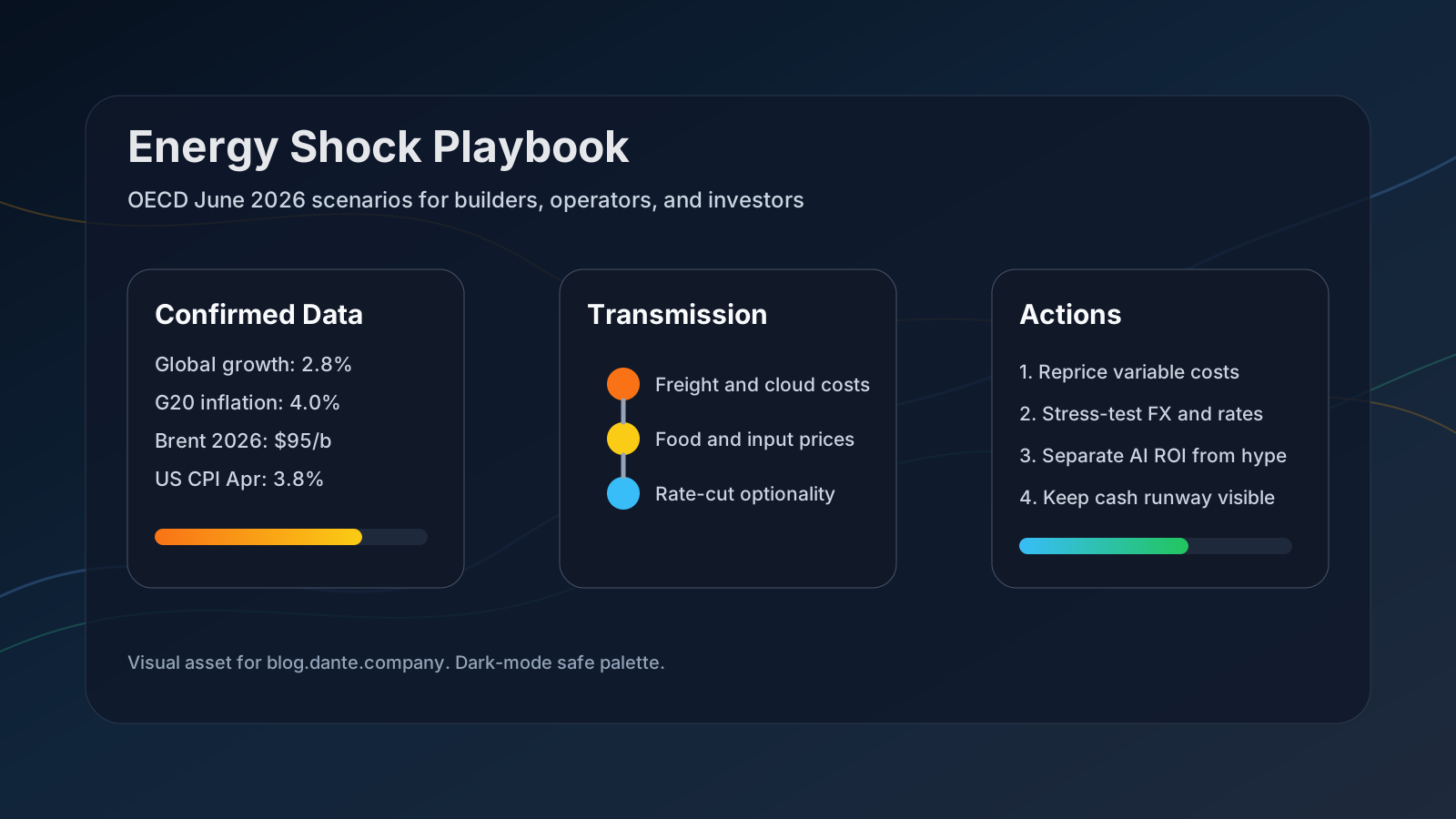
OECD làm câu chuyện thị trường bớt đơn giản: lạm phát hạ, lãi suất giảm và đầu tư AI tiếp tục nâng tăng trưởng. Trong kịch bản chính, tăng trưởng toàn cầu 2026 giảm còn 2,8%, còn lạm phát G20 lên 4,0%.
Với nhóm nhỏ, điều quan trọng là đường truyền chi phí: năng lượng sang điện, cloud, logistics, thực phẩm, tỷ giá và tỷ lệ chiết khấu.
Sự kiện đã xác nhận
- OECD: global GDP growth 3.4% in 2025, 2.8% in 2026, 3.1% in 2027 under the time-limited disruption scenario.
- OECD: G20 inflation 3.4% in 2025, 4.0% in 2026, 3.1% in 2027 under the same scenario.
- OECD prolonged disruption scenario: global growth 2.1% in 2026 and 1.8% in 2027; G20 inflation 4.4% in both years.
- EIA May STEO: Brent crude averages $95/b in 2026 and $79/b in 2027, with around $106/b expected in May and June.
- BLS April CPI: +0.6% month over month and +3.8% year over year; energy +17.9% year over year. BEA April PCE price index: +3.8% year over year.
| Signal | Confirmed number | Operating read |
|---|---|---|
| OECD time-limited disruption | 2026 global growth 2.8%; G20 inflation 4.0% | Budget for slower demand and stickier costs. |
| OECD prolonged disruption | 2026 global growth 2.1%; 2027 growth 1.8% | Stress-test runway, credit, and high-multiple exposure. |
| EIA May STEO | Brent 2026 average $95/b; May-June around $106/b | Treat energy as an operating input, not a headline variable. |
| U.S. April inflation data | CPI and PCE price index both +3.8% year over year | Expect central banks to wait for cleaner evidence. |
Diễn giải
Các số liệu không tự động có nghĩa là tăng lãi suất, nhưng làm hẹp dư địa cắt giảm nhanh nếu năng lượng lan sang lạm phát lõi và kỳ vọng.
Với sản phẩm AI, năng lượng trở thành bài toán unit economics: chi phí inference, region cloud, điện và free usage phải được đo cùng tăng trưởng.
Tín hiệu thị trường
Trên diễn đàn và ghi chú thị trường, các cụm như stagflation lite, trì hoãn cắt lãi suất và chi phí điện cho AI xuất hiện nhiều hơn. Đây không phải nguồn sự kiện, mà là tín hiệu ưu tiên rủi ro.
Tác động bậc hai
- Energy importers face margin pressure when fuel and FX move together.
- The U.S. has some energy-export offset, but consumers still feel gasoline, electricity, and food.
- AI infrastructure should be judged by power procurement and efficiency, not revenue growth alone.
- Small teams should monitor cloud, payment, logistics, FX, and travel costs before they become invisible margin leaks.
Checklist
- Separate fixed costs from usage-linked costs for the next 90 days.
- Model base, 5% currency weakness, and 10% currency weakness if costs are dollar-denominated.
- Track AI inference cost per user next to conversion rate and payback period.
- Review discount-rate sensitivity and expensive growth exposure before chasing headlines.
- If pricing changes are needed, start with overage usage, high-cost regions, and premium AI features.
Rủi ro
Kịch bản lạc quan vẫn có thể xảy ra: nếu năng lượng và phân bón giảm nhanh hơn, áp lực lạm phát giảm. OECD ước tính mức giảm thêm 10% từ nửa cuối 2026 sẽ nâng tăng trưởng toàn cầu 2027 thêm 0,1 điểm và giảm lạm phát 0,3 điểm.
Miễn trừ
Bài viết này chỉ nhằm cung cấp thông tin và không phải lời khuyên tài chính.