
Homebrew 6.0 moves developer supply chain security toward explicit trust
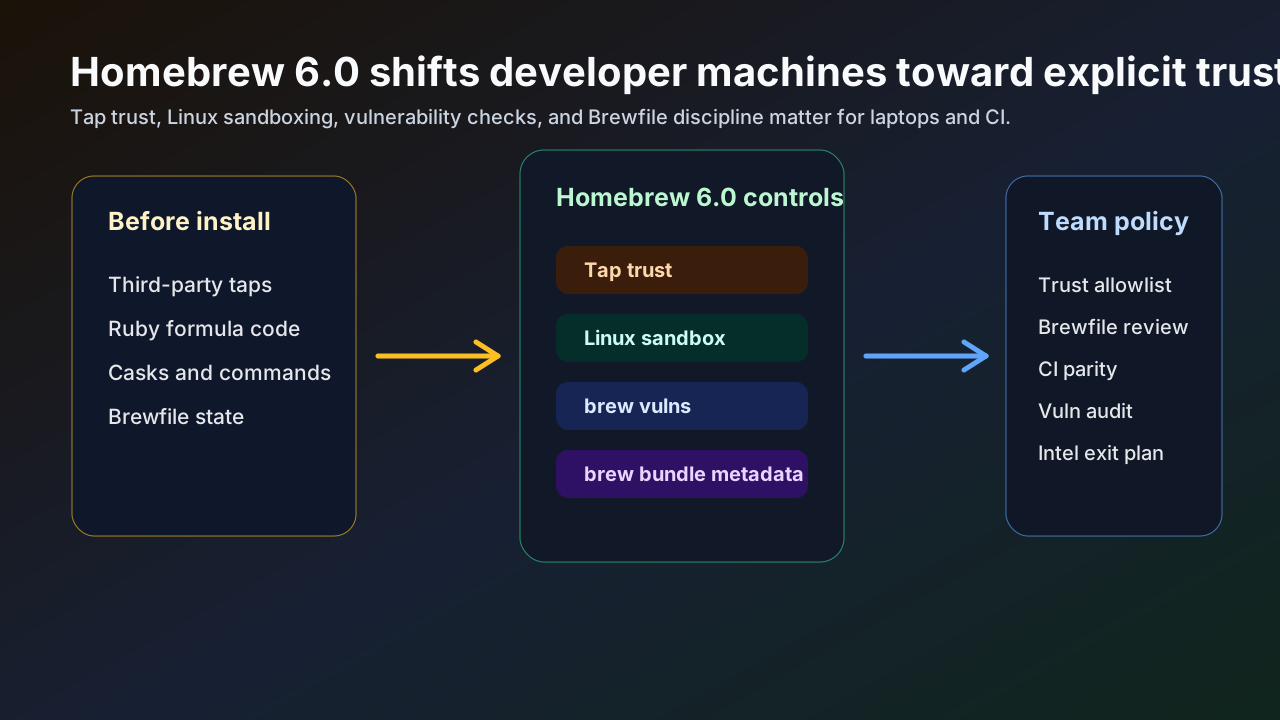
Developer laptops are often treated like personal machines. In practice, they are the first mile of the software supply chain: source code, secrets, deploy tokens, internal APIs, and build tooling meet there. Homebrew 6.0 matters because it makes trust in third-party taps and build execution more explicit.
Supply-chain read
The practical message of Homebrew 6.0 is simple: developer environment installation is a supply chain event. Tap trust belongs in code review and automation policy, and laptops and CI should share the same Brewfile, trust rules, and vulnerability check routine.
What happened
Homebrew released 6.0.0 on June 11, 2026. The official announcement highlights a new tap trust security mechanism, a faster and smaller default internal JSON API, sandboxing on Linux, better survey-informed defaults, many brew bundle improvements, performance work, and initial support for macOS 27 Golden Gate.
Tap trust requires third-party taps, tap-qualified formulae, and casks to be explicitly trusted before their code is evaluated or run. The Homebrew docs explain the reason directly: a third-party tap can contain arbitrary unsandboxed Ruby code, while official Homebrew taps remain trusted by default.
The Register also notes that Homebrew 6.0 adds Linux build sandboxing to align more closely with macOS sandboxing, and that the new brew vulns command checks installed packages against OSV for known vulnerabilities.
Why working developers should care
A Homebrew tap is not just a list of package names. The docs describe taps as repositories of formulae, casks, and external commands that Homebrew tracks, updates, and installs from. Adding a third-party tap expands the set of Ruby code that can run on a developer machine.
This is not only an endpoint security concern. Developers run brew install, brew upgrade, and brew bundle; CI runners often do the same on macOS and Linux. If trust state and Brewfiles are not reviewed, teams lose track of which external repository code executed during bootstrap.
The change is even more relevant when AI coding agents and automation can run shell commands. If an agent suggests brew install, the team needs to understand whether the command uses official taps, third-party taps, cask uninstall hooks, or external commands.
Community signal
The Hacker News discussion and Register comments show predictable friction around the Intel Mac support timeline and the tap trust UX. Security improvements are not received as pure upside when they affect old machines and bootstrap scripts.
A Homebrew discussion about uninstalling casks from untrusted taps illustrates the lifecycle issue. Trust decisions affect install, uninstall, bundle dump, cleanup, and automation, not just the first brew tap command.
Those community posts are narrative signals, not factual sources. The useful lesson is operational: teams need to document who decides trust, where that decision is recorded, and how automation follows it.
Development and operations impact
First, the Brewfile becomes a policy file. Homebrew Bundle can describe formulae, casks, taps, VS Code extensions, Go packages, Cargo packages, uv tools, Flatpak packages, krew plugins, and services. Reviewing Brewfiles is now supply chain review, not just environment convenience.
Second, Linux CI deserves a canary. If your runners build from source through Homebrew, sandboxing can change assumptions around file writes, network access, cache paths, or native dependency builds.
Third, brew vulns gives teams a lightweight workstation signal. It should not replace endpoint security or dependency scanning, but it fits well in bootstrap checks and periodic developer environment audits.
Fourth, the Intel Mac support timeline affects runner strategy. Teams still using old Intel Mac minis as build machines should plan replacement, self-maintained taps, or runner migration before the support cliff arrives.
A practical checklist
1. Collect brew tap output and classify official, internal, and third-party taps.
2. Prefer trusting specific formulae, casks, or commands over trusting an entire tap when possible.
3. Put Brewfiles under CODEOWNERS and pull request review.
4. Verify CI bootstrap scripts do not hang on trust prompts after Homebrew 6.0.
5. Add brew vulns to bootstrap or periodic checks, but keep its output separate from dependency scanner policy.
6. Canary Linux runners that build native packages under Homebrew sandboxing.
7. Create an Intel Mac runner and developer hardware exit plan if your team still depends on them.
Risks and counterarguments
The first risk is approval fatigue. If trust prompts appear too often, developers will approve by habit. A team allowlist and reviewed Brewfile are stronger than ad hoc clicks.
The second risk is automation breakage. Bootstrap scripts that relied on implicit tap loading may stop. That is painful, but it exposes a trust decision that was already there.
A fair counterargument is that many individuals only use official taps. For them, the visible change may be small. In company environments, internal taps, CI, casks, and AI agents running shell commands make Homebrew 6.0 much more important.
Team policy map
| Area | Decision | Why |
|---|---|---|
| Taps | Official, internal, or third-party | A tap can execute code on developer machines. |
| Brewfile | Reviewed environment state | Bootstrap is part of supply chain control. |
| Linux CI | Sandbox canary | Source builds may assume filesystem or network access. |
| Audit | brew vulns plus scanner policy | Workstation risk needs a lightweight signal. |
Homebrew 6.0 adoption checklist
• Collect brew tap output and classify official, internal, and third-party taps.