
Next.js 16.2 made agent-ready debugging a framework concern
If you read Next.js 16.2 as only another framework release, you miss the more durable signal. The release is not just about React Canary support, Turbopack improvements, Subresource Integrity, or adapter paths. The more practical shift is that Next.js is starting to define how AI coding agents should read, run, and verify a real application.
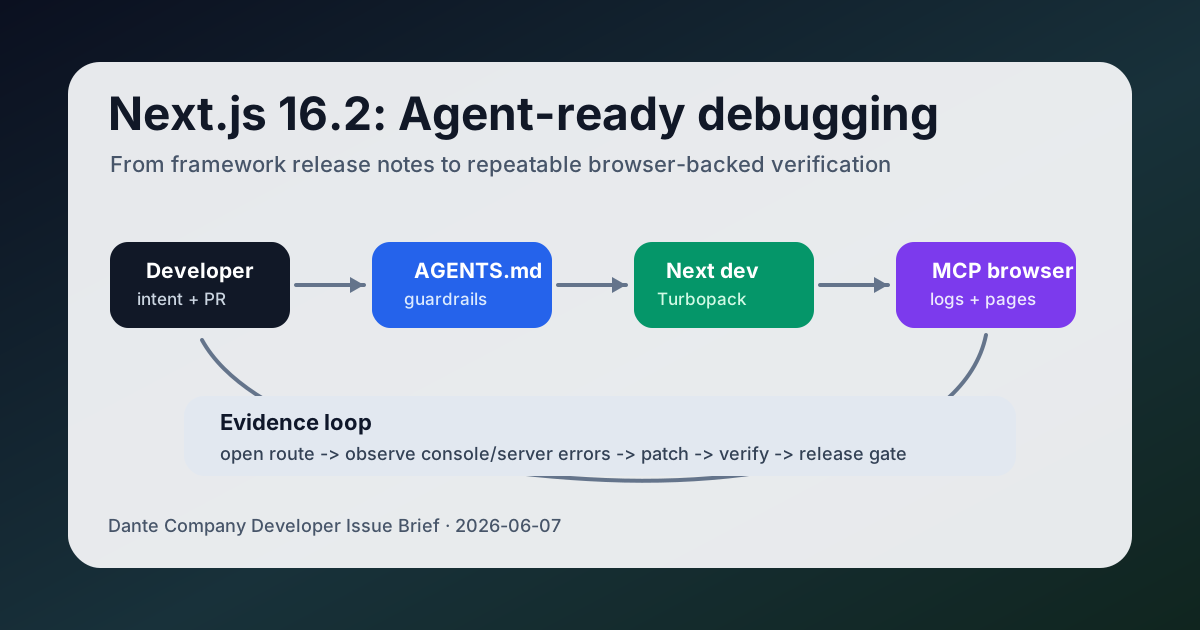
That matters because most failed agent workflows are not caused by a weak prompt. They fail because the agent cannot see the right runtime evidence. It edits code, passes a type check, and still misses a broken route, a hydration warning, a server action failure, or a cache behavior that only appears in the browser. The 16.2 AI improvements put names on that missing layer: AGENTS.md, browser log forwarding, and the next-browser MCP flow.
What changed
The official Next.js 16.2 notes cover several production-relevant changes: React Canary support, Subresource Integrity, Node.js runtime support for after, stabilized Turbopack file system cache work, adapter path progress, and experimental forbidden and unauthorized helpers. The companion AI improvements post reframes the developer experience around tools that can inspect the running app, not just the source tree.
Recent InfoQ coverage brought this back into the weekly developer conversation, and community threads around Next.js 16 highlight two simultaneous feelings: excitement about faster, more integrated workflows and anxiety about migration friction, cache behavior, and runtime differences. Community discussion is useful here as a signal of where teams are confused or cautious; the factual claims should still come from the official release notes and documentation.
Why this matters for working teams
A modern Next.js app is not a static pile of React components. Routing, Server Components, middleware, streaming, image optimization, cache policy, runtime selection, and platform adapters all participate in the behavior users see. AI coding agents need a path from project instructions to runtime observation. Otherwise they can produce plausible patches that are expensive for humans to unwind in review.
AGENTS.md should therefore be treated as an operational contract, not a decorative documentation file. It should tell an agent how to install, run, test, preview, and stop. It should define protected areas such as auth, billing, migrations, secrets, and production data. It should also name the pages and flows that must be opened in a browser before the work is considered done.
Expected development and operations impact
- Reviews become evidence-driven. A PR should show which route was opened, which console or server errors were observed, and which verification command passed.
- Onboarding docs become executable guardrails. The same instructions that help a new teammate should also constrain an agent.
- Build cache becomes part of risk management. Turbopack file system cache can improve iteration, but teams still need CI parity and cache-busting rules.
- Deployment targets need sharper contracts. Adapter progress increases options, while also making runtime and middleware verification more important.
Practical checklist
- Create or update
AGENTS.mdwith install, dev, build, test, lint, and preview commands. - Document which files agents may edit and which areas require explicit human review.
- Pick three representative user flows and require browser-backed verification for each high-risk change.
- Separate the upgrade into feature flags or branches: React Canary, Turbopack cache, PPR, adapters, and MCP/browser tooling should be validated independently.
- Add a PR template field for agent usage, observed browser URL, console/server errors, and remaining known risk.
Risks and counterarguments
Not every team should upgrade immediately. React Canary and experimental APIs may not fit a conservative release policy. Browser log forwarding and MCP also raise questions about permissions, internal URLs, and the risk of automation presenting a false sense of confidence. Treat these tools as verification aids, not as substitutes for review, monitoring, and rollback planning.
Bottom line
Next.js 16.2 points toward a framework world where agent-readiness is part of developer experience. The teams that benefit first will not be the ones with the flashiest prompts. They will be the ones that make their applications observable, their instructions explicit, and their browser verification loops repeatable.