
Maximizing Remote Work Productivity: Time Management for Digital Nomads
My first month as a nomad, my productivity hit rock bottom. Bali's beach was so beautiful that I'd go out for lunch and end up taking surfing lessons, or open my laptop at a café only to scroll Instagram for 2 hours... I didn't realize working freely would be this hard. After about a year of trial and error, I found my own methods.
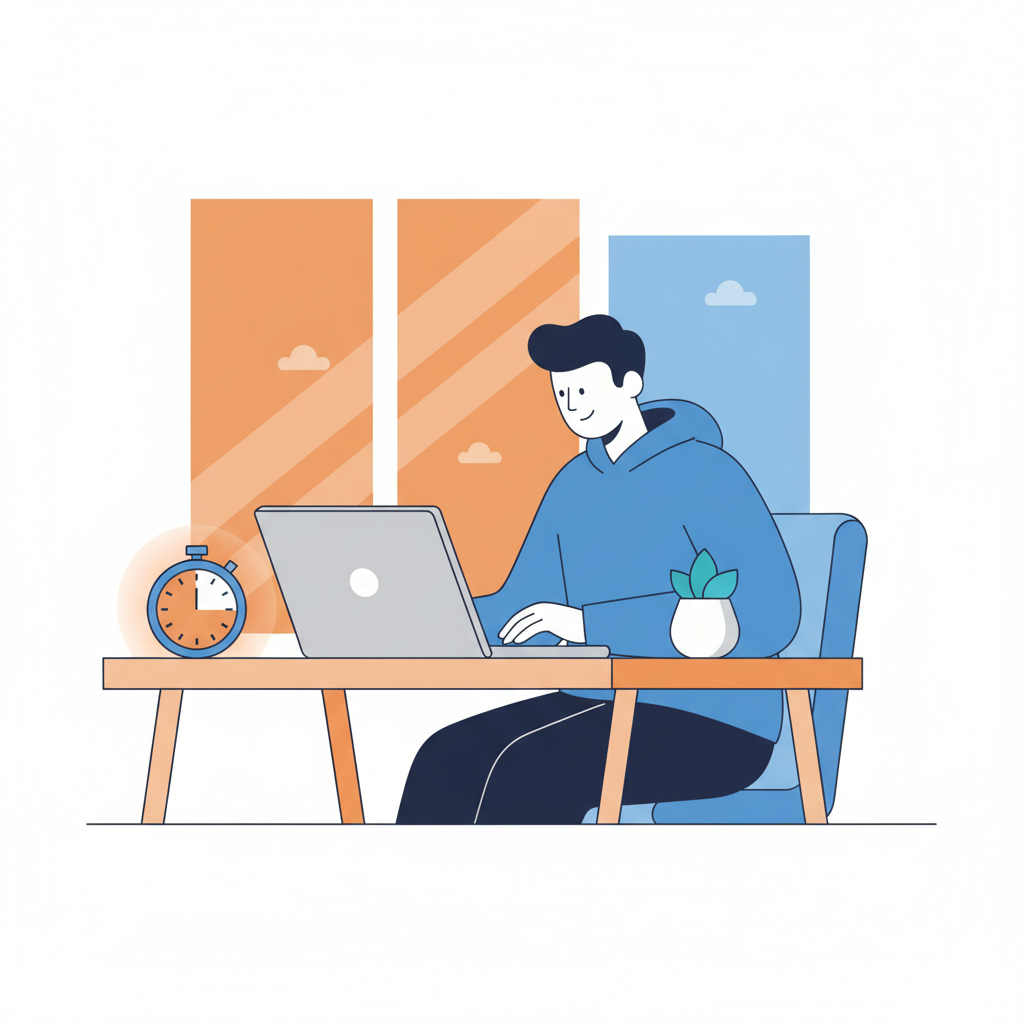
You Can't Work Just Anywhere
There's a trap in "you can work from anywhere." If you actually work just anywhere, you can't focus. Those Instagram-worthy photos of laptops on beach café tables look pretty, but in reality – sand gets everywhere, the screen's invisible in sunlight, WiFi is slow... work doesn't happen.
I ended up alternating between cafés and coworking spaces. I focus better in the morning, so mornings are for important work at coworking, then afternoons I move to a café for lighter tasks. I try not to work in my accommodation. The bed temptation is too strong.
Work environment conditions matter too. Internet needs at least 10Mbps, uncomfortable chairs mean you can't sit for 2 hours, too noisy and you can't focus. When I arrive in a new city, the first thing I do is secure two or three places where I can work.
Time Management: What Worked for Me
I initially dismissed the Pomodoro Technique – 25 minutes work, 5 minutes rest. "25 minutes? When I focus, I can go for hours," I thought, but when I actually measured my focus time, I couldn't even last 30 minutes. So I tried it, and surprisingly it worked.
Setting a 25-minute timer creates awareness of "I need to finish within this time." During the 5-minute break, I actually get up from my seat to stretch or get water. After 4 rounds, I take about 30 minutes to go outside. Doing this all day gets me 6-8 pomodoros, and it feels like more work than sitting for 8 hours before.
I also use "Eat the Frog." The task I least want to do, the hardest one – I do it first thing in the morning. If I postpone it, it lingers in my mind all day and interferes with other work. Finishing it in the morning makes the rest of the day easier.
Routine Creates Freedom
Just because nomad life is free doesn't mean you can live without routine. Ironically, maintaining a free lifestyle requires consistent routine.
I wake up at 7 AM, stretch, eat breakfast at 8, and start work at 9. Lunch at 1, work usually ends at 5 or 6. No laptop on weekends. I initially tried living flexibly, but this regular pattern ended up being most productive.
This isn't exactly the same every day. Some days I surf in the morning and work from the afternoon, or take a day off at a nice spot. But having a basic framework makes it easy to get back on track.
Things That Kill Focus
Social media was the biggest problem. The number of times I meant to check Instagram "just for a second" and lost an hour is countless. So during work, I put my phone in my bag. I also installed Freedom on my laptop to block Twitter, Instagram, and YouTube during work hours.
I turn off Slack and email notifications too. There's no need to check in real-time. I batch-check during pomodoro breaks or lunch. At first I worried "what if I miss urgent messages?" but truly urgent things are rare.
Watch Out for Burnout
Paradoxically, working while traveling makes you work more. Thinking "I'm traveling so I should work harder," I'd work weekends and nights... After about 6 months, I was completely exhausted.
Since then, I consciously rest. Sunday is a real rest day. Sometimes I don't work for 2-3 consecutive days and just sightsee. Staying longer in one place and living slowly is important too. Moving to a new city every week makes travel itself exhausting.
Conclusion
Maintaining productivity while living as a nomad isn't easy. But by finding a routine that fits you, eliminating distractions, and resting properly, it's definitely possible. Don't try to create a perfect system – aim for a routine you can follow about 70% of the time. That's realistic.