
ISM at 54: U.S. manufacturing is recovering, but prices and lead times hit margins first
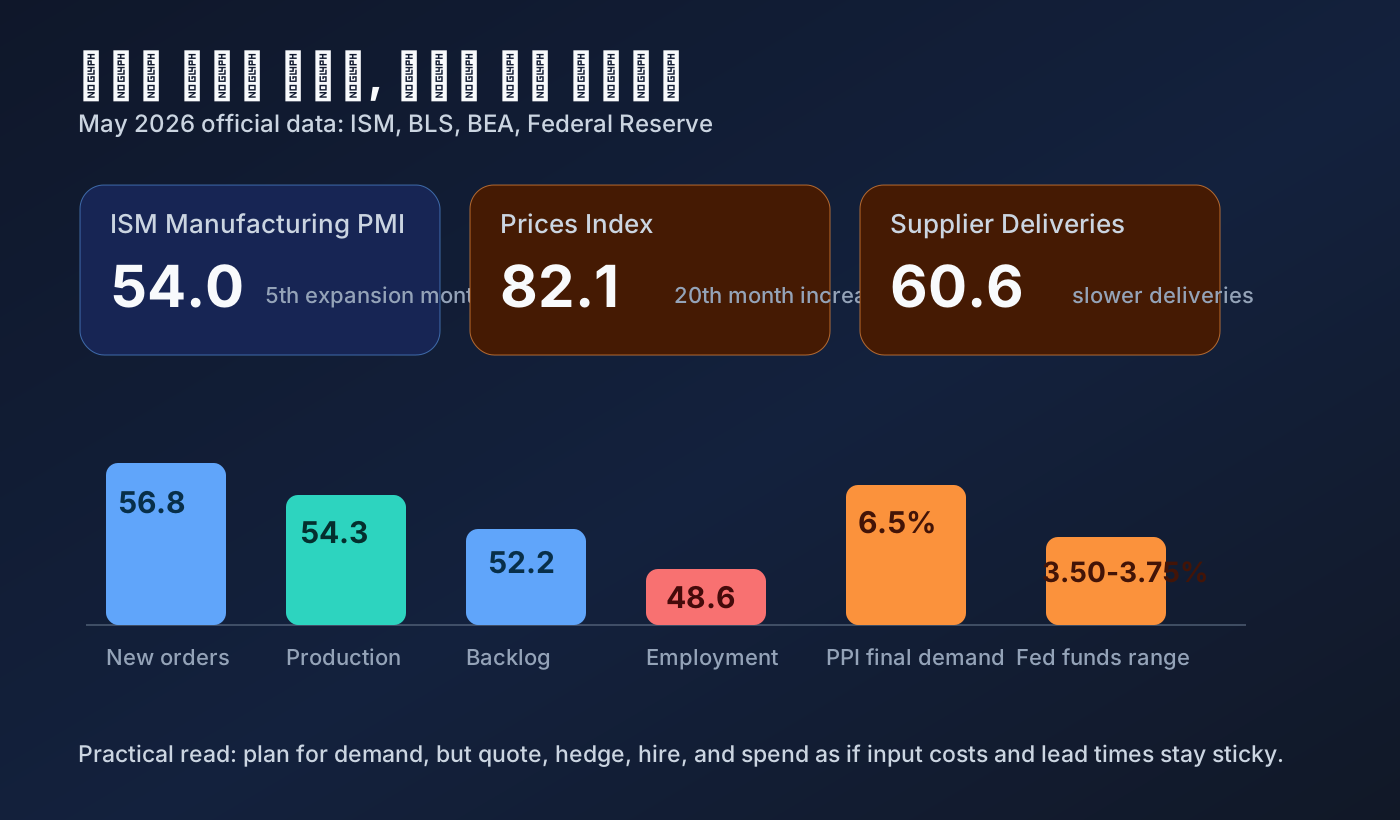
U.S. manufacturing finally looks like a recovery again. ISM’s May 2026 Manufacturing PMI rose to 54.0, with New Orders at 56.8, Production at 54.3, and Backlog of Orders at 52.2. For anyone worried about a factory downturn, the headline says activity is expanding. For builders and investors, however, the headline PMI is not the most useful number.
The same report showed the Prices Index at 82.1 and Supplier Deliveries at 60.6. Prices eased from April but remained deeply in increasing territory, while supplier deliveries above 50 mean slower delivery performance. Employment improved to 48.6 but stayed in contraction. In other words, demand is coming back while input prices, logistics, lead times, and hiring are not yet in a comfortable recovery phase.
The operating question is not “has U.S. manufacturing recovered?” It is “can a team safely expand inventory, advertising, headcount, cloud commitments, or component orders just because the headline is stronger?” BLS reported May final-demand PPI up 6.5% from a year earlier, BEA reported May PCE inflation at 4.1%, and the Fed kept the target range at 3.50% to 3.75% on June 17. Demand is better, but the cost floor has not clearly fallen.
Confirmed facts
•ISM reported that the May 2026 Manufacturing PMI registered 54.0, placing manufacturing activity in expansion. ISM explains that readings above 50 indicate manufacturing expansion and readings above 47.5 over time are generally consistent with overall economic expansion.
•The New Orders Index rose to 56.8 from 54.1 in April, while the Production Index rose to 54.3 from 53.4. The Backlog of Orders Index reached 52.2, continuing a fifth month of expansion.
•The Prices Index registered 82.1, down from 84.6 in April but still in increasing territory. ISM commentary described prices as the biggest impediment to sustained manufacturing expansion.
•The Supplier Deliveries Index was 60.6, unchanged from April. Because this index is inverted, a reading above 50 indicates slower deliveries, typical when demand improves but also consistent with disruption.
•The Employment Index improved to 48.6 from 46.4 but remained in contraction territory. Production is expanding, but manufacturers are still cautious about turning demand into fixed labor cost.
•BLS reported that the Producer Price Index for final demand rose 1.1% in May and 6.5% over 12 months. Final-demand goods prices rose 2.8% on the month, with energy a major contributor.
•BEA reported that the May PCE price index rose 0.4% from April and 4.1% from a year earlier. Core PCE rose 3.4% from a year earlier.
•The Federal Reserve kept the federal funds target range at 3.50% to 3.75% on June 17, 2026 and said inflation remained elevated relative to its 2% goal. The June projections showed median 2026 core PCE inflation at 3.3%.
Interpretation: recovery is not the same as margin relief
A 54.0 manufacturing PMI is a genuinely constructive signal. New orders, production, backlogs, and export orders all point toward stronger factory activity. That can help hardware, industrial, logistics, semiconductor, electronics, and equipment ecosystems. But this is not a clean, cheap recovery. It is a more expensive recovery.
The Prices Index at 82.1 should not be treated as background noise. When raw materials, energy, chemicals, and freight costs are rising, sellers need shorter quote windows and buyers need tighter budget discipline. Revenue can rise while gross margin fails to improve if input costs move faster than pricing.
Supplier Deliveries at 60.6 points in the same direction. In slower-delivery environments, the simple “run lean inventory” rule becomes fragile. Order too little and you miss sales; order too much and cash gets trapped. The useful operating sheet now combines item-level lead time, substitute suppliers, prepayment terms, and price-adjustment clauses.
Employment at 48.6 is a useful restraint on the bullish story. Production is expanding while employment is still contracting, which suggests companies may be meeting orders through automation, overtime, productivity, and outsourcing rather than aggressive hiring. Managers are still reluctant to convert demand into fixed cost.
Market narrative signal
The market narrative naturally gravitates toward “the strongest manufacturing reading in years.” ISM’s own roundup and commentary, however, kept returning to prices and delivery risk. The headline is recovery; the body text is margin defense.
This also touches the AI economy. Computer and electronic products, machinery, transportation equipment, power infrastructure, cooling, data centers, and semiconductor equipment can benefit from stronger orders. At the same time, parts, power equipment, metals, freight, and energy costs can push indirect cost pressure back into AI services, cloud buyers, and hardware startups.
For investors, the key point is that manufacturing recovery is not automatically a rate-cut story. If stronger demand coexists with sticky inflation, the Fed has less reason to ease quickly. Cyclicals may enjoy the order cycle while discount rates and input costs remain a headwind.
Second-order effects: quotes, inventory, and hiring move first
First, quote validity shortens. In high-price-index and high-PPI periods, 30-day quotes often become 7- to 14-day quotes, and contracts are more likely to include raw-material, freight, or energy adjustment clauses.
Second, inventory strategy becomes about where, not just how much. Bottleneck parts, long-lead-time components, and non-substitutable materials may deserve more safety stock, while generic inventory and fashion-like SKUs should still be governed by cash turnover.
Third, marketing metrics can be distorted. Stronger demand may make ads look more efficient, but late shipments, higher costs, refunds, and support burden can erase the apparent improvement.
Fourth, AI and software teams are not exempt. If data-center and electronics demand is pushing factory indicators up, GPU, power, cloud, and networking costs may tilt bargaining power toward suppliers.
Fifth, non-U.S. teams need to watch the dollar channel. Strong U.S. manufacturing can support Korean semiconductor and equipment demand, but sticky U.S. inflation and rates keep FX and dollar-denominated software, cloud, ad, and contractor costs in the risk model.
Checklist for founders, operators, and investors
✓Add raw-material, freight, quote-validity, and delay-condition language to this quarter’s pricing and contract templates.
✓Put purchase cost, lead time, shipment delay, refunds, and support tickets next to orders and revenue in the same dashboard.
✓Increase safety stock only for bottleneck and long-lead-time items. Manage generic inventory by cash turnover, not fear.
✓Approve marketing spend only after available supply, gross margin, refund risk, and delivery capacity pass the check.
✓In investment work, read Manufacturing PMI together with Prices, Supplier Deliveries, Backlogs, and Employment to see whether recovery becomes margin.
✓For dollar-cost-heavy teams, stress-test cloud, ads, components, and FX under a 3.50% to 3.75% policy-rate range and 4% inflation.
Counterarguments and risks
The bullish counterargument is real. PMI at 54.0, New Orders at 56.8, and Production at 54.3 show that U.S. manufacturing is expanding. Low customer inventories and rising backlogs can support future production. It is reasonable to say that some hardware and industrial demand has bottomed.
The Prices Index also declined from 84.6 to 82.1. If energy and geopolitical risk ease, PPI and PCE pressure could cool. The Fed’s projected path is conditional, and a faster disinflation path would change the policy conversation.
The operating conclusion remains cautious. Demand recovery and cost pressure can exist at the same time. The companies that make money when orders return are not always those that grow revenue fastest; they are the ones that adjust pricing, lead times, inventory, and cash conversion fastest.
This article is informational commentary about markets, inflation, and business strategy. It is not financial advice or a recommendation to buy or sell any security.