
Alerte energie de l’OCDE : meme le boom de l’IA doit respecter les couts
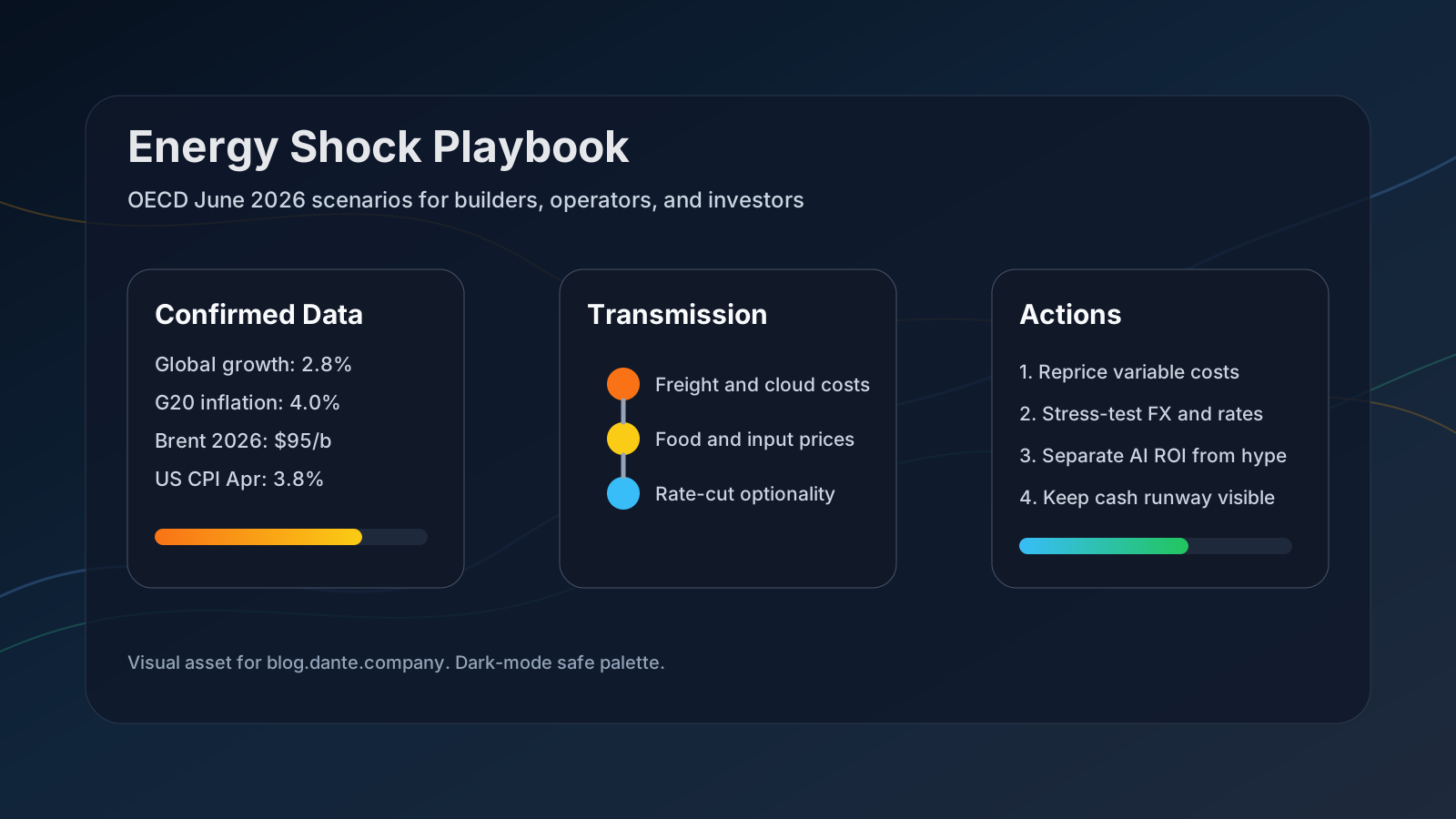
L’OCDE rend moins confortable le scenario de marche fonde sur baisse de l’inflation, baisses de taux et investissement IA. Dans son scenario central, la croissance mondiale tombe a 2,8% en 2026 et l’inflation du G20 monte a 4,0%.
Pour une petite equipe, le canal de transmission compte plus que le prix du petrole seul: electricite, cloud, logistique, alimentation, change et taux d’actualisation.
Faits confirmes
- OECD: global GDP growth 3.4% in 2025, 2.8% in 2026, 3.1% in 2027 under the time-limited disruption scenario.
- OECD: G20 inflation 3.4% in 2025, 4.0% in 2026, 3.1% in 2027 under the same scenario.
- OECD prolonged disruption scenario: global growth 2.1% in 2026 and 1.8% in 2027; G20 inflation 4.4% in both years.
- EIA May STEO: Brent crude averages $95/b in 2026 and $79/b in 2027, with around $106/b expected in May and June.
- BLS April CPI: +0.6% month over month and +3.8% year over year; energy +17.9% year over year. BEA April PCE price index: +3.8% year over year.
| Signal | Confirmed number | Operating read |
|---|---|---|
| OECD time-limited disruption | 2026 global growth 2.8%; G20 inflation 4.0% | Budget for slower demand and stickier costs. |
| OECD prolonged disruption | 2026 global growth 2.1%; 2027 growth 1.8% | Stress-test runway, credit, and high-multiple exposure. |
| EIA May STEO | Brent 2026 average $95/b; May-June around $106/b | Treat energy as an operating input, not a headline variable. |
| U.S. April inflation data | CPI and PCE price index both +3.8% year over year | Expect central banks to wait for cleaner evidence. |
Interpretation
Les chiffres n’impliquent pas automatiquement des hausses de taux, mais ils reduisent la marge pour des baisses rapides si l’energie se diffuse aux prix sous-jacents et aux anticipations.
Pour les produits IA, l’energie devient une question d’economie unitaire: cout d’inference, regions cloud, electricite et usage gratuit doivent etre suivis avec la croissance.
Signaux narratifs
Dans les forums et notes de marche, les expressions stagflation lite, baisses de taux retardees et couts electriques de l’IA reviennent davantage. Ce ne sont pas des sources factuelles, mais des signaux de priorite.
Effets secondaires
- Energy importers face margin pressure when fuel and FX move together.
- The U.S. has some energy-export offset, but consumers still feel gasoline, electricity, and food.
- AI infrastructure should be judged by power procurement and efficiency, not revenue growth alone.
- Small teams should monitor cloud, payment, logistics, FX, and travel costs before they become invisible margin leaks.
Liste de controle
- Separate fixed costs from usage-linked costs for the next 90 days.
- Model base, 5% currency weakness, and 10% currency weakness if costs are dollar-denominated.
- Track AI inference cost per user next to conversion rate and payback period.
- Review discount-rate sensitivity and expensive growth exposure before chasing headlines.
- If pricing changes are needed, start with overage usage, high-cost regions, and premium AI features.
Risques
Le scenario optimiste existe: si energie et engrais baissent plus vite, la pression d’inflation recule. L’OCDE estime qu’une baisse additionnelle de 10% a partir du second semestre 2026 ajouterait 0,1 point a la croissance mondiale 2027 et reduirait l’inflation de 0,3 point.
Avertissement
Cet article est une information economique generale et ne constitue pas un conseil financier.