
AI SDK 7 HarnessAgent: coding agent กำลังกลายเป็น runtime ที่สลับได้
Vercel AI SDK 7 เปิดตัว HarnessAgent เป็น API กลางสำหรับ harness ของ coding agent สัญญาณสำคัญคือทีมต้องมอง agent เป็น runtime ที่มี state สิทธิ์ และการรันจริง ไม่ใช่แค่การเรียกโมเดล
มีอะไรเปลี่ยน
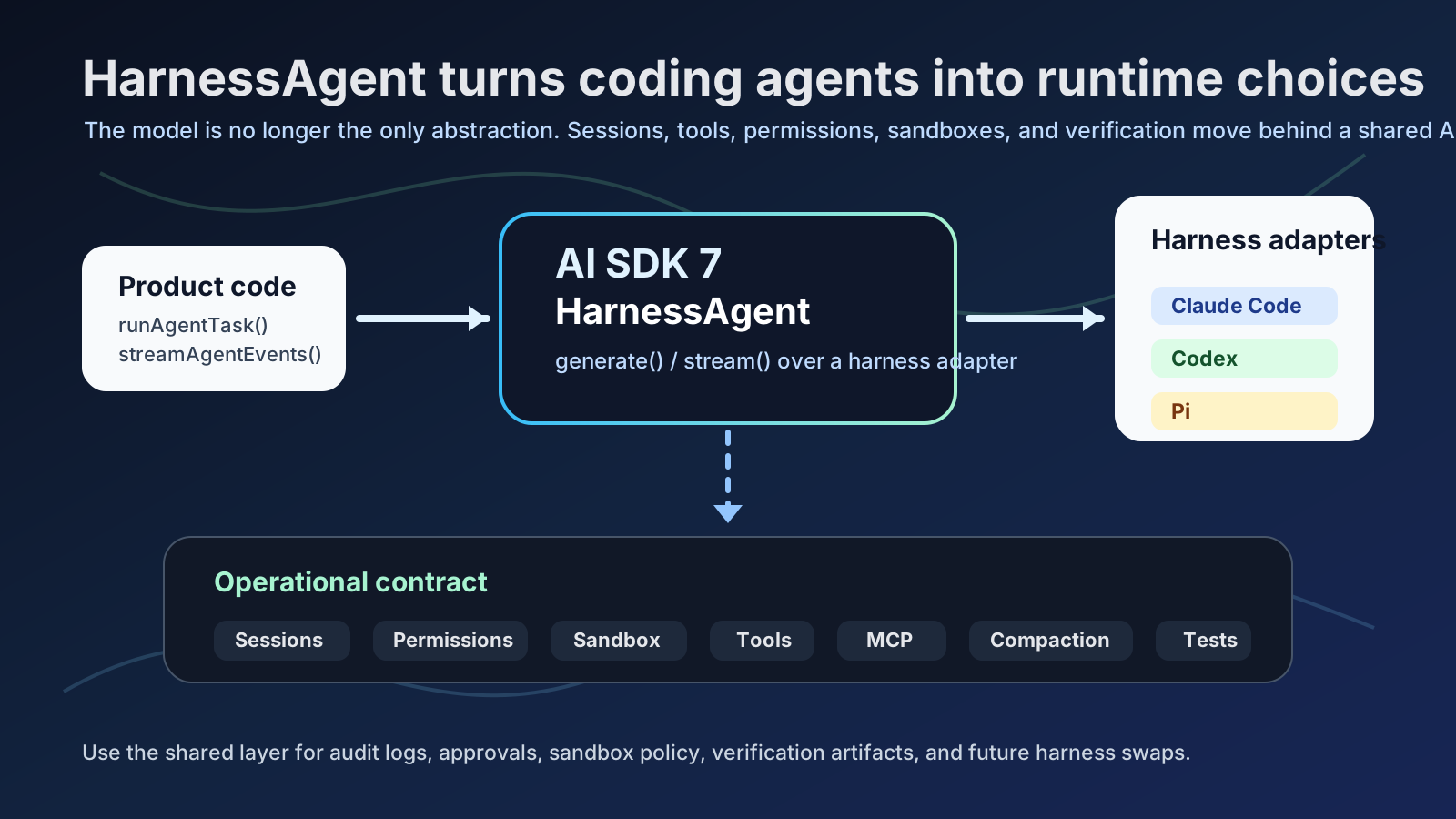
Vercel announced HarnessAgent on June 12, 2026 as part of AI SDK 7. The release names Claude Code, Codex, and Pi as initial experimental harness adapters, and describes harnesses as the layer above a model call: skills, sandboxes, sessions, permission flows, compaction, runtime configuration, and sub-agents.
The important architectural shift is the boundary. AI SDK already abstracts model providers and tool calls; HarnessAgent asks whether the agent runtime itself can become a replaceable component. That is useful when a team wants one approval UI, one audit trail, and one verification pipeline while testing different agent backends.
ทำไมจึงสำคัญ
Coding agents touch code, terminals, package managers, browsers, and sometimes deployment systems. The operational question is therefore broader than model quality. Teams must decide what a harness may read, write, execute, persist, and report before the output reaches a reviewer.
Community discussion around OpenHarness and adjacent GitHub releases about Copilot sandboxes and enterprise-managed plugins point to the same need: agent work needs isolation, policy, and repeatable governance. Community posts are useful here as demand signals, while the factual claims should come from official release notes and documentation.
ผลต่อการพัฒนาและปฏิบัติการ
Internal platforms should avoid binding product state directly to a vendor-specific stream format. A small adapter layer can expose stable concepts such as task, event, tool approval, sandbox session, diff, verification result, and cancellation. That boundary makes future harness changes less disruptive.
เช็กลิสต์
• Design product-level methods around agent tasks instead of calling a harness directly from UI code.
• Separate permissions for file edits, shell commands, network access, package installation, and deployment.
• Define sandbox defaults by task type, including local versus cloud execution and network limits.
• Require tests, dependency review, secret scanning, and static analysis for agent-authored changes.
• Treat canary or experimental APIs as pilot interfaces until event and permission semantics stabilize.
ความเสี่ยง
The main risk is standardizing too early. Harness semantics are still moving, and each runtime has different strengths. A common API should cover the lifecycle, but teams should leave room for optional capabilities when a specific harness offers stronger IDE, cloud, or policy integration.
AI SDK 7 HarnessAgent: coding agent กำลังกลายเป็น runtime ที่สลับได้ is therefore best read as an implementation prompt, not a migration mandate. Start with one internal workflow, measure review quality and operational friction, and keep the abstraction thin enough to revise.
แหล่งข้อมูล
- Vercel changelog: Program Claude Code, Codex, Pi and other agent harnesses with AI SDK
- AI SDK docs: HarnessAgent
- Vercel AI SDK GitHub repository
- AI SDK docs: Getting Started with Coding Agents
- Vercel guide: How to build AI Agents with Vercel and the AI SDK
- GitHub changelog: Cloud and local sandboxes for GitHub Copilot
- GitHub changelog: Enterprise-managed plugins in VS Code
- Vercel Community: OpenHarness discussion