
Next.js 16.2讓面向代理的除錯成為框架議題
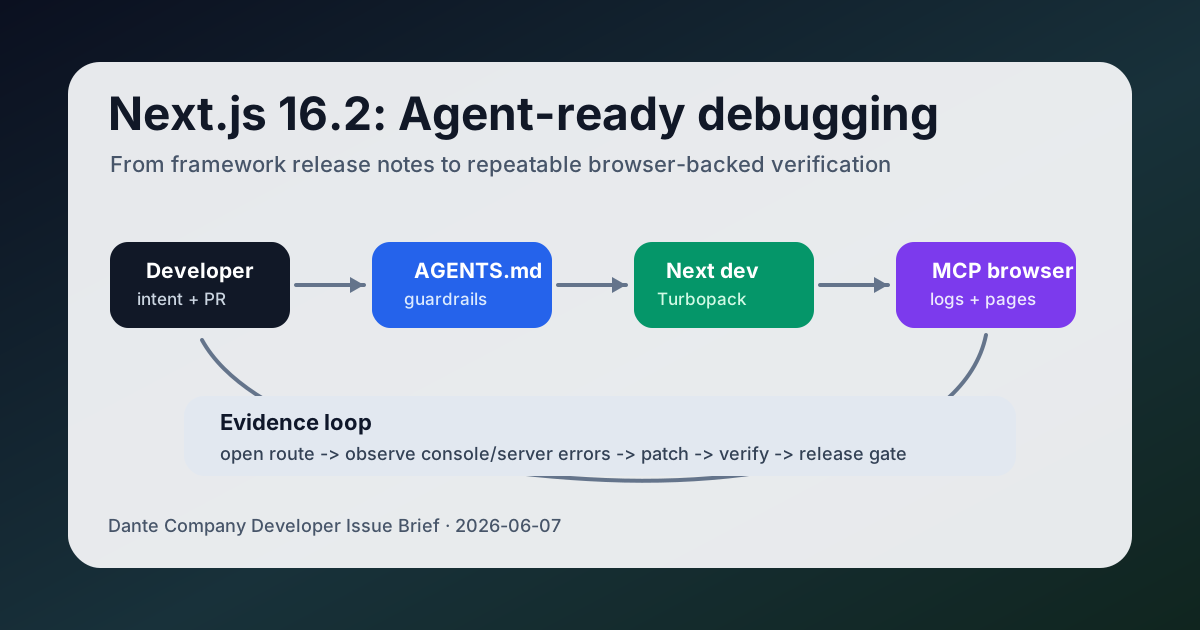
Next.js 16.2不只是功能更新。它顯示現代框架開始替AI coding agent提供可觀測的工作表面, 讓代理能閱讀專案規則、執行應用、看到瀏覽器錯誤並回報可驗證證據。
发生了什么
Next.js 16.2 brings together React Canary support, Subresource Integrity, after support in the Node.js runtime, Turbopack file system cache work, Adapter API progress, and AI-focused improvements such as AGENTS.md, browser log forwarding, and next-browser MCP. The practical message is that a framework upgrade now affects how automation observes the running product.
为什么重要
AI coding agents are useful only when they can move from source code to runtime evidence. In a Next.js app, routing, Server Components, middleware, streaming, caching, images, and deployment adapters can fail in ways that a plain type check will not catch. Teams therefore need documented commands, protected boundaries, browser verification, and review evidence.
實務清單
- Create an
AGENTS.mdwith install, dev, build, test, lint, and preview commands. - Define protected files and domains: secrets, auth, billing, migrations, and production data.
- Require browser-backed verification for the most important user flows.
- Validate React Canary, Turbopack cache, PPR, adapters, and MCP/browser tooling separately instead of changing everything in one PR.
- Add PR fields for agent usage, checked URL, console/server errors, and remaining risk.
風險與反論
Immediate adoption is not mandatory. Experimental APIs and React Canary may be too risky for conservative teams. Browser log forwarding and MCP also require clear permission rules, especially when internal URLs or sensitive data may appear. Use the new tooling as a verification loop, not as a replacement for human review and rollback planning.
結論
The best teams will not be the ones that simply enable an AI tool. They will be the ones that make the application observable, the project rules explicit, and the browser validation loop repeatable.