
Workflow SDK 與 Nitro v3:耐久型後端正在進入應用程式 runtime
需要等待、恢復或重試的後端流程,常會帶來 queue、worker、狀態表與監控。Workflow SDK 的 Nitro v3 整合讓這種 durable execution 更靠近應用程式碼。
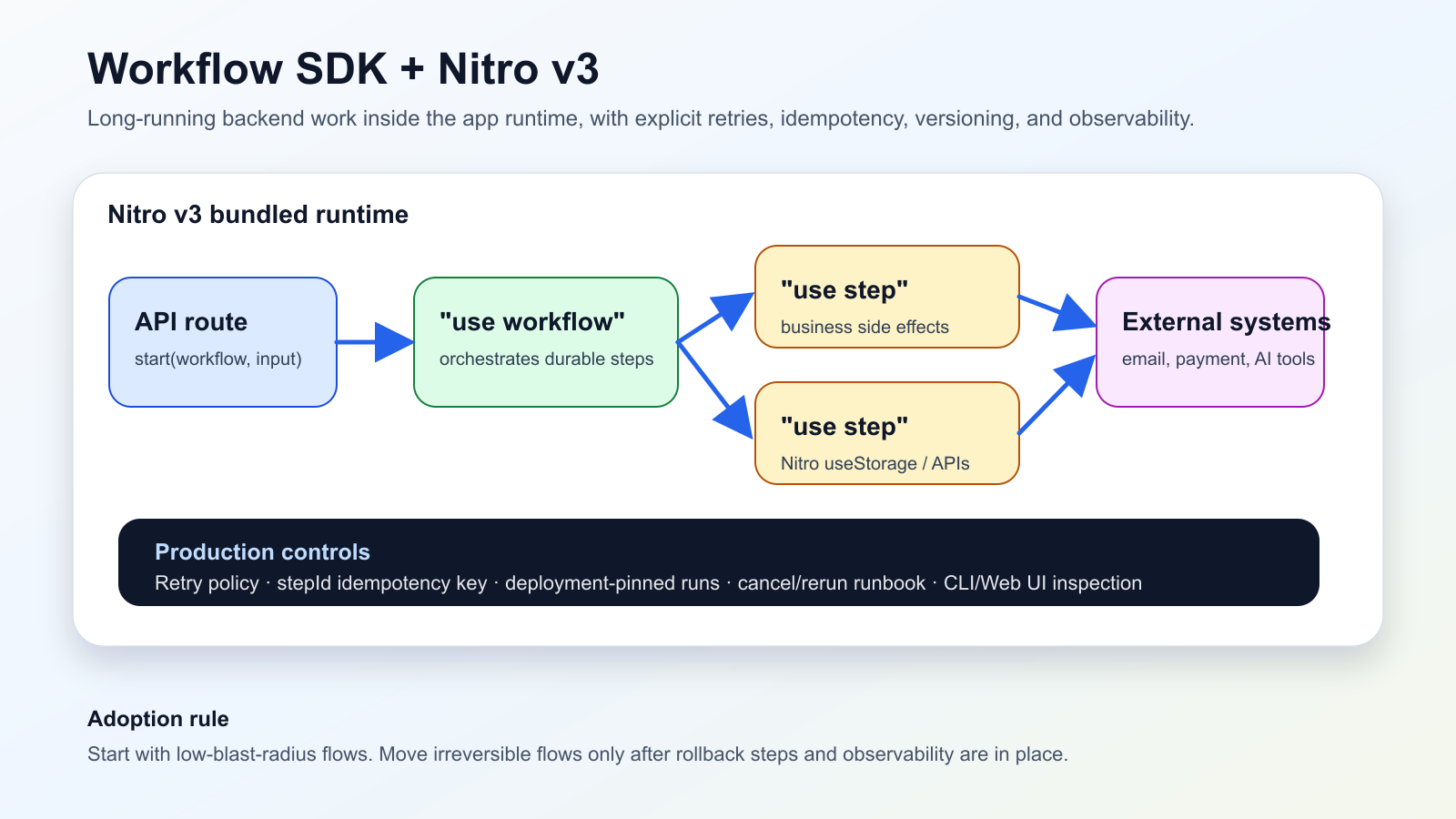
發生了什麼
Vercel 在 2026 年 6 月 13 日宣布 Workflow SDK 的 Nitro v3 原生整合進入 beta。step 會在與應用程式相同的 bundled runtime 中執行,workflow route 成為 Nitro build 的一部分,useStorage 等 server-side API 可直接用在 "use step" 函式內。
為什麼重要
對 Nuxt/Nitro 團隊而言,這改變了長時間後端任務的位置。API route 可以啟動 workflow,"use workflow" 負責編排,step 負責可重試的業務 side effect。團隊可以先在應用程式 runtime 附近設計,再決定是否拆成 worker 服務。
社群訊號
重點仍是維運邊界:外部寫入需要 idempotency key,錯誤要分成 FatalError 與 RetryableError,執行中的 run 會固定在啟動它的 deployment,而 observability 必須一開始就納入。
對開發與維運的影響
導入路徑應該循序漸進。先從 onboarding email、報表產生、延遲通知、需要人工確認的 AI agent flow 等容易觀測與回滾的流程開始。付款、庫存、帳號刪除等不可逆流程,應在 rollback step、冪等鍵與 runbook 都穩定後再遷移。
實務檢查清單
• Classify candidates into work that should finish inside a request, work that needs a queue, and work that needs human intervention.
• Keep the input and output shapes of `"use workflow"` and `"use step"` functions backward-compatible across deployments.
• Attach stable idempotency keys, preferably based on stepId, to payments, emails, external writes, and queue publishes.
• Separate non-retryable validation failures with FatalError and handle rate limits or transient outages with RetryableError plus retryAfter.
• Document how in-flight runs stay pinned to deployments and how affected runs are cancelled or rerun after a fix.
• When steps use Nitro useStorage, server APIs, or route handlers directly, test local and production backend differences.
• Verify that runId, stepId, input class, retry count, failure code, latency, and cost are visible in the CLI or Web UI.
風險與反方觀點
此整合仍在 beta,並不代表所有 job 都應改寫成 workflow。短時間快取刷新或簡單 webhook forwarding,可能仍適合一般 request/response 或小型 queue。同一 runtime 的便利性,不應模糊可重試程式碼與絕不能重複執行程式碼之間的邊界。
來源
- Vercel Changelog: Workflow SDK now runs natively in Nitro v3
- Workflow SDK Docs: Nitro pre-release guide
- Workflow SDK Docs: Errors & Retrying
- Workflow SDK Docs: Idempotency
- Workflow SDK Docs: Versioning
- Workflow SDK Docs: Observability
- Nitro v3: Build full-stack servers
- Hacker News discussion signal: Make any TypeScript function durable
- Vercel Community signal: Testing Vercel Workflows?