
The yen at 160 is a funding-cost warning for all of Asia
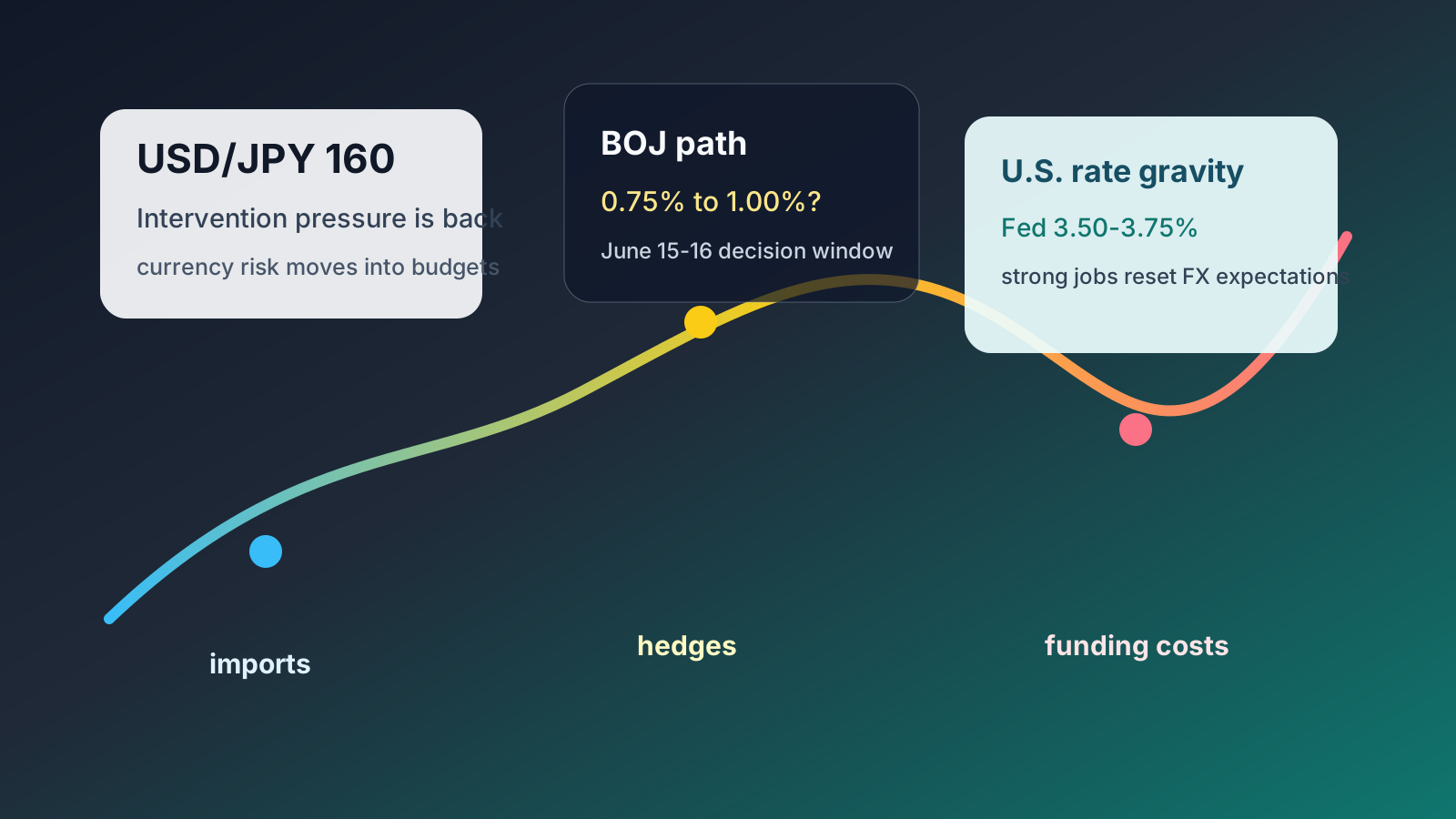
| USD/JPY | 160.14 near June 9 Reuters report |
|---|---|
| BOJ pricing | 93% chance of June hike in swaps, per Tokyo Tanshi data cited by Reuters |
| U.S. labor | May payrolls +172,000; unemployment 4.3%, per BLS |
USD/JPY near 160 is not just a Japan story. It is a live signal that the cost of operating in Asia is being repriced through currencies, interest-rate expectations, and imported input costs. Reuters reported on June 9 that the yen was trading around 160.14 per dollar and that swaps priced a 93% chance of a Bank of Japan rate hike at the June meeting. The BOJ meeting is scheduled for June 15-16, and the market is treating a move from 0.75% to 1.00% as the base case rather than a surprise.
The reason this matters to founders and small teams is simple: currency moves reach your P&L faster than policy speeches do. Cloud bills, API usage, overseas ad spend, hardware, contractors, data tools, app-store proceeds, and imported equipment can all be affected before a central bank decision becomes old news.
Confirmed facts
- The Bank of Japan’s next Monetary Policy Meeting is scheduled for June 15-16, 2026.
- The BOJ’s April Summary of Opinions included several views that policy normalization should continue because real rates remain low and inflation risks are tilted upward.
- Reuters reported that Japan has spent 11.7 trillion yen, about $73 billion, defending the currency since the yen first broke above 160 on April 30.
- The U.S. Bureau of Labor Statistics reported that nonfarm payrolls rose by 172,000 in May, unemployment stayed at 4.3%, and March-April payrolls were revised up by a combined 93,000.
- The Federal Reserve’s operating directive keeps the federal funds target range at 3.50% to 3.75%.
- The Korean won is moving in the same stress zone. Yonhap reported a 1,512.1 won-per-dollar close on June 9 after 1,535.0 the prior session, while Korea JoongAng Daily reported that the won briefly traded above 1,560 in overnight trading days earlier.
Interpretation: the rate hike is smaller than the signal
A 25-basis-point BOJ hike would not close the gap with U.S. rates. But markets trade direction, credibility, and timing. If the BOJ signals that yen weakness is now part of the inflation problem, investors will reprice more than Japan’s overnight rate. Yen carry trades become less comfortable, Japanese government bond volatility matters more, and Asian currencies with dollar funding needs can be grouped together as “higher import-cost risk.”
Community discussions are useful here as narrative signals, not as factual sources. Japanese forums are debating whether rate hikes protect the yen or punish mortgage borrowers and consumers. Korean discussions are focused on what a 1,500-plus won-dollar exchange rate does to living costs and overseas payments. The pattern is consistent: people do not experience policy as a basis-point change; they experience it as rent, debt service, subscription bills, food, energy, and travel budgets.
Practical checklist
- Map dollar invoices: list cloud, AI APIs, ads, data vendors, contractor payments, and software subscriptions. Recalculate margins at a 5% and 10% weaker local currency.
- Separate yen and dollar exposure: a weaker yen can help Japan-facing sales but hurt teams that buy Japanese services, hardware, or travel. Watch KRW/JPY as well as USD/JPY.
- Review pricing clauses: if your product embeds cloud or API cost, decide when exchange-rate changes trigger a price update.
- Hold natural hedges where possible: match dollar revenue with dollar costs before buying complex hedging products.
- For investors: do not treat “higher Japanese rates” as a one-line bank-stock thesis. Also check duration risk, real estate leverage, exporters, and domestic-demand sensitivity.
Second-order effects
The first second-order effect is regional contagion. When the yen and won both trade under stress, global funds can treat Asian FX as one basket exposed to U.S. rates and energy costs. The second is faster price pass-through for small operators. Large companies can hedge and negotiate; small teams usually see the new exchange rate on the next card statement. The third is communication risk. If the BOJ sounds too soft, the market may test 160 again. If it sounds too hard, Japanese bond volatility and domestic credit stress may rise.
Counterarguments
The BOJ can hike and still fail to strengthen the yen if U.S. rate expectations rise faster. Energy risk could ease and reduce the urgency to tighten. A sharp rise in Japanese long-term yields could force the BOJ to prioritize market stability over a clean normalization path. The right takeaway is not a currency trade. It is that FX has become an operating variable again for Asian businesses and investors.
Watch next: the BOJ statement on June 16, the tone of Governor Ueda’s press conference, any changes to JGB purchase reduction plans, the June 17 Fed decision, U.S. CPI/PPI, and whether USD/KRW stabilizes below or above the 1,500 zone.
This article is for informational purposes only and is not financial advice or a recommendation to buy or sell any asset.
Sources
- Reuters via MarketScreener
- Bank of Japan: 2026 MPM schedule
- Bank of Japan: April 2026 Summary of Opinions
- Japan Ministry of Finance: FX intervention data
- U.S. Bureau of Labor Statistics: May 2026 Employment Situation
- Federal Reserve: March 2026 implementation note
- Yonhap: won-dollar close on June 9, 2026
- Korea JoongAng Daily: won briefly above 1,560
- Reddit r/japan discussion signal
- Reddit r/KoreaNewsfeed discussion signal