
Supabase AI Agent Plugin: Database Changes Now Need a Permission Contract First
Letting an AI agent edit a React component and letting it change a database schema are not the same risk. A bad label can be reverted. A bad RLS policy, trigger, function, extension, or migration sequence can cross straight into production data and authorization boundaries. Supabase’s June 2026 developer update matters because it puts several pieces on the same table: the AI coding agent plugin, the official ChatGPT app, the MCP server, temporary token-based database access, and pg-delta. Together they say that database agents are becoming practical, but only if teams design the permission and verification contract around them.
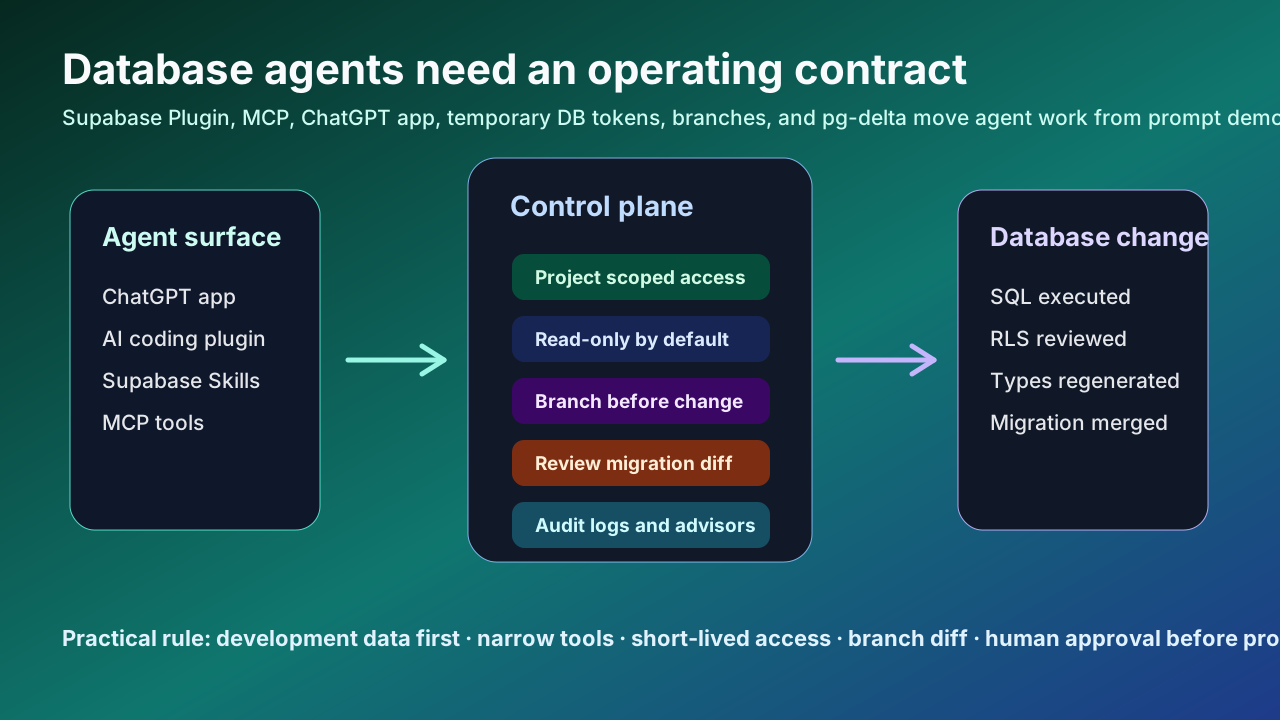
Database agent operating contract
The useful unit is not a natural-language SQL prompt. It is a database operating contract: development data first, scoped MCP tools, short-lived access, migration diffs, RLS review, and human approval.
What Happened
Supabase introduced a plugin for AI coding agents that bundles the Supabase MCP server and Supabase agent skills into one setup path. The official docs describe the plugin as a way for agents to query databases, manage migrations, deploy Edge Functions, and follow Supabase and Postgres best practices without manual configuration.
Supabase also became an official ChatGPT app in May 2026. The blog post says the app can execute SQL, modify schemas, deploy Edge Functions, manage branches, apply migrations, inspect real-time logs, and search Supabase docs from inside ChatGPT. That means Supabase is no longer only exposed to IDE-hosted coding agents; it is also becoming reachable from a conversational operations surface.
The June update also points to temporary token-based database access and pg-delta. Temporary access moves direct DB access toward explicit roles and expiry windows. pg-delta is described as a schema-diffing engine for Postgres objects such as tables, columns, RLS policies, functions, triggers, indexes, and extensions. Read together, these are not isolated announcements. They are the outline of a governed database-agent workflow.
Why It Matters
The first shift is the unit of permission. In earlier agent setups, connecting a database often degraded into the question of where to paste a service key or personal access token. Supabase MCP now documents scope controls such as project_ref, read_only=true, and feature groups. The temporary-token preview moves in the same direction: a database role and an expiry window become part of the contract.
The second shift is migration quality. Asking an agent to “add this column” is easy. Shipping that change means checking backfills, RLS policy coverage, generated TypeScript types, Edge Function dependencies, index cost, rollback options, and branch merge behavior. A plugin that combines tools and skills is important because tools define what can be done while skills encode the order and cautions for doing it.
The third shift is reviewability. A schema diff engine like pg-delta matters because humans need to review agent-produced database changes as objects, not just as a blob of SQL. If a PR can show table, trigger, function, extension, and policy differences clearly, reviewers can ask better questions before the change reaches production.
Community And Practitioner Signals
The June developer update bundles a wide surface: the ChatGPT app, agent plugin, temporary tokens, pg-delta, tracing, RLS Tester, and more. The practitioner signal is not “let the model run the database.” It is that Supabase is treating AI tool integration as both a product surface and a security surface.
The MCP documentation is notably conservative. It recommends avoiding production data, not exposing the server to customers, using read-only mode when appropriate, scoping access to a project, using branching for database changes, and reducing the attack surface with feature groups. Those recommendations are practical policy text for internal platform teams.
This also matches what teams worry about when stronger agent surfaces appear: not only what can be automated, but how far a mistake can execute. Short-lived access, project scoping, branch-first changes, and reviewable schema diffs are the controls that make database agents usable inside a team rather than impressive in a demo.
Development And Operations Impact
Teams need a hard boundary between local development and production databases. A branch project, seed data, obfuscated fixtures, and narrow MCP configuration should be the default environment for agent work. Production access should be exceptional, read-only where possible, and auditable.
Migration PRs also need a broader checklist. Reviewers should see which tool calls were used, whether SQL came from a branch, which RLS policies changed, whether generated types were refreshed, and whether logs, advisors, or RLS testing were checked. Agent-produced work needs more readable evidence, not less.
ChatGPT app access and IDE plugin access should be governed by the same policy. They look different to users, but both may reach SQL, branches, migrations, logs, docs, and Edge Functions. Platform teams should define allowed projects, allowed feature groups, approval requirements, and token lifetime rather than approving tools one by one by brand name.
What To Do Now
Document a production-connection ban for agents unless a reviewed exception exists. Put the policy where agents and humans will both read it: AGENTS.md, an internal runbook, or the repository onboarding docs.
Make read-only the default. Keep documentation search, introspection, type generation, and advisor checks easy. Put execute_sql, apply_migration, branch merge, and Edge Function deploy behind explicit approval and branch-first rules.
Treat schema diff as the review artifact. Do not let a natural-language prompt become the only record. Keep the migration file, generated types, RLS changes, rollback notes, and schema diff in the PR.
Risks And Counterarguments
Not every team needs this immediately. Smaller projects may be fine with the CLI and dashboard. A team without review discipline can make the system more dangerous by adding an agent surface too early. Production data, customer PII, billing tables, authorization tables, and sensitive logs deserve separate isolation before any agent can inspect them.
A full ban is also unlikely to last. Developers are already using coding agents locally, and database work is exactly where context, docs, and repetitive checks are expensive. The pragmatic answer is not “no agents.” It is narrow scope, short lifetime, branch-first execution, diff-first review, and human approval before production.
Operating Controls
Supabase Agent Adoption Checklist
• Connect agents to development or branch projects first, not production.
• Reduce MCP scope with project_ref, read_only=true, and feature groups.
• Require human approval for SQL and keep schema changes as migrations.
• Issue temporary database access with a role and expiry window, then test revocation.
• Review RLS, extensions, functions, triggers, and generated TypeScript types in the PR.