
U.S. retail sales rose 0.2%, but online and autos jumped 1.9%: the channel split matters more
Asking whether the U.S. consumer is simply strong or weak misses the most useful part of this release. The Census Bureau reported seasonally adjusted June 2026 retail and food-services sales of $768.6 billion, up 0.2% from May. But the official margin of error is ±0.4 percentage point and includes zero. There is not enough statistical evidence to treat the aggregate monthly increase as definitive.
Confirmed facts
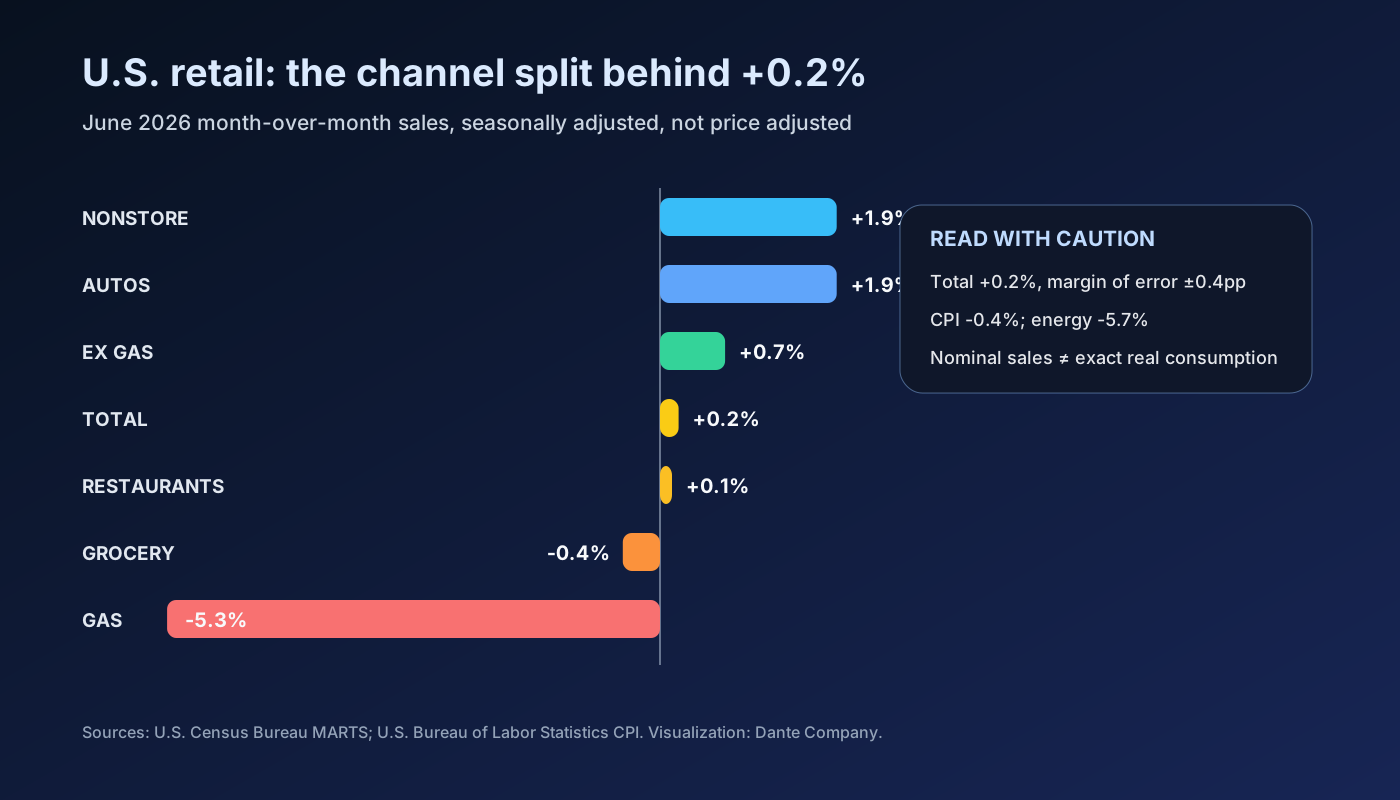
Under the total, sales channels separated sharply. Motor-vehicle and parts dealers rose 1.9% month over month, as did nonstore retailers. Gas-station sales fell 5.3%, food and beverage stores slipped 0.2%, and food services and drinking places edged up just 0.1%. Excluding gas stations, total sales increased 0.7%; excluding both autos and gasoline, they rose 0.4%.
A crucial boundary: Census retail sales are nominal and not adjusted for price changes. In the same month, the BLS CPI fell 0.4%, with energy down 5.7% and gasoline down 9.7%. Price effects clearly matter for the gas-station decline. Yet subtracting or adding the headline CPI to the retail-sales rate does not produce a precise real-sales measure because the coverage and weights differ.
Interpretation: demand split by channel
The operating translation is not “consumption has fully recovered.” It is “purchases concentrated in online and auto channels while frequent-spend categories such as groceries and restaurants barely moved.” That is encouraging for digital products, subscriptions, and DTC businesses, but traffic growth is not profit growth. Channels must be judged after ads, returns, fulfillment, and discounts.
| Signal | Confirmed value | Operating read |
|---|---|---|
| Retail & food services | +0.2% MoM; margin ±0.4pp | Do not overread the aggregate |
| Nonstore and autos | +1.9% MoM each | Audit conversion, inventory, and channel economics |
| Gas stations / CPI energy | -5.3% / -5.7% MoM | Separate price effects from quantities |
Market narrative signal
Two market stories can form around the release: the U.S. consumer remains resilient, or lower energy prices created an optical boost. Both are incomplete. Large, credit-sensitive auto purchases and online shopping rose together while restaurants stalled. Consumers may not be closing their wallets; they appear to be choosing where and how to spend more selectively.
Second-order effects
The second-order effects matter. Continued online strength can intensify search and retail-media competition, raising customer-acquisition costs and pressuring sellers to centralize inventory or improve delivery. Durable auto demand could imply a firmer credit and goods cycle than the headline suggests. Weak local services, however, would mean national totals reach neighborhood operators slowly.
Checklist for small teams and investors
• Separate conversion and repeat purchase for web, direct, marketplace, and partner channels.
• Reallocate ad spend using contribution margin after returns, discounts, and fulfillment—not clicks alone.
• Plan inventory under base and upside cases, favoring shorter replenishment cycles over one large order.
• Do not map national online growth directly onto your local geography or customer segment.
• Update any investment view after the June revision, July retail report, and relevant credit or delinquency data.
Risks and counterarguments
The counterargument is data quality and timing. This advance estimate is based on roughly 4,800 employer firms and will be revised using a larger survey. One strong month for online and autos is not a trend. On the upside, if lower energy costs persist, household spending capacity could rotate into restaurants and services later. The right response is a channel dashboard, not a one-line macro bet.
Disclaimer: This article is for information and economic interpretation only. It is not financial advice or an investment recommendation.