
The Fed held rates, but its two dissenters wanted a hike
A rate-hold headline can sound like a quiet meeting. The Federal Reserve’s October 28 decision contained a different signal: the federal funds target stayed at 3.75–4.00%, while both dissenters preferred a quarter-point increase rather than a cut. The statement was released at 2 p.m. EDT, or 3 a.m. October 29 in Korea.
Holding the level reached in September
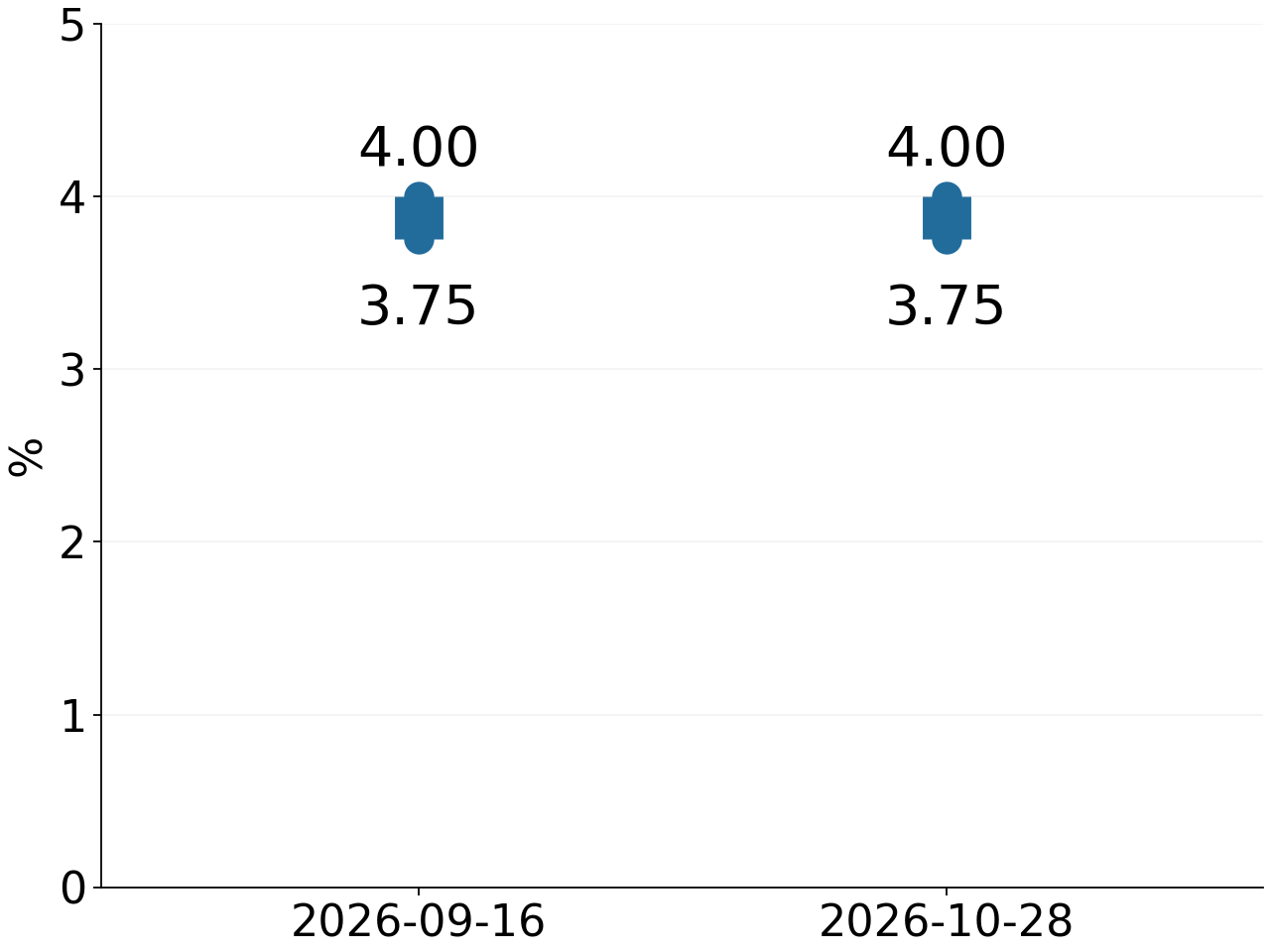
On September 16, the FOMC voted 12–0 to raise the range by 0.25 percentage point to 3.75–4.00%. October’s hold maintained that higher level; it did not reverse the increase. The identical range has a different relationship to each meeting: the result of a change in September, the level retained in October.
Our chart displays the lower and upper bounds for those two decisions. It is neither a daily series of traded interest rates nor a forecast. Separating the level of policy from the change at a particular meeting prevents an unchanged rate from being mistaken for an easier policy.
The direction of dissent matters
October’s vote was 10–2. Lisa D. Cook and Beth M. Hammack preferred an increase of 0.25 percentage point. Two dissenting votes seeking higher rates carry a different meaning from two votes seeking cuts. They cannot be converted into a numerical probability of the next decision: these votes express preferences at this meeting, not future ballots.
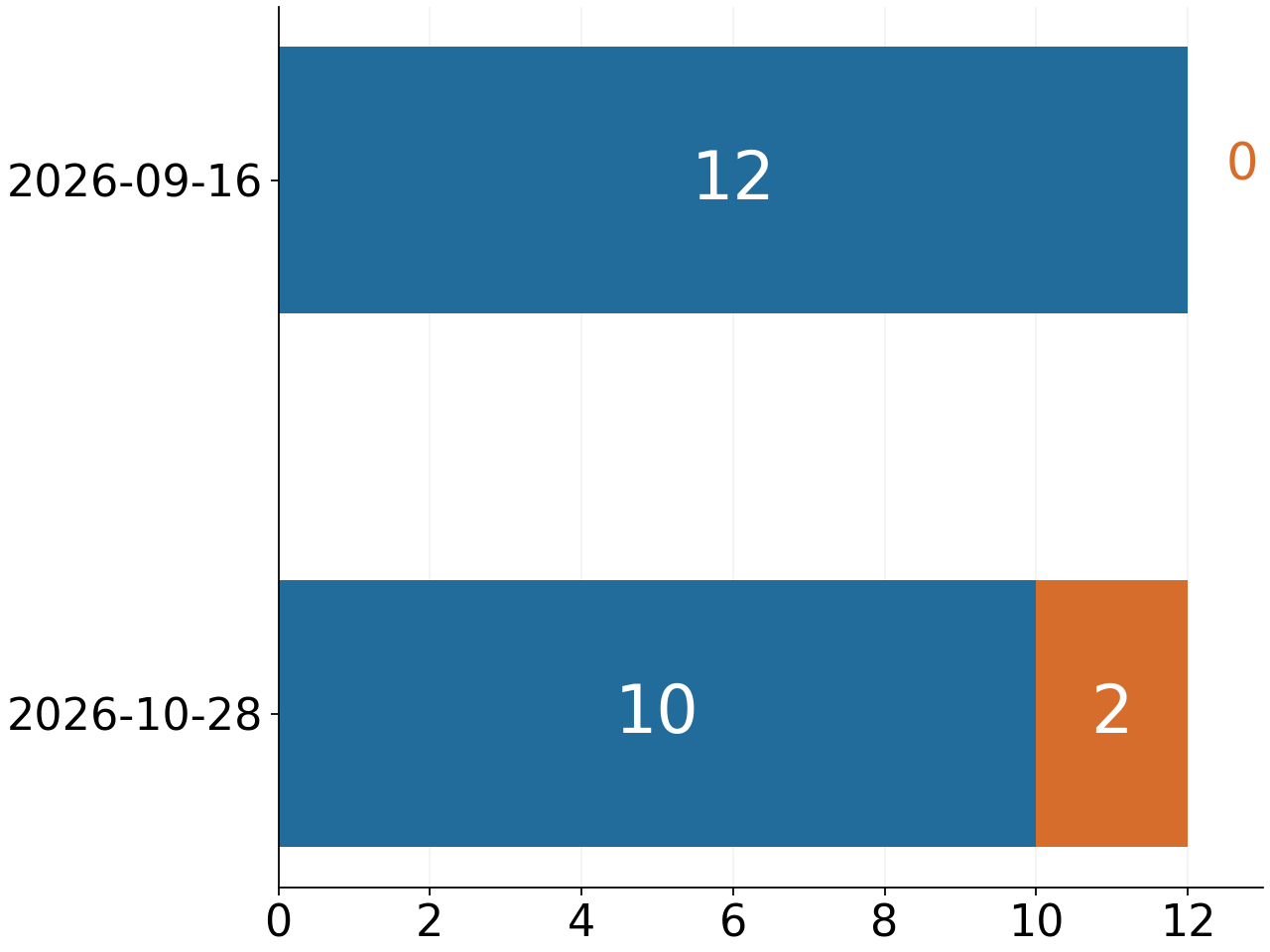
The useful comparison is the coexistence of a hold and demands for another hike. September’s increase was unanimous; October split between a majority retaining the level and a minority wanting more tightening. That does not establish either imminent cuts or a certain next hike. It shows the current policy level alongside differences in the committee’s judgment.
Why 3.90% and 4.00% appear elsewhere
The implementation note contains separate operating rates effective October 29. Interest on reserve balances remains 3.90%, standing overnight repo operations 4.00%, and the overnight reverse repo offering rate 3.75%. These are tools with different counterparties and transactions, not interchangeable labels for bank deposits, household loans or the target range.
The federal funds rate concerns overnight lending of reserve balances between depository institutions. The Fed sets a range and uses operating tools to help keep the market rate there. That explains why administered rates coexist with a target range. Unchanged settings do not require corporate loans, mortgages or exchange rates to stay unchanged: contracts, maturities, credit conditions and market expectations differ.
Read the level and the direction together
This was a hold after a hike, with dissent pointing toward another increase. Distinguishing the target range from operational tools also makes the day’s other numbers easier to place. At the next release, read the retained level and dissent direction alongside the headline verb. This article provides economic information and is not investment advice or a recommendation to trade any financial product.