
GitHub scheduled scanning changes: separate initial validation from weekly analysis
After a security configuration rollout, weekly scans in a quiet repository can look like evidence of ongoing development. A reduction in runs can also be mistaken for lost protection. Both interpretations need more context.
On October 1, 2026, GitHub announced a change to scheduled analysis for code scanning default setup and GitHub Code Quality. This article separates the announced behavior from suggestions for an operational review.
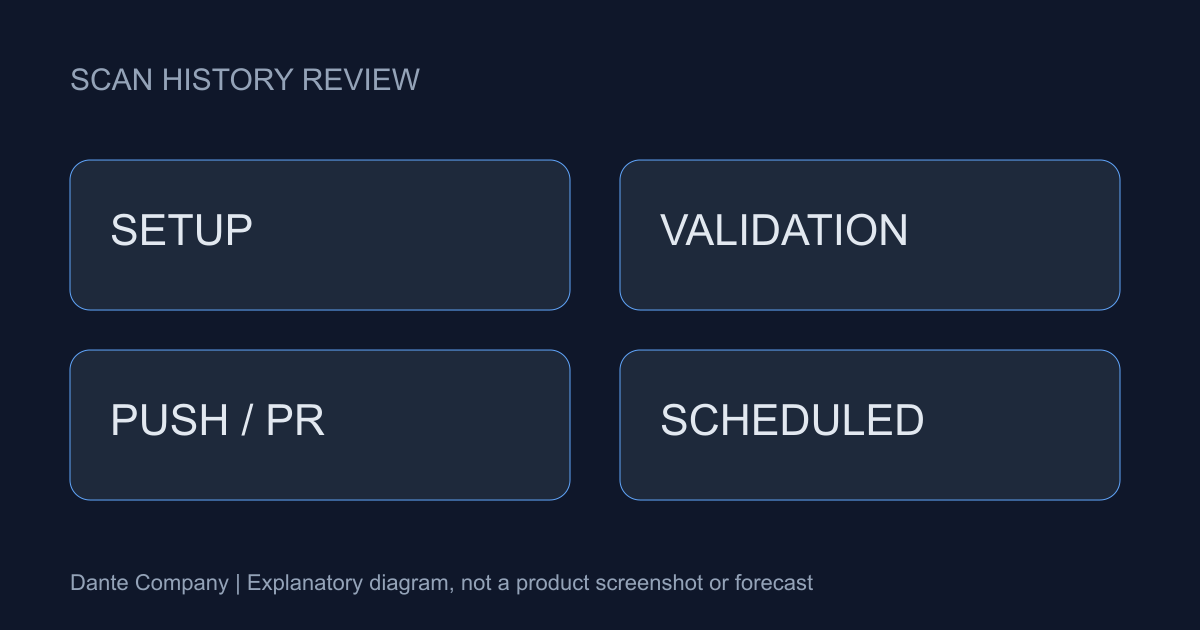
Initial validation still runs
Enabling default setup still performs an initial validation scan and immediately populates findings. Weekly scheduled scanning begins after a push or pull request triggers an analysis. The decision uses analysis history rather than Git activity before scanning was enabled.
Code scanning and Code Quality share the activity determination. The change applies to GitHub Enterprise Cloud and is planned for Enterprise Server 3.24. GitHub says no configuration change is required. Do not assume every deployed server version already behaves this way.
Record setup and analysis separately
For your own inventory, keep separate fields for setup status, latest analysis trigger, commit, result time and owner. A record that a setting was enabled should not be presented as proof that weekly analysis remains active.
For example, describe an archive with only initial validation as setup applied and initial analysis verified. When push or pull request analysis is present, record that evidence separately. These are suggested team records, not newly announced GitHub status labels.
Fewer runs are not fewer vulnerabilities
Avoid turning a reduction in scheduled runs into a security improvement score. Assess whether findings remain relevant, whether they are resolved and whether the repository still supports a running service.
A dormant repository can still contain production source. Low development activity does not imply low business importance. Review analysis coverage, dependency maintenance and ownership of deployed assets alongside scan history.
Start with a small read-only review
Choose one maintained repository and one archive. Read their setup screens and analysis histories, checking whether you can distinguish initial validation from push and pull request analysis before changing the organization report.
Do not create meaningless commits or alter validated settings merely to inspect this change. If documentation and observed results differ, record the environment and version and investigate. The accompanying diagram explains a review sequence; it is not a product screenshot or an actual scan result.