
Repository-Level GitHub Copilot Metrics Are GA: Turn Adoption into Operating Evidence
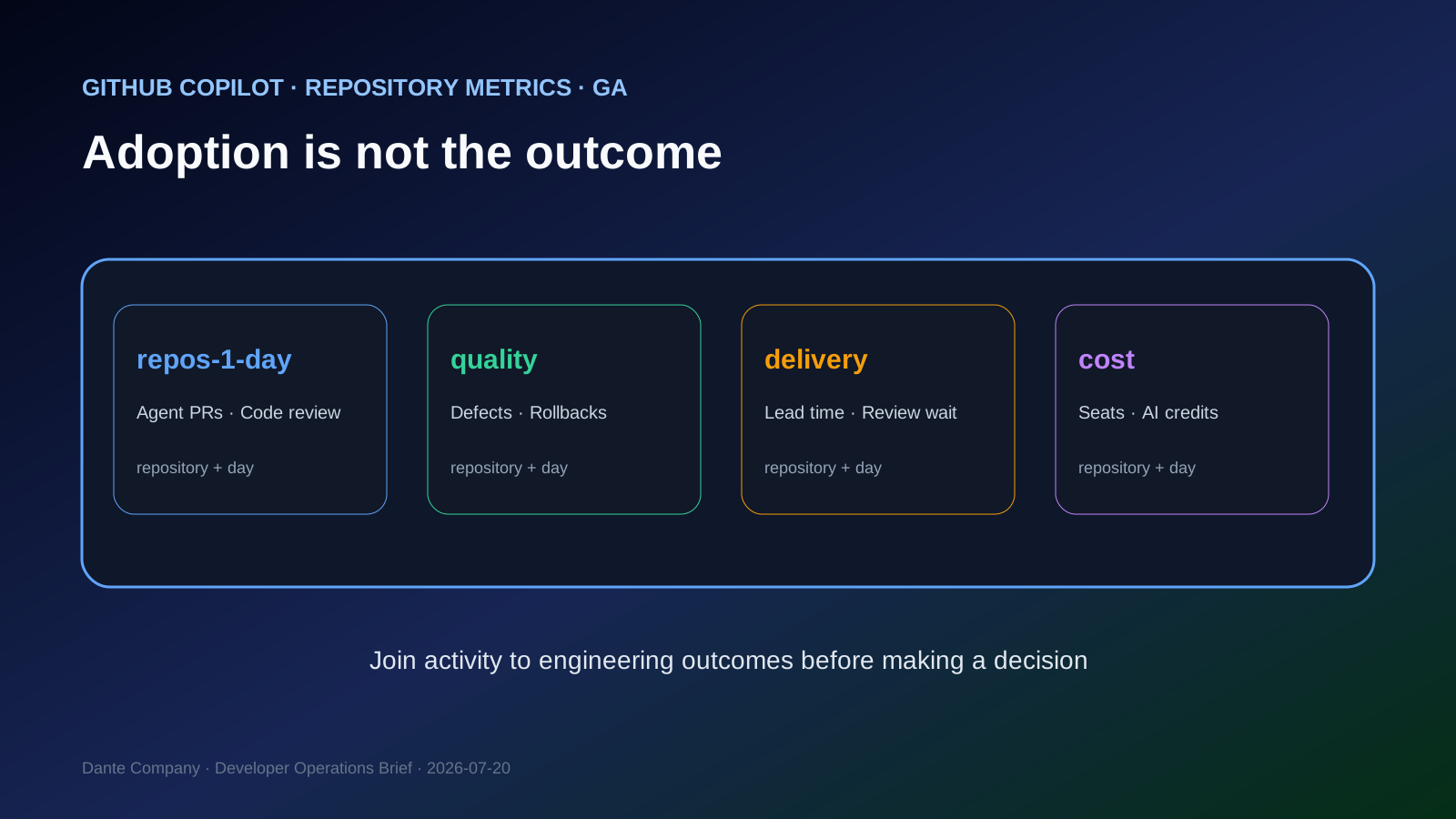
Seat counts and organization-wide active users cannot tell you where engineering work actually changed. GitHub’s repository-level daily report, generally available on July 17, 2026, lowers the unit of analysis from the organization to the codebase. It reports pull requests created and merged by Copilot coding agent and pull requests reviewed by Copilot code review, including suggestion counts by comment type.
What changed
Enterprise and organization endpoints accept day=YYYY-MM-DD. Access requires the View Copilot Metrics permission and an enabled usage-metrics policy. The output is repository activity, not a productivity score.
| API | Scope | Daily evidence |
|---|---|---|
| GET /enterprises/{enterprise}/copilot/metrics/reports/repos-1-day | Enterprise | Agent PRs · Code review |
| GET /orgs/{org}/copilot/metrics/reports/repos-1-day | Organization | Agent PRs · Code review |
Why repository scope matters
Repositories differ in test automation, review rules, deployment cadence, and ownership. Joining this report to defects, rollbacks, lead time, and review latency lets an operator find where enablement or guardrails are needed instead of declaring that more usage equals more value.
An operating workflow
✓Collect repos-1-day at a consistent time and retain the raw response.
✓Join repository and day to deployment, incident, and review data.
✓Audit branch protection, tests, CODEOWNERS, and security scanning where agent activity is high.
✓Compare four-week lead time, rollback, defect, and review-latency trends separately from license counts.
Interpretation risks
PR and suggestion counts are not outcomes. Changes vary in size and difficulty, and review suggestions need acceptance and quality context. GitHub also warns that Copilot data resources are not interchangeable, so do not add unlike totals together.