
US import prices rose 1.1% in September: pressure beyond fuel
Reducing the latest import-price release to an oil story misses another part of the evidence. On October 16, 2026, the US Bureau of Labor Statistics reported a 1.1% monthly rise in import prices for September. Both fuel and nonfuel prices increased. For a small business, that is a reason to identify which quotes need updating, rather than copy the headline percentage into next month's supplier budget.
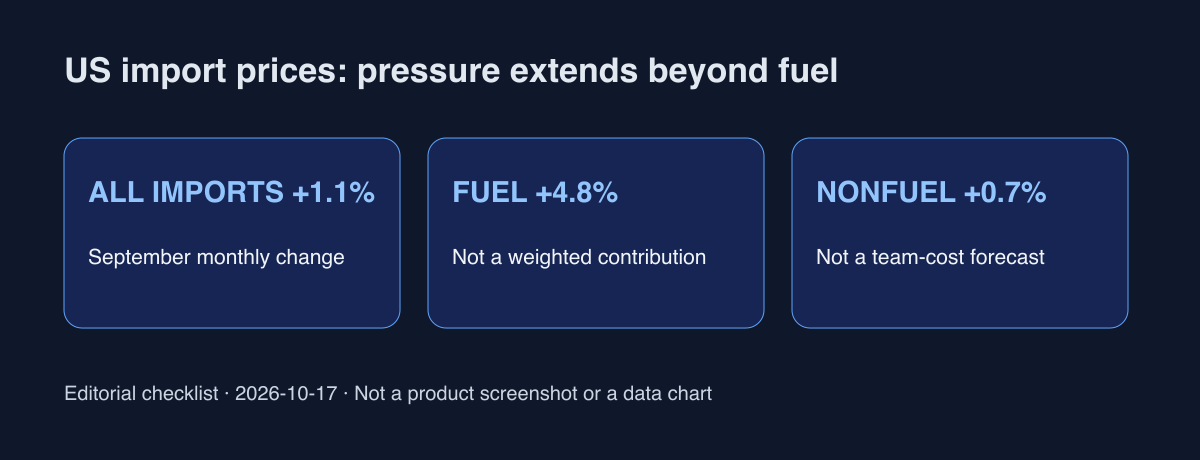
Keep monthly and annual comparisons separate
Total import prices increased 1.1% from the previous month and 8.1% from a year earlier. Fuel import prices rose 4.8% monthly; nonfuel prices rose 0.7% monthly and 6.0% annually. These figures belong to the same September release but answer different comparison questions. Nonfuel means a category excluding fuel, not a category with stable prices. The indexes are not seasonally adjusted, another label worth keeping beside the figures when comparing them with other inflation releases.
A large rate is not a contribution calculation
Fuel's larger monthly rate does not by itself establish that fuel accounts for most of the total rise. The effect on an aggregate also depends on weights. Adding the fuel and nonfuel percentage changes does not reproduce the overall 1.1%. This article does not calculate contributions. The official release identifies increases in both groups as drivers. The practical inference is modest: a story attributing all the pressure to energy leaves relevant evidence unexplained, but the component rates alone do not quantify each group's contribution.
The index is not your purchasing basket
The release reports a 0.9% monthly rise in imported capital-goods prices, with computers, peripherals and semiconductors among the upward drivers. That is not a forecast that a developer's laptop quote or cloud subscription will rise by the same amount. Product mix, contract currency, quote expiry, payment date, inventory and supplier pricing differ. Checking a team's own exposures is an operational interpretation of the data, not an additional BLS finding about software companies or their suppliers.
Turn the release into a quote-review list
Separate committed purchases from optional purchases for the next quarter. Ask relevant suppliers for current quotes, lead times and price-lock terms. For each item, keep the old and new quote dates, currency and treatment of taxes and shipping together. This makes it easier to explain why an observed supplier cost differs from a national index. Record exchange-rate and tariff or freight conditions separately as well. A dollar-based US import-price measure cannot simply become a Korean company's won-denominated landed cost.
There is a reasonable counterargument to immediate action: fixed-price contracts or ample inventory may mean no near-term budget change is needed. If many purchases still need fresh quotes, however, delaying verification may carry a cost. Neither situation supports automatically accelerating every purchase or raising every customer price. Narrow the question to which decision genuinely needs new information. This article offers no asset-price forecast or recommendation to buy or sell a security.
When considering a post-release narrative that the rise was energy-driven, keep the 0.7% nonfuel increase in view too. We have not estimated the size of online discussion or a market consensus. At the next release, compare the same series and check revision markings against the version saved today. This is information, not financial or investment advice. The immediate task is to find the items in your actual purchasing list that need a refreshed quote, and document the decision made from that evidence.
Sources and reference date
Checked the October 16 BLS release as of October 17, 2026. Figures refer to September and may subsequently be revised.