
GitHub Code Quality CSV: disabling a repository does not cut the current bill
If you disable Code Quality for one repository, do its committers immediately disappear from the bill? GitHub's October 15, 2026 CSV export offers evidence for investigating that question. For a small team, the useful change is a repeatable reconciliation process across people, repositories, and billing periods. Downloading a report is only the beginning. This article does not estimate an account's usage, prices, or savings.
What the new report actually covers
The announcement describes active committers consuming a license, repositories receiving their commits during the last 90 days, and whether committers are unique to a repository or organization. GitHub Team and GitHub Enterprise Cloud customers can download it from the Code Quality card under Billing and licensing, then Licensing. Disabling coverage may release licenses for the next billing period; it does not change the current license charge. A configuration change today is not evidence of a refund today.
Reconcile overlap before adding repository totals
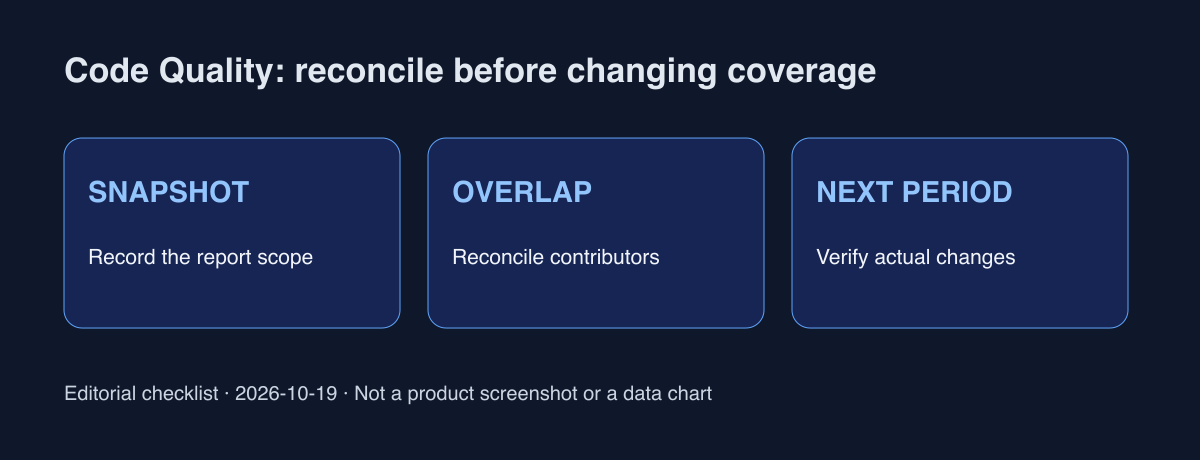
The following is a team procedure, not an automated savings feature. Compare a dated CSV with internal contributor records. Do not add repository headcounts as though the groups were disjoint. Someone still contributing to another enabled repository may continue to consume a license after the first repository is disabled. Keep ambiguous identities unresolved until their mapping is verified. Inspect the actual downloaded headers and report scope rather than inventing a schema from the announcement. Preserve the original snapshot for a reproducible comparison.
A savings candidate also changes quality coverage
For each candidate, record the owner, product role, recent changes, and the review process that would replace automated checks. A quiet repository can still contain a critical shared library. Compare the plausible license reduction with the problems that reduced coverage could miss. Review the proposal with its owner and make a limited change only through the team's normal approval process. This article does not authorize changing an organization's settings or commercial commitments. Keeping coverage can be the more economical decision when review risk is high.
License usage is only one part of the cost
GitHub's cost documentation separates licenses from GitHub Actions minutes used by scans and GitHub AI Credits used by AI features. A smaller license count therefore does not imply an identical percentage reduction in total spending. Compare the next period's actual license count separately from scan activity for that same period. Do not manufacture a currency estimate from the CSV alone. Define the observation date, scope, and cost component before putting any savings assumption into a budget.
This research does not quantify community savings claims. The operational question is which review coverage remains after overlapping contributors are reconciled. Because the export connects people to repositories, keep the original within the approved internal workflow instead of attaching it to a public issue or article. Share only what the responsible reviewers need, and publish the reasoning in aggregate if an external explanation is useful.
Start with one export and a short decision memo: snapshot date, report scope, overlapping contributors, candidate repositories, compensating review, and the next billing check. Make the no-change option explicit. Confirm the next period's actual counts and review outcomes before calling the hypothesis validated. A successful download proves access to the report; a documented comparison shows whether the decision improved costs without creating an unacceptable coverage gap.
Official sources
GitHub Changelog · License usage CSV
GitHub Docs · Code Quality costs
Record contributor overlap and the remaining review process before selecting a repository for a cost change.