
GitHub retires push emails: audit the delivery path, not just the inbox
A commit can reach the repository while the team inbox stays silent. Before treating that silence as evidence that nothing changed, check the notification path. GitHub announced that repository push event email notifications stopped on October 15, 2026. The useful response is to decide which changes require human attention and how that attention is requested. Copying the old message into a new automation without reviewing its audience can preserve the same operational weaknesses.
Separate the confirmed change from your team's choices
GitHub says the feature was retired to reduce spam and abuse because recipients did not have to consent beforehand. Its announcement suggests a GitHub Actions workflow triggered by push events, using your own SMTP server or email provider, for teams that still need these emails. The stated scope is repository push emails. Do not turn that announcement into a claim that all GitHub email notifications, including issue and pull request messages, have ended.
Define the action before choosing a channel
Ask who actually needs to inspect every commit. Reviewing a default branch change, checking a deployment result and responding to a security incident are different jobs. If a push email has been treated as proof of a successful deployment, replacing the sender will not fix the underlying confusion. As an operational choice, include the repository, branch, commit link and requested next action in change notifications. Confirm deployment results through the system that actually observes the deployment. A message about source changes cannot establish that production is healthy.
Give the replacement an owner and a failure route
The following are engineering recommendations, not promises about GitHub's service. Maintain a recipient list with explicit consent and an accountable owner. Document the branches and conditions that justify a message. Keep delivery credentials in your established secrets process rather than repository content or outbound email. For a busy repository, compare immediate mail with a digest: lower delay may also mean more noise and provider cost. Measure whether the message prompts a useful action, rather than treating a larger message count as an improvement.
Test receipt separately from workflow completion
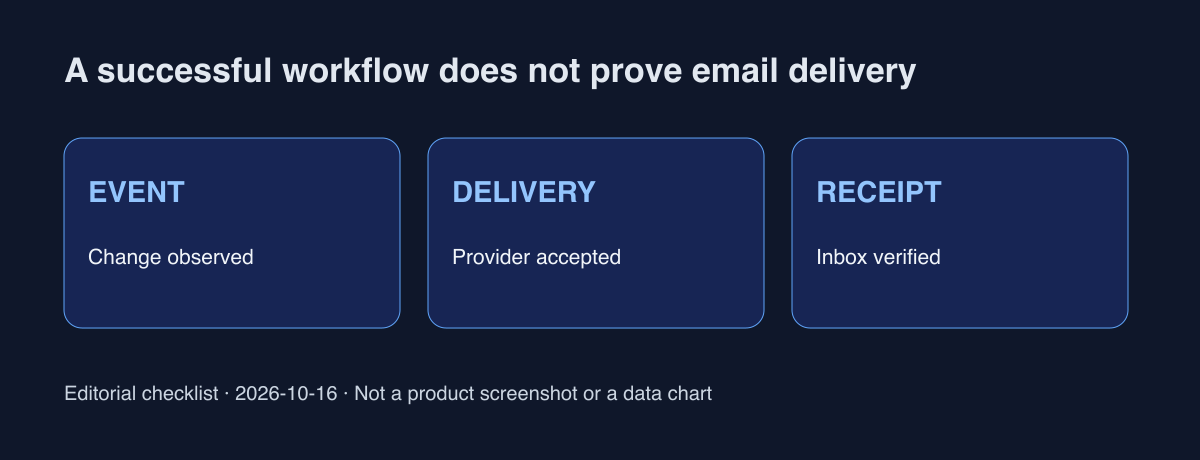
Use one agreed test change to follow the chain: event, workflow execution, provider acceptance and arrival in an authorized inbox. A green workflow alone does not prove delivery. Check whether rerunning the workflow duplicates the same notification, whether excluded branches remain excluded and who learns about provider rejection. Review the implementation so commit messages and other externally supplied text remain data, not executable instructions. These checks should reflect the behavior of your actual workflow and provider; this article does not supply a universal delivery guarantee.
A small team may reasonably choose not to build another email system. Existing review screens and deployment monitoring may already connect important changes to the right people. If mail is essential, record ownership and recovery steps so the path does not depend on one person's account. Treat the retirement as a reason to audit an existing dependency, not as evidence of an undocumented platform outage. No community incident rate or delivery benchmark is being asserted here.
Start by listing the tasks that depended on the old push emails. Agree on the intended recipients and a harmless test message, then retain evidence from the actual delivery path. Revisit the list and failure routing after the replacement is introduced. This article sends no messages and changes no repository settings. The retirement is a confirmed product change; the design of a replacement remains a decision for each team.
Official sources
Checked October 16, 2026. The retirement is official; the review sequence is an independent operational recommendation.