
The Big One estuary art guide: reading three fish silhouettes
Fish in the estuary can blur together when you remember only their names. Comparing Mullet, Sea Bass and Estuary Black Seabream bodies and dorsal fins makes the artwork you are looking for in Fishpedia easier to recognize.
As the developer of The Big One, this time I am introducing fish artwork rather than equipment stats. All three species are in the estuary data matching public iOS 1.3.3. The comparison uses official resources from that version; it is neither a gameplay screenshot nor a capture of a new update.
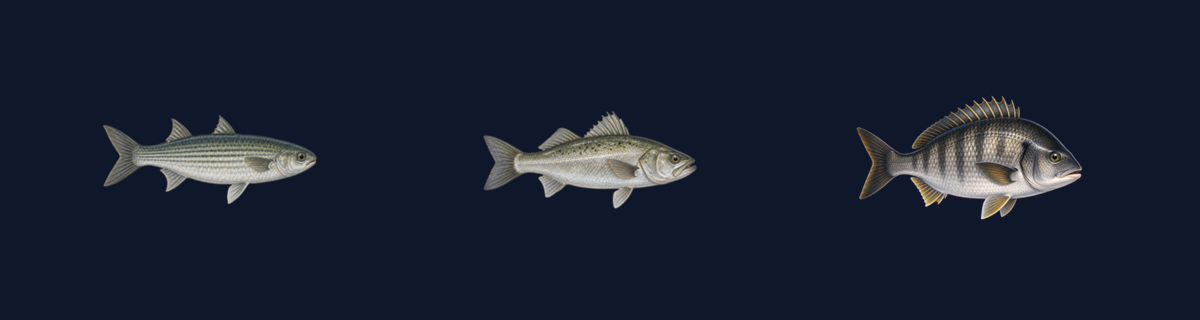
Mullet: start with the long, rounded body
The Mullet illustration draws attention to its elongated body and relatively small mouth. Follow the outline toward the tail first. These observations help distinguish the game's illustrations; they are not a field guide to identifying real fish.
Sea Bass: look at the mouth and back
In the Sea Bass illustration, compare the mouth area with the sharper outline around the dorsal fin. When it faces the same direction as Mullet, the difference in head and back helps connect the name with the picture.
Estuary Black Seabream: compare body depth
Estuary Black Seabream has a noticeably deeper body than the other two illustrations. Compare the silhouette from head to belly instead of relying only on screen brightness or color. Names follow the game's English localization.
Learn the picture, then choose one entry
Look up the three species in Fishpedia and select one collection goal you have not completed. Do not infer spawn times, bait or probabilities from this illustration; consult the current entry. Inclusion in the estuary pool does not mean the fish appears on every cast.
Read casting, the bite, hooking and reeling in sequence. Matching the name and picture again after a catch makes the collection record easier to remember. The existing guides below explain casting without groundbait and reading distance alongside tension during reeling.